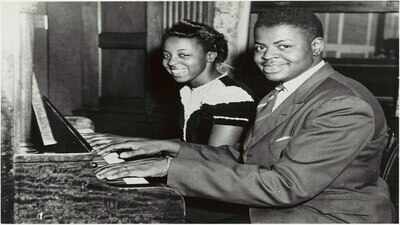
Long before computer animation, two Canadian artists showed how a film could express ideas. In 1949, McLaren and Lambart created an unusual animation called Begone Dull Care, which is widely regarded as an important experimental film. Instead of using traditional cel animation, McLaren and Lambart painted, scratched and engraved Their collaboration became a visual interpretation of the Oscar Peterson Trio’s performance. Instead of narrating a story, the 8-minute film turned the performance into an explosion of colours and rhythms, proving that animation can act as the visual representation of sound. Decades later, Begone Dull Care remains an influential example of experimental animation.Painting Music Instead of Illustrating ItWhen McLaren first heard the young jazz pianist Oscar Peterson in Montreal, he recognised that the improvisational energy of jazz demanded an equally spontaneous visual language. Instead of synchronising characters or objects to musical beats, he and Lambart chose to let the music itself dictate every movement on screen.According to the Canadian Film Encyclopedia, working at the National Film Board of Canada, the pair abandoned cameras almost entirely. They stretched strips of transparent 35mm film across long wooden boards and painted directly onto the film using inks, dyes, brushes, airbrushes, and even unconventional tools that produced unpredictable textures. At other moments, they scratched through the film’s dark emulsion to reveal bright lines beneath, creating flashes of light that danced alongside Peterson’s rapid piano passages. The swirls, splashes and angular shapes follow the pace of the trio’s performance. Slow parts result in soft transitions of colours on the screen, while more intense sections of jazz are accompanied by energetic bursts of red, yellow, blue and white hues. Many viewers feel a sense of motion in the way it reflects the music’s emotions.This technique is called direct animation, or cameraless animation, when artists work directly on film instead of filming drawings. Although McLaren had already tried this technique before, Begone Dull Care was one of its finest examples.Jazz and animation in perfect conversationAlthough the visuals appear spontaneous, the collaboration between McLaren and Peterson was remarkably deliberate. Rather than treating music as a finished soundtrack, the artists developed a close dialogue between visual rhythm and musical performance. Peterson’s improvisations inspired the animation, while McLaren’s ideas influenced the final musical arrangement before recording.A study published in Intersections: Canadian Journal of Music explains that both art forms rely on improvisation, variation, and rhythmic interplay. It notes that the film was made in 1949 as a seven-minute, forty-eight-second three-movement work built around the Oscar Peterson Trio, with McLaren and Evelyn Lambart using the improvisatory structure of jazz to let the animated forms respond and react to the music itself. Pinson further points to the piece’s basic chordal organisation as evidence that the visuals are timed to musical shifts rather than to plot.The production also reflects McLaren’s philosophy that animation should be viewed as performance rather than merely drawing. Another scholarly study by Nichola Dobson explores how McLaren physically “performed” while animating, describing his movements across the filmstrip as a dance responding directly to the soundtrack. His gestures became part of the artwork, blurring the boundary between creator, performer, and filmmaker. This relationship between sound and movement helps explain why the film still feels alive decades later. Instead of mechanically matching images to beats, McLaren and Lambart translated the emotion, tempo, and spontaneity of jazz into visual form, making viewers almost “hear” the colours and “see” the music.
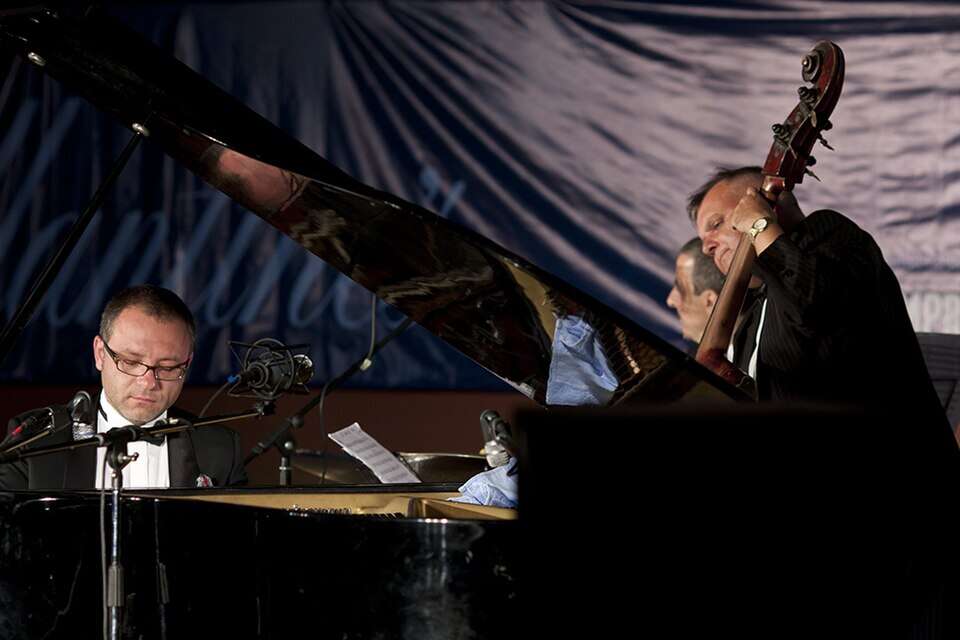
A jazz pianist and double bassist perform in harmony, capturing the improvisational energy that inspired Begone Dull Care. Image Credits : Wikimedia Commons
A colourful legacy that still inspires artists todayReleased in 1949, Begone Dull Care won awards at several film festivals and helped establish McLaren as a major figure in twentieth-century animation. It also expanded ideas about what animation could do as a genre. Animation was increasingly The film has inspired experimental filmmakers, music video artists, digital visualizers and audiovisual performers who combine sound and moving images. Modern artists use computer programs to create synchronised visual effects, while McLaren and Lambart achieved a similar effect with paints, scratches and film.Their ideas anticipated themes that are now being explored in neuroscience. Some research suggests that the brain can integrate information from multiple senses, allowing sound and visual stimuli to influence one another during perception. This may help explain why the film’s synchronised colours, rhythms and movements create such a compelling audiovisual experience. The film Begone Dull Care utilised this principle many years before computer technology made audiovisual synchronisation a common practice, prompting viewers to experience music not only as something auditory but also as something visual.Viewed today, Begone Dull Care still feels contemporary. Its abstract shapes can resemble digital motion graphics more than conventional hand-drawn animation. By painting directly onto 35mm film, McLaren and Lambart turned jazz into a kinetic visual experience where piano flourishes, drumbeats and bass lines became bursts of colour. Their collaboration with the Oscar Peterson Trio remains a striking example of how music can be translated into image.