
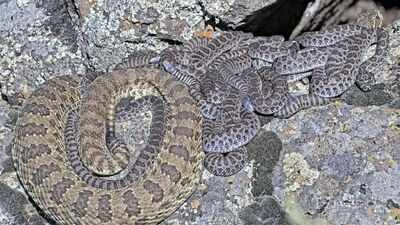
Many people believe that baby rattlesnakes are more dangerous than adult ones because they cannot control the amount of venom they inject when they bite. A new study has now challenged this long-held belief.Researchers from Loma Linda University in United States say there is no evidence that baby rattlesnakes always inject all their venom. Instead, the study found that young rattlesnakes can control how much venom they release, just like adult snakes, Science Daily reported.The researchers also found that adult rattlesnakes are generally more dangerous because they carry much larger amounts of venom and usually inject more of it when they bite. Their findings were published in the journal Toxins.According to the study, the false belief has led “to negative consequences, including misinformed risk‐taking by those encountering snakes, unwarranted fear among snakebite victims, and inappropriate care delivered by misinformed or patient/family‐pressured medical professionals.”William Hayes, professor of biology at Loma Linda University School of Medicine and the study’s lead researcher, said the myth has survived for decades despite scientific evidence showing otherwise.“This is an easily defanged myth that has generated dread, panic, and real-life consequences,” Hayes said. “Ample evidence demonstrates that baby rattlers, like adults, can control their venom expulsion, the adults possess and deliver far more venom when biting, and the adults cause substantially more severe symptoms in snakebite victims,” he said.The researchers stressed that this does not mean bites from baby rattlesnakes are harmless. Hayes said any rattlesnake bite is a medical emergency and needs immediate medical attention. He added that antivenom remains the only effective treatment.
.
How myth spread
The study also looked at how the false belief became so common. The researchers found that the myth had already started appearing in news reports by 1967. They said news outlets in California played a major role in spreading it during the 1970s, 1980s and 1990s. Between 2000 and 2014, the claim continued to appear in media reports across North America.Although the myth still appears in some sources today, the researchers found that reporting has become more accurate since 2015. They believe better public education has helped reduce the spread of the misinformation.The study also found that many inaccurate reports included incorrect statements attributed to healthcare professionals and emergency responders such as firefighters, police officers and rescue personnel.
How it affects environment
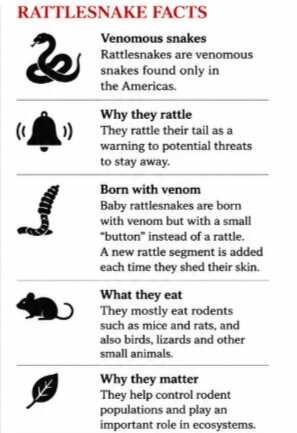
The researchers further said the misunderstanding has influenced not only how people react to snakebites but also how they treat rattlesnakes in the wild.According to the study, “Misconceptions about rattlesnakes create unnecessary fear and frequently result in people harming or killing them.”The researchers added that rattlesnakes play an important role in the ecosystems where they live. They also noted that rattlesnake populations have declined significantly in many parts of the United States in recent years.
.
Many still believe
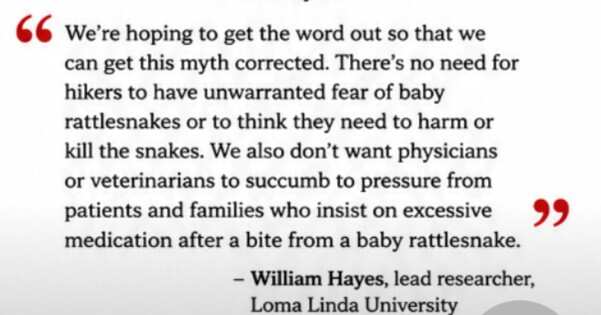
Despite scientific evidence, the belief remains common. According to Hayes, 53% of students surveyed in Southern California believed baby rattlesnakes were more dangerous than adults. The belief was even more common among emergency responders and healthcare professionals, with 73% of those surveyed accepting the claim.“We’re hoping to get the word out so that we can get this myth corrected,” Hayes said. “There’s no need for hikers to have unwarranted fear of baby rattlesnakes or to think they need to harm or kill the snakes. We also don’t want physicians or veterinarians to succumb to pressure from patients and families who insist on excessive medication after a bite from a baby rattlesnake.”