
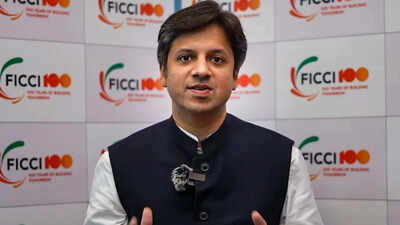
Ficci president Anant Goenka, who is the vice-chairman of the RPG Group, believes that the economic momentum is sustaining, especially after oil prices moderated. He tells TOI that the trade deals are positive and it is now for industry to take advantage of it. Excerpts:What is your assessment of the first quarter performance of the corporate sector?Overall demand continues to be robust and growth remains good. So, despite inflationary impact, the positive momentum that we saw post GST 2.0 continues to be good: a good 3-4% uplift on the previous baseline levels. Margin impact is going to be there, but it will be fairly mixed. Sectors that have seen generally good momentum would be automotive, banking, telecom. IT remains under pressure. But on margin side, particularly manufacturing sector, there is stress and it will continue, possibly, into Q2, because of inventory.How much uncertainty is there because of what happens to the US tariffs as the 10% tariffs will be removed this month?Section 301 will also bring in around a similar level of tariff, 10-12%. It’s an important relationship for us and we are working closely. What I understand is that we are looking at a competitive advantage and that’s where we are holding on, but it’s really the last leg of discussions. It is our largest export market and Indian exporters are also diversifying into other markets and trade deals are being implemented.
The UK FTA kicked in on Wednesday, and there are others in the pipeline. Is industry prepared in terms of capacity addition and other things to meet the additional demand?The potential is very large. A lot of B2B partnership connections have been established and it will get more intense when these agreements get going. Once industry sees around 80% capacity utilisation, it goes for the next level of capacity. I don’t think capacity is going to be going up saying, okay, FTA is coming in.The few areas of focus for us will be making sure, from a business side, we are working on building relationships, quality improvement. It is from the business side that we have to really work on making sure that we convert these agreements into actual action. Once these frameworks are set, we will be able to take advantage of it. We have a very small share of UK imports, and there is tremendous opportunity for us across sectors, be it textiles or footwear or other sectors. The other thing is the comprehensiveness of this agreement really makes it a model agreement for all. It’s just not trade, but movement of people, social security benefits, IP protection, review mechanisms.Overall capacity addition has been a concern for govt. Do you see a pickup or will the war impact it?Last year, private capex was around Rs 6 lakh crore. So, investment continues. The point is, just the uncertainty that happened because of the war and inflation, although GST injected a lot of momentum. In my own company, whatever we anticipated by 2028-29 is already happening. So, we are going ahead with substantially more capex than we had planned as demand is exceeding supply.There are concerns of goods being dumped from China. Is there a need to step up trade defence mechanism, such as anti-dumping duty?There is fair amount of overcapacity, particularly in China, and we are seeing increased dumping. There are industries where DGTR has been able to establish injury because of dumping. A large share of those (recommendations) have not been accepted, or have been rejected. From industry side, it would be good to get some more clarity on the reason for rejection.