
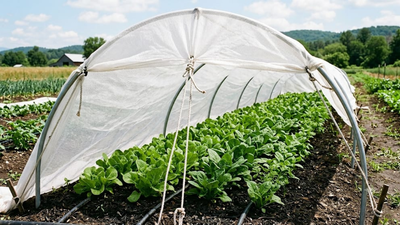
As climate change drives temperatures higher, farmers are facing a growing challenge: protecting crops from extreme heat without reducing the sunlight they need to grow. Conventional shade nets can lower temperatures, but they also block visible light, limiting photosynthesis and potentially affecting yields. Researchers and engineers in Japan believe they have found a better solution. Developed by Sumitomo Metal Mining, Solament AgriCool Shade is an innovative agricultural fabric that selectively blocks heat-causing near-infrared light while allowing most visible sunlight to pass through. The technology could help farmers grow healthier crops, improve yields and adapt to increasingly hot growing conditions without sacrificing the sunlight essential for plant growth.
How does the AgriCool fabric help crops without blocking sunlight
Unlike conventional shade cloths that simply reduce the amount of sunlight reaching plants, the Shade takes a more selective approach. The fabric is made using Solament, a material technology that absorbs near-infrared (NIR) light, the part of sunlight responsible for much of the heat, while allowing visible light to pass through almost unhindered. Since plants rely primarily on visible light for photosynthesis, they can continue producing energy even as excess heat is reduced.According to Sumitomo Metal Mining, It allows the visible light needed for photosynthesis to pass through it while blocking out infrared rays, meaning it can keep the temperature inside greenhouses as low as 8.5°C without hindering the growth of crops.By filtering this portion of sunlight instead of blocking the entire spectrum, the fabric helps create a cooler growing environment without making greenhouses or fields significantly darker. The company says this balance enables crops to photosynthesise efficiently while avoiding heat stress during the hottest parts of the day.The fabric is also engineered using specialised weaving techniques that allow growers to adjust the transmission of visible and near-infrared light depending on the crop and growing conditions. It even permits controlled levels of ultraviolet light to pass through, which is important for the colour development of crops such as aubergines and for the activity of pollinating insects like bees.
Why could the AgriCool fabric improve crop yields in a warming climate
Heat waves are becoming one of agriculture’s biggest challenges. Excessive temperatures can cause leaf scorch, fruit cracking, poor pollination and reduced yields. High soil temperatures also place additional stress on plant roots and increase water loss.Sumitomo Metal Mining and its agricultural partners conducted field trials deduced that the AgriCool fabric can lower soil temperatures by up to 8.5°C during peak summer conditions. In some case studies, this reduction in heat stress has been associated with crop yield increases of up 50%, although results vary depending on crop type, location and environmental conditions.The cooler environment benefits more than just plants. Lower greenhouse temperatures can make working conditions safer and more comfortable for farmers during extreme summer heat, while helping maintain fruit quality by reducing damage caused by overheating. The company says the technology can suppress greenhouse and fruit surface temperatures, reducing problems such as sunscald and cracking that often affect high-value crops.
How the new agricultural fabric is already being tested on farms
Sumitomo Metal Mining has launched collaborative field trials with farmers, agricultural organisations and local governments across Japan through its ReFarm initiative. The programme aims to evaluate how the material performs under different climatic conditions and with a wide range of crops.One farmer participating in the trials, Masaru Nakano of Nakano Farm in Hokkaido, said rising temperatures have made traditional cultivation methods increasingly difficult. According to the company, Nakano reported that the AgriCool Shade significantly reduced heat stress in his tomato crops, allowing photosynthesis to continue while helping maintain fruit quality. He also noted that lowering cumulative temperatures delayed harvesting, spread out shipping periods and helped stabilise market supply.The technology is also being explored as part of broader efforts to preserve traditional Japanese heirloom vegetables that are increasingly threatened by climate change. By reducing heat stress without sacrificing essential sunlight, researchers hope the material will help protect crop varieties that have been cultivated for generations but are becoming harder to grow under rising temperatures.
Could AgriCool fabric change the future of sustainable farming
Although still being expanded through field trials, the AgriCool Shade demonstrates how advances in materials science could help agriculture adapt to a warming world. Unlike traditional shade nets, which reduce both heat and light, the new fabric separates the two by filtering only the wavelengths that contribute most to overheating.Because the material is based on rare-metal-derived inorganic nanoparticles, it is designed to resist ultraviolet degradation and retain its heat-blocking performance over long periods. Researchers also envision applications beyond greenhouse cultivation, including open-field tunnels, agricultural workwear and future farming systems that combine heat management with renewable energy solutions.As global temperatures continue to rise, innovations that keep crops cool while preserving the sunlight needed for photosynthesis could become an increasingly important tool for improving food security and helping farmers produce more with fewer climate-related losses.