
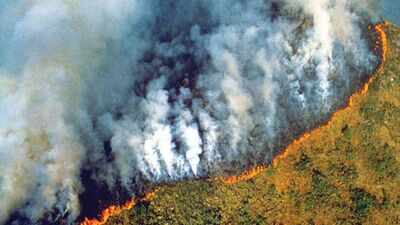
Amazon forest fires peaked during a crushing 2024 drought, but just a year later, the total burned area dropped to its lowest level since records began in 1985, reports Euronews.Data from the environmental monitoring network MapBiomas reveals that 3.1 million hectares burned across the Brazilian Amazon in 2025. This historic low marks a sharp reversal from 2024, when unprecedented drought triggered widespread human-made fires that swept through the world’s largest tropical rainforest, destroying vast stretches of carbon-absorbing trees and wildlife.The dramatic shift stems from a mix of shifting weather patterns, dropping deforestation rates, and heightened community awareness following the previous year’s destruction.The decline was “out of the ordinary”, MapBiomas report coordinator and geographer Ane Alencar told news agency AFP.Unusual weather played a direct role in suppressing flames. A delayed rainy season between 2024 and 2025 shortened the period when land is typically cleared with fire for farming. That delay blocked the “ideal window for burning in certain areas”, Alencar explained.Fires used for land clearing are often made worse by illegal practices like unauthorized mining. However, the severe damage caused in 2024 created a strong psychological reaction among local communities, prompting residents to act quickly to prevent and contain new outbreaks.According to MapBiomas, this community response helped interrupt years of expanding fire activity, bringing Brazil back to historically lower levels of burned land. Nationwide, burned areas reached their smallest footprint since 2018, though central Brazil’s Cerrado savanna continued to burn at its usual rate.
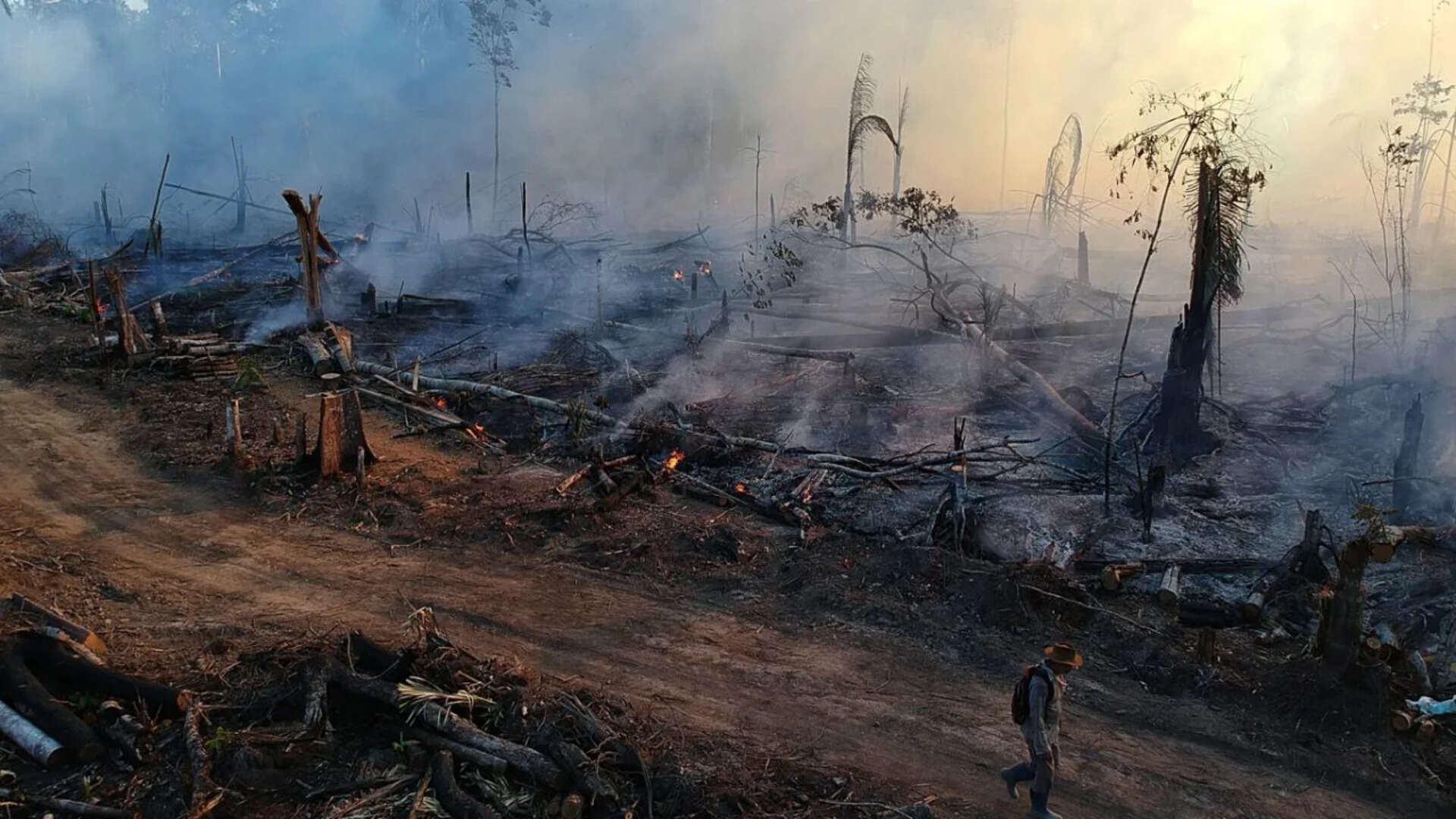
Amazon forest fire (AP Photo/Edmar Barros)
Political promises and falling deforestation
The drop in fires coincides with lower deforestation rates across the Amazon. Less tree clearing reduces the dry wooden debris that fuels large forest fires.Protecting the Amazon is critical to global climate goals because its dense vegetation absorbs large amounts of heat-trapping greenhouse gases.“There is no climate security for the world without a protected Amazon,” leftist President Luiz Inacio Lula da Silva said during the COP27 climate summit, adding that Brazil will “do whatever it takes to have zero deforestation and degradation of our biomes”.Since taking office in 2022 after defeating Jair Bolsonaro, President Lula has made forest protection a central policy goal, promising to end deforestation by 2030. Under Bolsonaro, destruction had surged, reaching 9,762 square kilometres in 2019 alone—a 30 per cent increase in a single year.At the time, Adriana Ramos of Instituto Socioambiental noted that “Jair Bolsonaro’s reign as Brazil’s president has seen the greatest reversal of social and environmental protections in our nation’s history.”In contrast, deforestation fell by a third during Lula’s first six months in power and dropped 68 per cent by April 2023 compared to the previous year. Data from the first quarter of 2026 shows deforestation rates hitting their lowest levels this decade.Despite these environmental gains, President Lula faces criticism from environmental activists over his endorsement of a major offshore oil exploration project near the mouth of the Amazon.
Super El Niño threatens future progress
The progress seen in 2025 faces an immediate threat from changing ocean temperatures in the Pacific.Environmental scientists warn that a potential “super El Niño” weather event could quickly reverse recent gains by triggering another severe dry spell across South America.Forecasts issued in March by the US National Oceanic and Atmospheric Administration (NOAA) calculated a 62 per cent chance of El Niño conditions developing over the summer.“If El Niño forms, the potential strength remains very uncertain, with a one-in-three chance that it would be ‘strong’ during October to December 2026,” NOAA’s Climate Prediction Center states.El Niño occurs when tropical trade winds weaken or reverse direction, allowing warm surface waters to build up along the South American coast. This warming blocks cooler water from rising to the surface, altering global weather patterns and raising global temperatures.Because air can hold roughly seven per cent more moisture for every 1°C temperature increase, El Niño can cause intense rainfall and floods in some regions while driving severe heatwaves and drought in the tropics.In the Amazon, a strong El Niño would likely cause “an extended dry season and a greater risk of forest fires”, according to Alencar.Whether Brazil can maintain its record-low fire levels will depend heavily on weather conditions late in the year and political stability as President Lula seeks a fourth non-consecutive term in October’s elections.