
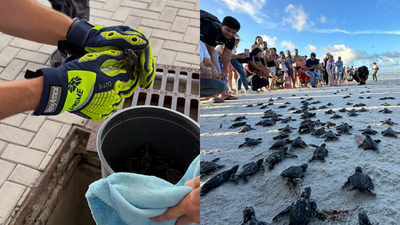
What began as a routine response for firefighters in southwest Florida quickly turned into an extraordinary wildlife rescue after tiny movements were spotted beneath a storm drain cover near the beach. Instead of debris or a stranded animal, crews found 14 sea turtle hatchlings trapped inside two storm drains during what should have been their first journey to the ocean. Working alongside volunteers from Turtle Time Inc., firefighters carefully retrieved each hatchling before releasing them safely into the Gulf of Mexico. The successful rescue has captured attention online while shining a spotlight on the growing challenges sea turtles face as coastal development increasingly overlaps with their natural nesting habitats.
How Florida firefighters rescued 14 baby sea turtles from a storm drain
The rescue took place near the Mediterra Beach Club on Bonita Beach, where firefighters from the Bonita Springs Fire District responded after hatchlings were spotted inside two storm drains. Working alongside volunteers from Turtle Time Inc., a Florida state-permitted sea turtle conservation organisation, crews carefully removed each tiny turtle by hand and placed them in a bucket for transport.Photographs released after the rescue showed gloved firefighters gently lifting the hatchlings from the drains before carrying them to the shoreline. All 14 baby sea turtles were successfully released into the Gulf of Mexico, allowing them to continue the journey they had been unable to complete on their own.
Why baby sea turtles end up in storm drains
Sea turtle hatchlings usually emerge from their nests at night and instinctively crawl towards the brightest horizon, which under natural conditions is the reflection of moonlight over the ocean. Along developed coastlines, however, artificial lighting from buildings, roads, hotels and parking areas can confuse them.Instead of heading towards the sea, hatchlings may crawl inland and become trapped in storm drains, roadside gutters or other man-made structures. Wildlife experts refer to this as hatchling disorientation, and it remains one of the biggest human-related threats to young sea turtles during nesting season.
Why every rescued hatchling matters
Sea turtles lay dozens, and sometimes more than a hundred, eggs in a single nest. Yet only a tiny percentage of hatchlings survive long enough to become breeding adults. Predators, pollution, fishing gear, boats and habitat loss all contribute to high mortality rates during their early years.Because survival is so low, rescuing even a small group of hatchlings can make a meaningful contribution to future sea turtle populations. Every turtle that successfully reaches the ocean has a chance to return years later to nest on the same beaches where it hatched.
Florida’s sea turtle nesting season
Florida is home to one of the world’s largest nesting populations of sea turtles, particularly loggerhead turtles. Nesting season generally runs from May through October, with hatchlings emerging around 55 to 65 days after eggs are laid.Many coastal communities encourage residents and visitors to switch off unnecessary beachfront lighting during this period because bright lights can interfere with the hatchlings’ natural instinct to crawl towards the sea.
The role of Turtle Time in protecting sea turtles
Turtle Time Inc. has monitored nesting beaches along southwest Florida for decades. Volunteers patrol beaches early each morning to record nests, monitor hatchling activity, assist stranded turtles and educate the public about protecting nesting areas.The organisation also works with local emergency services whenever hatchlings become trapped or disoriented, ensuring they can be rescued and returned safely to the ocean as quickly as possible.
Firefighters often rescue wildlife too
Although firefighters are primarily known for tackling fires and medical emergencies, many departments across Florida regularly respond to wildlife incidents. Animals ranging from ducklings and birds to reptiles and marine creatures often require assistance after becoming trapped in drains, canals or other hazardous locations.The Bonita Beach rescue is a reminder that first responders frequently play an important role in conserving wildlife as well as protecting people.
A small rescue with a big conservation message
The successful rescue of all 14 hatchlings ended with each tiny turtle making its way into the Gulf of Mexico. Beyond the heartwarming images, the incident highlights the importance of protecting nesting beaches, reducing artificial lighting near the coast and reporting stranded wildlife promptly. As Florida’s nesting season continues, conservationists hope stories like this encourage more people to recognise the obstacles sea turtles face during the first and most vulnerable moments of their lives.