
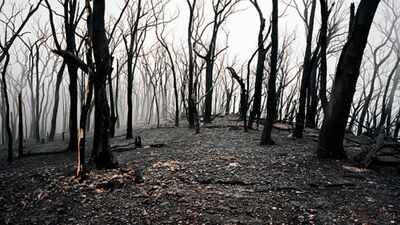
When it comes to forests, the line is tricky and every country seems to be toeing it carefully. How do you manage them? Should forests be protected entirely or should trees be harvested to support local economies and communities? The reality is far more interesting and complex than we understand and new research on a long-forgotten experiment in Victoria’s mountain ash forests reveals it all.Since the 1970s, scientists and the public have questioned the use of clear-cut logging, where all trees in a block of forest are cut down. Conservationists argued it destroys habitat for rare species and reduces the forests’ ecological value. But foresters stated that mountain ash is adapted to catastrophic wildfires and clear-cutting is the forestry equivalent. Along with the argument, the underlying questions about the impacts of clear-cutting and how they compared to less intensive forestry options, remained unsolved.
A landmark experiment
In the mid-1980s, the Victorian government invested today’s equivalent of A$26 million to explore alternatives to clear-cutting in an attempt at restructuring the timber industry. This would use silviculture, the branch of forestry that deals with establishing, growing and tending to forests. The Silvicultural Systems Project was established at two sites between 1987 and 1989: Tanjil Bren in Victoria’s Central Highlands and Cabbage Tree Creek in East Gippsland.It was a landmark experiment, comparing forest regeneration across the full range of silvicultural approaches. These included traditional clear-cuts (250–350 meters wide, or 820–1,150 feet), small patch clear-cuts (50–140 m wide, or 165–460 feet), and heavy thinning, where 50–70% of trees were cut. Extensive areas of unharvested forest were kept as benchmarks for comparison.The forest at Tanjil Bren was dense mountain ash regrowth from the 1939 fires. Hundreds of survey plots were established and thousands of seedlings were monitored. By the early 2000s, the results were clear: mountain ash regenerated best on clear-cut sites. Where tall canopy trees were retained or the cleared patches were small, common understory species such as acacia dominated.
The long-lasting results
In 2014, a team of researchers visited the Tanjil Bren site as part of a University of Melbourne subject on silviculture in native forests. What they found was shocking: the original results still held. 30 years later, the mountain ash in the large cleared patches and clear-cut areas was vigorous and abundant.But it was the heavily thinned parts of the forest that really caught the attention. The trees left behind after thinning were enormous. While they were only 80 years old, the largest averaged well over a meter (3.3 feet) in diameter at chest height, and some were more than 1.5 m (5 feet). Thinning had given these trees more space and resources to grow, and they had responded dramatically. The largest trees in the thinned stands were 20% greater in diameter than those in the unharvested control areas.Moreover, the thinned stands of trees had stored as much or more carbon in their wood than the unharvested control areas. In just 30 years, the heavily thinned forest had not only recovered all the carbon removed during harvesting but had also gained enough additional carbon to equal the increase seen in the unharvested controls.
Why do the findings matter?
The findings published in Springer Nature, have important implications. Bigger trees are more resistant to fires, so when the next fire occurs, they are more likely to survive. Bigger trees are also more likely to form hollows, a critical and declining habitat for rare species such as the greater glider and Leadbeater’s possum. The acacia trees that grew in most of the silvicultural treatments are also vital for Leadbeater’s possums, which use them to forage and move around the forest. Camera traps across the sites confirmed this: Leadbeater’s possums were found in every silvicultural treatment plot surveyed, but not in any of the unharvested areas.According to the researchers, the experiment establishes three key lessons:Long-term silvicultural experiments are irreplaceableForest thinning is not a trade-offThere is no silvicultural silver bullet for managing forests.