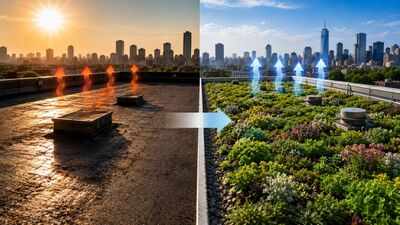
Cities have a habit of storing heat. Roads, walls and rooftops absorb sunlight during the day and slowly release it back into the surroundings after sunset, leaving built-up areas warmer than nearby rural landscapes. Among these surfaces, rooftops often receive little attention despite covering large portions of urban space. A dark, exposed roof can become extremely hot during summer, adding extra strain to buildings and the people living inside them.Across many cities, an alternative is appearing above streets and neighbourhoods. Empty roof surfaces are being transformed into living spaces covered with plants, soil and carefully designed layers that help buildings cope with rising temperatures.
How green roofs use plants and water to cut rooftop heat by up to 40°F
A green roof is not just a set of plants placed on the roof surface of a building. Below the plants, there is a sophisticated construction, which is created to secure the roof and provide for the survival of plants. It usually consists of such elements as waterproofing, drainage material, growth medium and vegetation depending on the climate zone.This approach to roof construction affects the way it reacts to solar radiation and atmospheric phenomena. In case of a usual roof, solar energy is absorbed directly, which causes an increase in the temperature of the roof surface on hot days. A green roof reacts in a different manner: leaves cast shadows, and water in the soil evaporates.According to various reports, in the course of measurements conducted in summer, it was found out that the temperature of the surface of planted roofs is about 30-40°F lower than that of exposed conventional roofs. This phenomenon occurs mainly in sunny weather.
How green roofs use shade and evaporation to naturally cool buildings
The cooling ability of a green roof comes from a combination of simple natural processes. Vegetation prevents much of the sun’s energy from reaching the roof itself, reducing direct heating. On the other hand, water contained in the accumulating layer is slowly released into the atmosphere.According to the study published in Energy and Buildings, titled ‘Surface temperature analysis of an extensive green roof for the mitigation of urban heat island in southern mediterranean climate’ reveals that green roof in southern Italy found that a traditional roof reached 74.3°C in June, vegetated roofs maintained surface temperatures 57–63% lower and helped reduce heat fluctuations in both summer and winter.Evapotranspiration is the name for the loss of water by plants. When water is transported from the soil and leaves into the atmosphere, energy is needed for the process. This will help cool down the temperature surrounding the roof surface, according to the United States Environmental Protection.There could be effects beyond the roof. If there is less heat absorbed by a building from the roof, there could be less need for cooling inside the building when it is hot outside. When the buildings are located in urban settings, where many heat-absorbing surfaces are close to each other, there can be an impact on urban heat reduction.
Extensive vs intensive green roofs: Choosing the right system
Green roofs come in different forms depending on the building, budget and intended use.Extensive green roofs are the lighter option. They usually have a thinner layer of growing material and are planted with low-maintenance species that can tolerate limited water and harsh conditions. Their lighter weight makes them easier to install on a wider variety of buildings.Intensive green roofs are closer to rooftop gardens. They can support deeper soil, larger plants and sometimes trees, creating spaces that people can use. The trade-off is that they need stronger structures, more maintenance and greater investment.The choice between the two depends largely on what a building can support and what purpose the roof is expected to serve.
Rooftops that help with rainwater and wildlife
Heat reduction is only one part of the role green roofs can play. In cities, rainfall often moves quickly across hard surfaces such as concrete and metal before entering drainage systems. During heavy storms, this can place pressure on urban water networks.A planted roof works differently. Soil and vegetation can hold part of the rainfall, allowing water to be absorbed gradually rather than immediately flowing away. Some of it is used by plants, while the rest is released slowly over time.These rooftop habitats can also support small forms of urban wildlife. Insects, including pollinators, may use flowering plants for food and shelter, while birds can benefit from additional green areas in places where natural habitats have become limited.
Green roofs and cool roofs solve different problems
Adding plants is not the only way to reduce rooftop temperatures. Many buildings use reflective or “cool” roofing materials designed to send more sunlight away from the surface rather than absorbing it.Cool roofs are often cheaper and simpler to install. They can quickly reduce surface temperatures and may help lower energy use during hot months. Green roofs require more preparation because they involve additional layers, structural considerations and ongoing care.The two approaches work in different ways. A reflective roof mainly changes how sunlight affects a building. A green roof introduces living elements that can manage heat, retain water and create ecological space. In some projects, the two ideas can even be combined.
The cost of creating a rooftop garden
Installing a green roof usually costs more than fitting a standard roof. The final price depends on the type of system, the condition of the building and the level of maintenance expected.A simple extensive roof may require fewer materials and less regular attention.An extensive roof garden would require deeper soils, more supporting structures and maintenance than a small roof garden.The maintenance work may include watering in case of dry spells, monitoring drainage systems, removal of unwanted plant species and replacement of damaged plant species. However, green roofs may extend the life span of roofing materials due to the protection from sun and temperature variations.As time progresses, the savings in energy costs and increased roof life will be able to offset the cost incurred at the start.
What cities are learning from green roof projects
Cities around the world have been testing green roofs as part of wider plans to manage heat, rainfall and limited green space. The results vary depending on climate, building design, plant choices and local weather patterns.A roof covered with drought-resistant plants in a dry climate will behave differently from one planted in a cooler, wetter region. The benefits are influenced by everything from the depth of the soil layer to how much sunlight the building receives.Projects such as the green roof assessment carried out in Kansas City have examined wider environmental effects, including changes in stormwater management, air quality and emissions linked to urban infrastructure.No single rooftop can change a city’s climate by itself. But as more buildings replace bare surfaces with living systems, rooftops are becoming part of the conversation about how cities adapt to hotter summers.Above the streets, spaces once used only to cover buildings are being redesigned as places that can absorb rain, support plants and reduce some of the heat created by modern urban landscapes.