
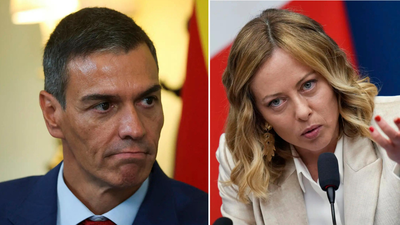
Spain has imposed temporary border checks on air and sea travel from Italy as tensions between the two EU countries escalate over migration. Spanish PM Pedro Sanchez and his Italian counterpart Giorgia Meloni appeared at odds over the EU’s migration policy.According to the BBC, Spain’s checks began at midnight and will remain in place until September 7, unless the situation changes. The move came a week after Italy introduced similar restrictions following the arrival of around 78,000 migrants from Morocco into Spain’s North African exclave of Ceuta.Spain had asked Italy to withdraw its checks by Sunday, but Rome said the measures would remain until at least August 15. Italy said it expected another possible wave of migration towards Ceuta around that time.The dispute has brought Spanish Prime Minister Pedro Sanchez and Italian Prime Minister Giorgia Meloni into a fresh clash over migration policy. Meloni has long pushed for tighter EU migration controls.Italy does not share a land border with Spain. Rome said it temporarily suspended parts of the Schengen rules for non-EU nationals arriving from Spain to prevent migrants who entered Ceuta from travelling onwards to Italy.Madrid rejected the reasoning, calling it based on “spurious arguments” and saying migrants who entered Ceuta had no route into the Schengen area.Italy also said it would not accept what it described as “ultimatums”. Rome said the checks would remain until security and terrorism risks had been fully addressed. Spanish citizens are exempt from the additional checks, which mainly apply to non-EU nationals.However, the BBC reported that some Italian airports have seen long queues, with passengers arriving from Spain being directed to separate lines for checks.Spain’s new measures include passport, nationality and visa checks for passengers arriving from Italy. Madrid said the controls were necessary because of continued “irregular migratory pressure”.Most of the migrants who entered Ceuta last week were sent back within days, but nearly 1,400 minors remain there. Spain has not confirmed that another large-scale crossing is expected, although social media posts in Morocco have fuelled concerns about a possible second attempt.Spanish authorities said they were monitoring the situation but did not expect a repeat of last week’s events.The reason behind the sudden arrival of tens of thousands of migrants remains unclear. EU Migration Commissioner Magnus Brunner has blamed criminal networks for spreading disinformation, a view also supported by Spain.The crossings followed a Spanish Supreme Court ruling that migrants intercepted at sea while trying to reach Ceuta or Melilla cannot be immediately returned to Morocco.Morocco has criticised the ruling, saying it weakened the system meant to deter migrants from attempting the crossing.Ceuta and Melilla, two Spanish enclaves in North Africa, have long been a source of tension between Spain and Morocco, which does not recognise Spanish sovereignty over them.