

Monsoon rain can be hard on metal surfaces around the home. Door locks are particularly exposed, and moisture can reach them through rain, humid air, and wet hands. Over time, that moisture can cause rust to form on the lock body, keyhole, and internal metal parts. A lock may still work at first, but repeated exposure can make the key harder to turn and eventually affect the mechanism. Keeping a lock dry is therefore only part of the solution. Regular cleaning, suitable lubrication, and quick attention to early rust can help protect the metal before the problem gets worse. Fortunately, most routine lock care does not require complicated tools. A few simple habits can help keep metal door locks working smoothly throughout the rainy season.
How to protect your door locks from rain and rust during monsoon: 6 easy ways
1. Use a dry lock lubricant in the keyhole
For a conventional mechanical lock, a dry lock lubricant made with PTFE or graphite can reduce friction without leaving the thick oily residue that attracts dust. Apply a small amount inside the key and insert the key a few times to distribute it. Wipe away any excess around the opening. Dry-film lock lubricants are also designed to resist moisture and help prevent sticking.
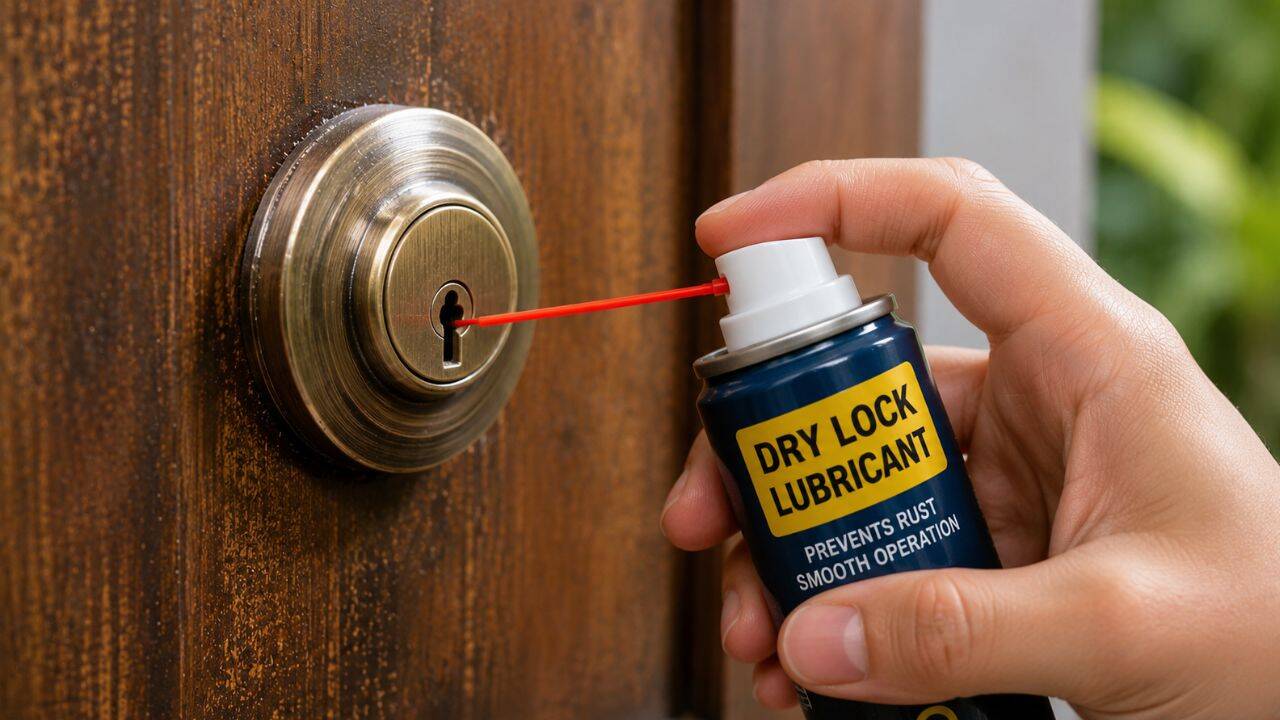
PC: AI Generated
2. Lubricate the latch and bolt separately
The keyhole is not the only part that needs attention. The latch and deadbolt can also become stiff when exposed to rain and humidity. For these exposed parts, use a small amount of silicone or suitable PTFE lubricant. Spray onto a cloth or apply to the bolt rather than soaking the entire lock. Move the handle and bolt several times to spread the lubricant evenly.
3. Add a weather shield
A small lock cover or weather shield can stop rain from hitting the lock directly. This is particularly useful for doors without a porch or roof above them. Choose a cover that leaves enough room to insert and turn the key. Keep the shield clean so water does not collect around its edges. Reducing direct rain exposure is often more effective than repeatedly dealing with rust after it appears.
4. Keep the key clean and dry
A wet or dirty key can carry moisture and debris into the key every time it is inserted. Wipe the key dry after using it in the rain. Clean away visible dirt before inserting it again. If a key has developed heavy rust or damage, replace it rather than repeatedly putting that rough surface into the lock. A clean key also helps reduce the build-up of debris inside the key.
5. Tackle early rust before it damages the lock
Small orange or brown spots should not be ignored. For light surface rust on the exposed metal face of a lock, gently remove the loose rust with a fine abrasive such as very fine steel wool or a fine abrasive pad. Wipe away the residue and dry the surface completely. Then apply a thin protective coating suitable for the lock’s exterior metal.
6. Stop rainwater from reaching the lock
Sometimes the lock keeps getting wet because rainwater runs down the door. Check the area above the lock after a downpour. If water is flowing directly over it, a door canopy, small rain shield, or suitable weather strip can redirect the water. Keeping the surrounding door area dry reduces repeated exposure and protects the lock as well as the door hardware.
3 mistakes to avoid when protecting door locks from rust
1. Do not pour cooking oil into the keyhole
Cooking oil may seem like an easy lubricant, but it can leave a sticky residue that attracts dust and grime. That build-up can make the lock harder to operate over time. Use a dry lock lubricant or a product designed specifically for the lock mechanism instead.

PC: AI Generated
2. Do not apply too much lubricant
More lubricant does not mean better protection. Excess product can collect dirt around the lock and may run onto the door surface. Apply a small amount to the keyway and wipe away anything left on the external parts of the lock. Some lock manufacturers specifically warn against over-lubrication.
3. Do not force a stiff or rusty key
A key that suddenly becomes difficult to turn may indicate dirt, corrosion, or a problem with the door alignment. Forcing it can bend or break the key inside the cylinder. Clean and lubricate the appropriate parts first. If the key remains difficult to turn, get the lock checked rather than applying force.