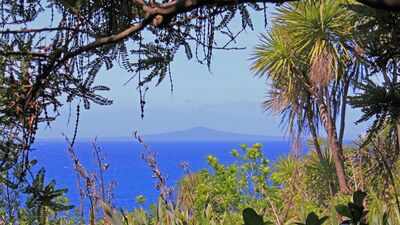
Off the coast of Auckland, in New Zealand’s Hauraki Gulf, lies an island that looks like a slice of untouched wilderness. Dense native forest blankets its hills, rare birds call from the canopy and visitors walk along quiet tracks surrounded by ferns and flowering shrubs. Yet just a few decades ago, Tiritiri Matangi was a very different place: a grassy, heavily farmed island with only about 4% of its original forest cover remaining.The transformation of Tiritiri Matangi from a degraded landscape into a world-renowned conservation sanctuary is one of New Zealand’s most inspiring environmental success stories. And at the heart of that transformation were 280,000 trees, planted by thousands of volunteers over a single decade, according to 2013 study titled ‘Tiritiri Matangi – an overview of 25 years of ecological restoration’.A landscape stripped bareLike many islands and coastal areas in New Zealand, Tiritiri Matangi was once covered in rich native forest. But from the mid-19th century, the island was cleared for farming. Trees were felled, undergrowth was removed and the land was turned into pasture for livestock.By the 1970s, black-and-white photographs showed Tiritiri Matangi as a largely open, grassy outcrop with only scattered trees. Native birdlife had dwindled, and the ecosystem that had once thrived there was severely diminished. Without intervention, the island was unlikely to regenerate on its own.In 1984, a bold new vision emerged. Scientists from the University of Auckland, working with the Department of Conservation and community groups, proposed turning Tiritiri Matangi into an “open sanctuary”, a protected area where native species could be reintroduced and where the public could visit and learn about conservation firsthand.The “spade brigade” and a decade of plantingThe first step was to restore the forest. Between 1984 and 1994, a massive revegetation programme was launched. The goal was ambitious: to replant the island with native trees and shrubs, creating habitat suitable for endangered birds and other wildlife.Over those ten years, an estimated 280,000 native plants were propagated in the island’s nursery and then planted across the landscape. Volunteers formed teams known as the “spade brigade,” using distinctive pointed spades to dig holes and set seedlings into the ground.Volunteer groups typically ranged from 15 to 400 people per trip, with each group planting between 1,000 and 1,400 plants in a single visit. One record-setting group of 120 volunteers planted 2,000 trees in two hours. With around 10,000 volunteers involved it is one of New Zealand’s largest community-led conservation projects.Thirty different native tree and shrub species were planted, beginning with hardy pioneers such as pōhutukawa that could cope with the exposed, windy conditions. Over time, these early plantings helped create shelter and shade, allowing other species to establish and the forest to develop in layers.From farmland to forestThe impact of the planting programme was profound. Within a decade, the island’s forest cover had grown from just 4% to more than 60%. What had once been open paddocks began to resemble the dense, biodiverse ecosystems that once covered the region.But planting trees was only part of the story. Predators also had to be eradicated to provide a safe haven for native wildlife. In the early 1990s the rats were eradicated from the island and strict biosecurity measures introduced to prevent new invasions. Tiritiri Matangi was established as a sanctuary, free of predators, a rare and precious environment in a country where introduced mammals have devastated many native species.The habitat was restored and the predators gone, so the next phase was to reintroduce the native birds.A sanctuary for rare and endangered speciesToday, Tiritiri Matangi is home to some of New Zealand’s most threatened birds. Species such as the takahē, kōkako, stitchbird (pōpokotea), saddleback (tīeke) and little spotted kiwi have been reintroduced and are now thriving.The island is one of the few places in the country where visitors can reliably see these rare species in the wild. It has become a living classroom, where school groups, tourists and locals can experience native wildlife up close and learn about the challenges of conservation.The success of the bird reintroduction programmes has been remarkable. Many populations are increasing, and the island now serves as a source for translocations to other sanctuaries and predator-free areas.A conservation model driven by the communityWhat makes Tiritiri Matangi special is not just the ecological success but how it was achieved. This used to be the project of a handful of scientists in remote, inaccessible parts of New Zealand, conserving critically endangered species. Tiritiri Matangi broke that mold.The project engaged thousands of volunteers making conservation a shared responsibility. It demonstrated that ordinary people could play a direct role in restoring ecosystems and protecting endangered species. The island became a symbol of what communities can accomplish when they work together toward a common goal.In recognition of its impact, Tiritiri Matangi has been highlighted as an official example of success in the United Nations Decade on Ecosystem Restoration (2021–2030). It is often cited as a global flagship for conservation and ecological restoration.A legacy that continuesMore than 30,000 people visit Tiritiri Matangi each year, walking its tracks, listening to birdcall and learning about the island’s history. Volunteers remain active, helping with planting, monitoring and maintenance.Tiritiri Matangi’s story is a reminder that it is possible to recover the environment, even after severe degradation. It shows that damaged landscapes can be repaired and endangered species can be given a second chance through vision, persistence and community engagement.The 280,000 trees planted by volunteers did more than reforest a forest. They put back an ecosystem, created a haven for rare wildlife and inspired new thinking about conservation. Today Tiritiri Matangi is an example of what people and nature can achieve together. It is a living sanctuary created by the hands of thousands of people who cared enough to plant a tree.