
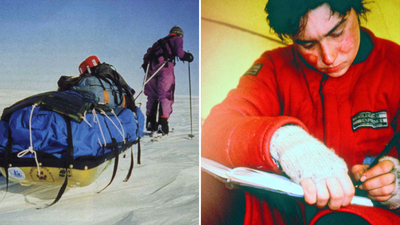
In 1986, Ann Bancroft set out across the Arctic as a 29-year-old elementary school teacher with a love of the outdoors and a place on an eight-member expedition. Fifty-five days later, she stood at the North Pole, becoming the first woman to reach it. The journey involved dog sleds, tonnes of supplies and long stretches without any realistic prospect of outside help. At one point, Bancroft fell through the sea ice and developed hypothermia, surviving the night with the help of her teammates’ body heat.Yet the North Pole was only the beginning. She went on to lead an all-woman expedition to the South Pole, cross Antarctica with Liv Arnesen and turn her experiences into educational work. 40 years after that first polar record, Bancroft’s story has taken an unexpected direction from surviving some of the world’s harshest landscapes to helping thousands of girls pursue ambitions of their own.
Ann Bancroft’s North Pole expedition showed the reality of Arctic survival
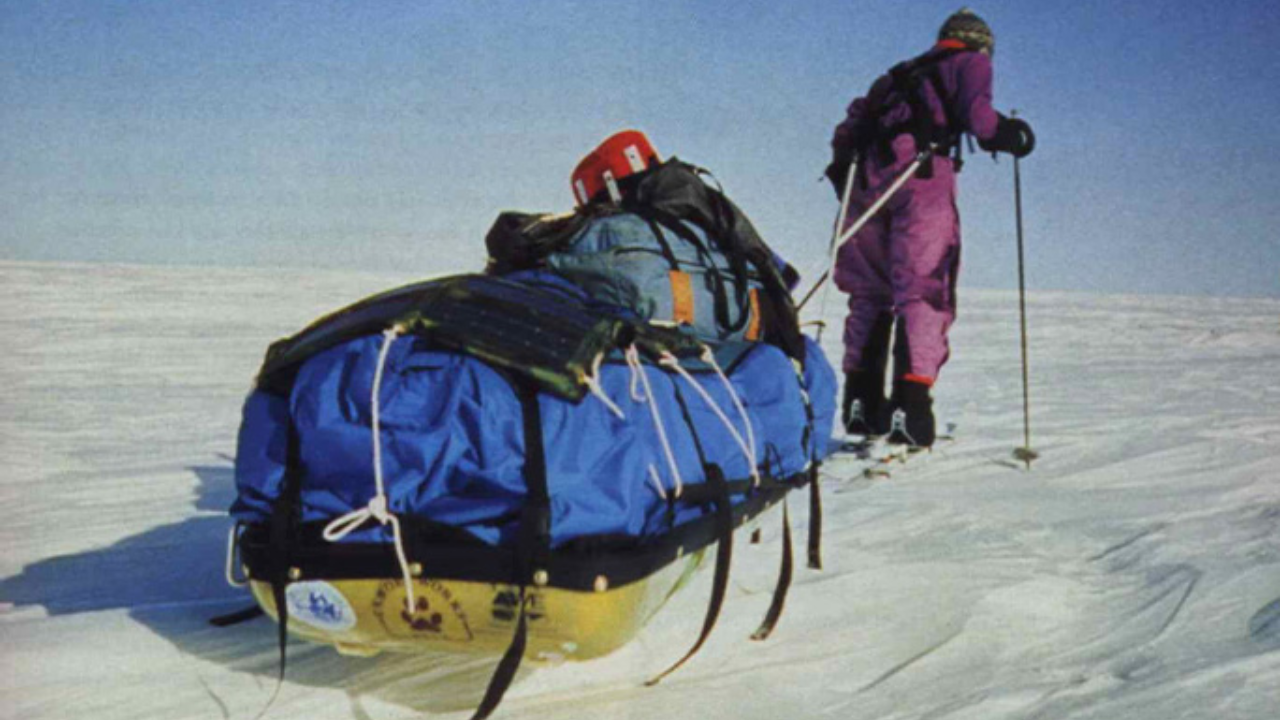
As reported by Guinness World Records, Bancroft joined the Steger International Polar Expedition on 8 March 1986. The expedition was led by explorer Will Steger and brought together eight people for an attempt to reach the North Pole across the Arctic.The journey was carried out without the kind of communications and emergency equipment that polar travellers take for granted today. The expedition transported its own provisions and equipment, about 2.72 tonnes in total, using five sleds pulled by 49 dogs. Two members of the group were injured and did not make it to the end.Bancroft and the remaining members had to deal with the practical problems themselves. There was no easy way to summon assistance. Even in an emergency, an aircraft could take days, or potentially a week, to arrive.That isolation was part of what attracted Bancroft to polar travel. She later described the importance of beginning an expedition with the assumption that you are responsible for solving whatever goes wrong. It was a mindset that would remain with her long after the North Pole journey.
PC: Guinness World Records
For Bancroft, the Arctic’s dangers were harsh but predictable
During the expedition, Bancroft fell through the sea ice. Her heavy clothing kept her from disappearing completely beneath the surface, but she emerged soaked from the chest down in freezing conditions.The rest of the team reached her with their sleds. Bancroft immediately began removing her wet clothes before they could freeze. The situation became more serious that night. She developed hypothermia and was unable to produce enough body heat to warm herself.She spent the night in a tent beside two male members of the expedition, relying on their body heat. The effects did not disappear quickly. She continued shivering for three days. It was an experience that made the remoteness of the expedition particularly clear. Had she been travelling alone, she later acknowledged, the outcome might have been very different.Yet Bancroft has never described the Arctic simply as a place of danger. In one of the stranger comparisons to emerge from her years of polar travel, she has said she feels safer there than she does driving on a US freeway.
The first woman to reach the North Pole
On 2 May 1986, after 55 days on the ice, Bancroft reached the North Pole. She became the first woman to reach it, a record that was difficult for her to fully understand at the time. There was little room during the expedition to step back and consider what the achievement meant. Reaching the destination was the immediate concern.Four decades later, her view of that moment has changed. Bancroft has described the distinction of being first as something that cannot later be taken away. The record was not simply about completing a difficult journey. It placed her in a part of exploration history that had previously contained no woman.“I shivered for three days, and I really realized at that moment, we’re remote and there was no help around.“Fortunately I had the guys there to help me, if I had have been on my own, maybe I wouldn’t have lived.”
The South Pole brought a different challenge
In 1992, Bancroft led the American Women’s Expedition to the South Pole. The four-person team included Sue Giller, Anne Dal Vera and Sunniva Sorby.The expedition was significant for more than the destination. It was an all-woman attempt at a time when sponsors had been reluctant to support women travelling to the Antarctic without a man accompanying them.Bancroft later recalled being confronted with the attitude directly. During preparations in South America, she met British explorer Sir Ranulph Fiennes, who asked where her sponsors were.The question exposed a problem the team had already encountered repeatedly. Companies had been unwilling to back the expedition, with some arguing that sending women to the Antarctic without a man was irresponsible. For Bancroft, the response was not to add a male member to the team. The expedition went ahead with its original composition.Her North Pole journey had already established her place in polar exploration. The South Pole expedition gave her another way to challenge the assumptions surrounding who was considered capable of undertaking such journeys. It also changed the direction of her work.
By 2001, exploration had become a mission to inspire children
By the time Bancroft travelled across Antarctica again, she was no longer the 29-year-old teacher who had arrived at the North Pole. In 2000, she set off with Norwegian explorer Liv Arnesen. Together they undertook a 94-day crossing of the Antarctic landmass, completing it on 11 February 2001.The pair travelled 2,747 kilometres, or 1,707 miles, without outside support. Each pulled a sled weighing about 113 kilograms, carrying the supplies required for the journey.The expedition was physically demanding, but her relationship with exploration had changed considerably since 1986. She had become accustomed to public life as an explorer and had developed a clearer sense of what she wanted those expeditions to achieve.Children had become part of that purpose. She could not physically bring them along, but she began treating them as members of her expedition team in another sense. Since the 1992 South Pole expedition, she has said, she has not undertaken a project without some form of educational curriculum attached to it.
What she learned on the ice became a cause far beyond the poles
That idea eventually found a permanent home through the Ann Bancroft Foundation. The organisation provides grants to girls and young women, helping them pursue programmes and activities connected to their own interests. The age range is deliberately broad, extending from young children through high school.Bancroft began the foundation after her 1992 expedition. Funding the South Pole journey had exposed her to the resistance women explorers could encounter, and she wanted to address some of those barriers rather than simply move beyond them herself. The foundation’s work has continued for nearly three decades.Girls applying for support are encouraged to identify a mentor as part of the process. For Bancroft, that element reflects something she valued when she was young: having an adult outside her family recognise potential in her.The organisation has also developed a girlhood summit, bringing girls together for a day of activities and discussion.The work has become an extension of the expeditions rather than a separate chapter. The landscape has changed, but the underlying idea is familiar: give someone the opportunity to attempt something that may otherwise remain out of reach.