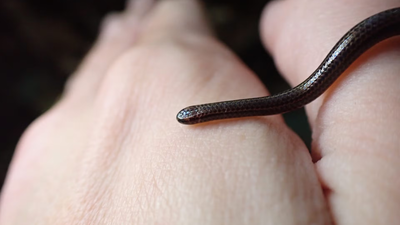
After nearly 20 years without a confirmed sighting, scientists in Barbados have finally rediscovered the world’s smallest-known snake. According to the Associated Press, the tiny Barbados threadsnake was found beneath a rock during an ecological survey in central Barbados, bringing an end to a search that had seen researchers turn over hundreds of rocks in the hope of finding the elusive reptile. Measuring just 3 to 4 inches (9 to 10 centimetres) when fully grown, the snake is small enough to escape notice and spends much of its time hidden underground. Its rediscovery came during a survey led by Barbados’ Ministry of the Environment and National Beautification and Rewild, as researchers searched areas of remaining forest for signs of the species.The find was particularly important because the threadsnake had been considered lost to science for nearly two decades, with only a handful of confirmed sightings since it was first documented in 1889. Now, conservationists hope the discovery will help them learn more about the snake and protect its shrinking forest habitat.
Scientists search hundreds of rocks for the elusive Barbados threadsnake
During the March survey, Blades and Justin Springer, Rewild’s Caribbean programme officer, focused on an area around a jack-in-the-box tree. While other team members measured the tree, the two researchers began looking under rocks for signs of the elusive snake. AP reported that they had already searched hundreds of rocks without success in their efforts to find the species. Eventually, one rock beneath a tree root caught their attention.Rewild reported that Blades loosened the rock and lifted it, revealing an earthworm and a tiny snake underneath. Springer initially thought they might have finally found the Barbados threadsnake, but the researchers were cautious because the species closely resembles the Brahminy blind snake, also known as the flowerpot snake.
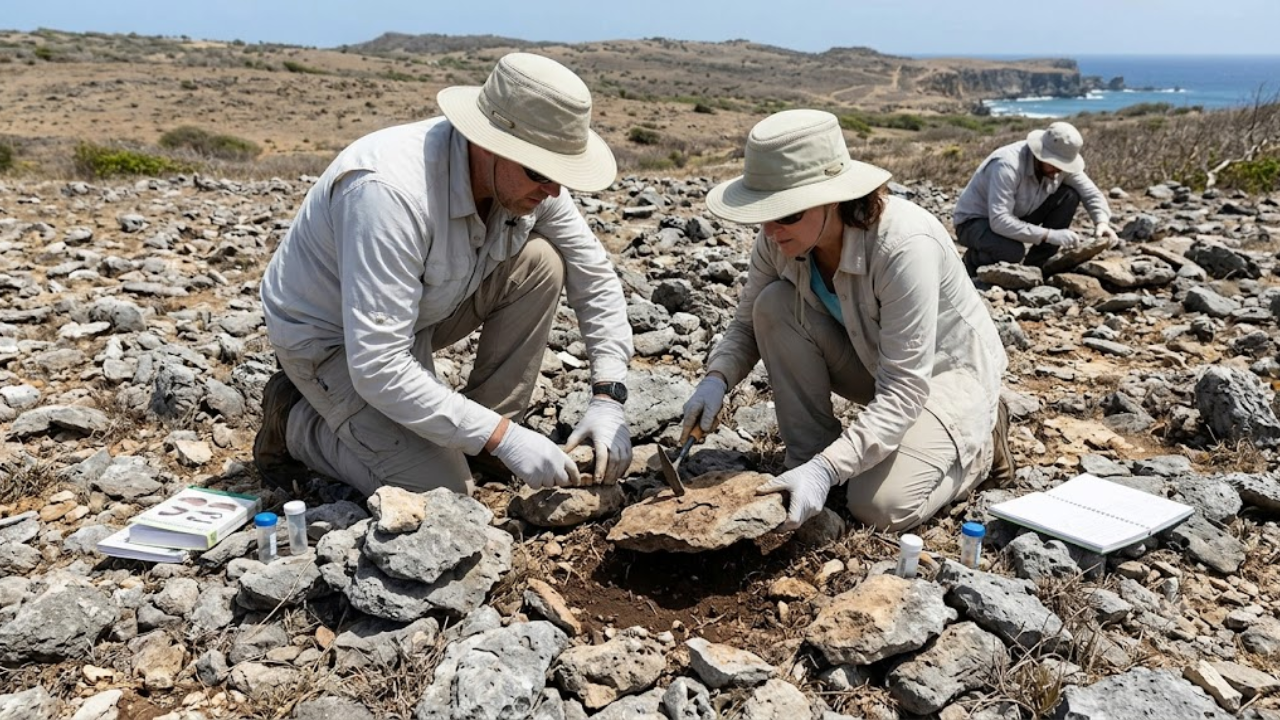
Image AI generated
How scientists identified the rediscovered Barbados threadsnake under a microscope
Finding the snake was only the first step. The researchers needed to establish that it really was the rare Barbados threadsnake. Blades took the specimen to the University of the West Indies, where he examined it under a microscope. Rewild said the snake displayed several characteristics of the species, including pale orange lines running along its body and eyes positioned on the side of its head. After the examination, the snake was returned to the forest.Identification was particularly difficult because the snake resembled the Brahminy blind snake. According to Rewild, the two species can be distinguished with a magnifying glass. Blades said the physical differences were difficult to recognise by eye, especially as this was the first Barbados threadsnake the team had encountered.
Why the Barbados threadsnake rediscovery matters for conservation
The rediscovery has given conservationists a new opportunity to study the species and understand where it survives. The Conserving Barbados’ Endemic Reptiles project plans to continue surveying the island to determine the threadsnake’s range and develop conservation measures for both the animal and its habitat.That work is important because Barbados has lost much of its original forest. 98% of the island’s primary forest has been cleared for agriculture since the colonial era began more than 500 years ago. Several endemic species have already disappeared because of habitat destruction and invasive species. The threadsnake’s return to the scientific record therefore offers more than an unusual wildlife discovery: it has highlighted the importance of protecting the small areas of forest that remain.