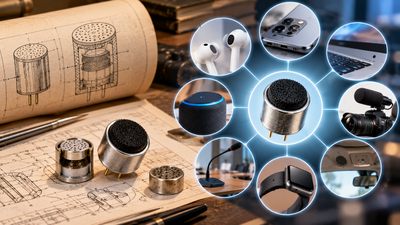
In 1962, James West and Gerhard Sessler, scientists at Bell Labs, patented a compact, inexpensive yet highly sensitive microphone: the electret microphone. Their invention, covered by U.S. Patent No. 3,118,022, soon became widely used because of its high performance, accuracy and reliability, as well as its low cost, small size and light weight. According to the National Inventors Hall of Fame, 90% of the 2 billion microphones manufactured yearly are now electret microphones, found in items from recording equipment to phones, hearing aids, baby monitors and toys. West, born in Virginia in 1931, holds more than 70 U.S. patents.
How does the electret microphone work
The Hall of Fame describes the electret microphone’s construction in specific terms. Thin sheets of polymer electret film are metal-coated on one side to form the membrane of a movable plate capacitor. That capacitor converts sound to electrical signals with high fidelity, which allowed the device to be both small and highly sensitive.The Hall of Fame says the microphone soon became widely used because of its high performance, accuracy and reliability, as well as its low cost, small size and light weight. Its applications include recording equipment, professional sound measurement instruments, phones, hearing aids, baby monitors and toys.
Who was James West before inventing the electret microphone
West was born on 10 February 1931 in Prince Edward County, Virginia. According to the source, his mother, Matilda, gave birth at the family home, which her father had built, because the nearby hospital in Farmville would only admit white patients. West grew up wanting to understand how things work and often took apart items such as his grandfather’s pocket watch to explore the inner mechanics. His parents encouraged his curiosity, and they initially expected him to become a doctor.The Hall of Fame notes that his mother was one of the human computers who became known as the “Hidden Figures”. She went from teaching at a school to working at Langley Research Centre, and she was also an active officer in the National Association for the Advancement of Colored People. Langley ultimately fired her in reaction to her work with the NAACP. The source says this was one of many experiences that fuelled West’s determination to advocate for greater diversity in STEM fields.
How did James West’s work at Bell Labs shape his career
While attending Temple University, West interned at Bell Labs during his summer breaks. The source says the workforce there was more diverse than that of most other companies at the time. After earning his degree in 1957, he joined the company and began working in electroacoustics, physical acoustics and architectural acoustics. During his time at Bell Labs, he was also instrumental in coordinating a summer research programme designed to improve diversity for women and underrepresented minorities throughout the operating companies of AT&T.West carried his advocacy for STEM education and diversity into the Hall of Fame’s education programmes and competitions. He collaborated in developing curricula for the K-6 Camp Invention programme, made personal visits to Camp Invention sites and served as a judge for the Collegiate Inventors Competition. He is a fellow of IEEE, served as president of the Acoustical Society of America in 1997 and 1998, and received the 2006 National Medal of Technology. According to the National Inventors Hall of Fame, he holds more than 70 US patents and is a professor of electrical and computer engineering and mechanical engineering at Johns Hopkins University.
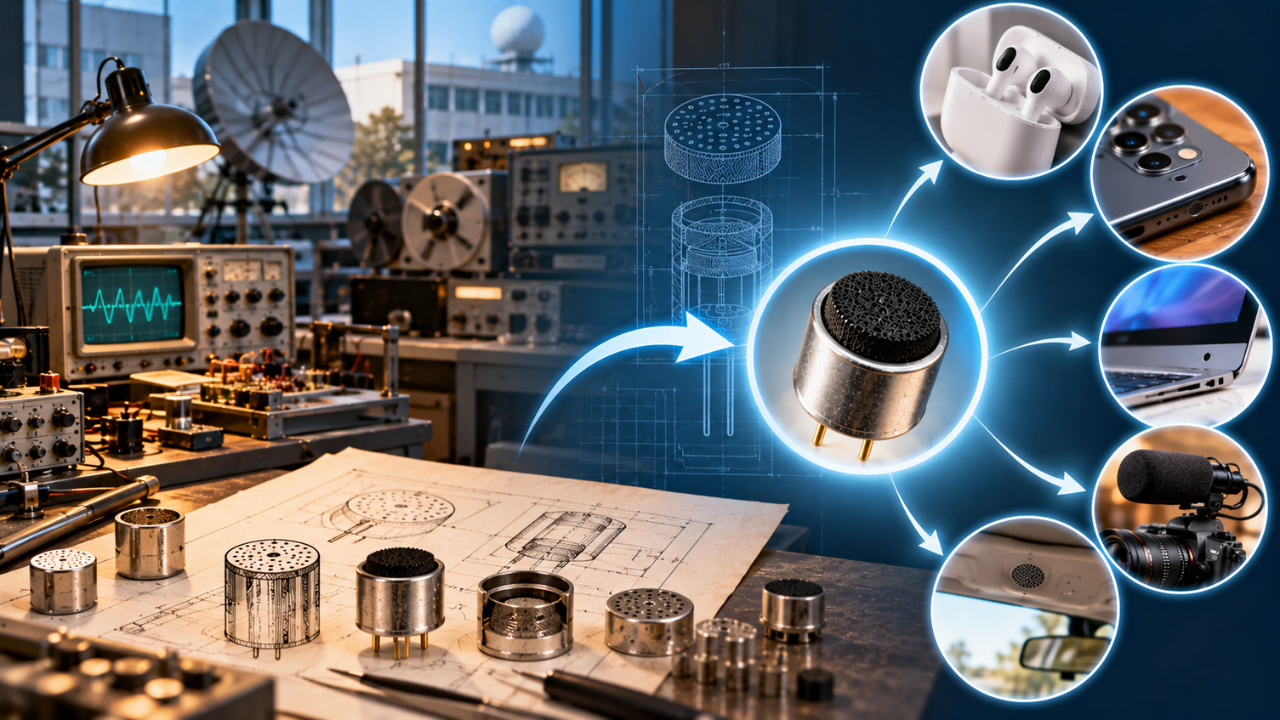
Image AI generated