
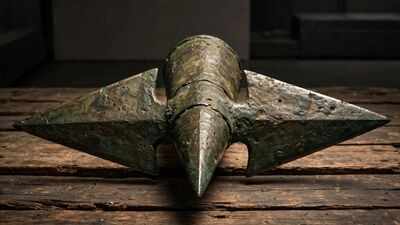
Researchers have successfully recreated an ancient bronze naval ram using experimental archaeological methods, casting the weapon for the first time in more than 1,500 years. Used in Mediterranean naval warfare for nearly a millennium, from around 500 BCE to 500 CE, these weapons were designed to destroy, swamp, or sink enemy vessels. The experimental project recreated a three-bladed waterline ram for a quinquereme, a type of ancient warship, using shipbuilding and bronze-casting techniques reflective of Greek and Roman cultures.According to research published in the Journal of Archaeological Science titled ‘An experimental archaeological project in recreating an ancient bronze naval ram’, the ram measured 75 centimetres in length, 67 centimetres in height and 41.5 centimetres in width, weighing 163.52 kilograms.
Researchers recreate a bronze naval ram using ancient methods
The experimental archaeological project reconstructed a full-scale, three-bladed waterline ram using evidence from ancient texts, images and archaeological discoveries. The researchers examined the construction process from the initial building of the ship’s bow through the modelling of the ram in beeswax, bronze casting and final attachment to the bow timbers.The project aimed to clarify how ancient craftsmen produced these complex weapons and to establish the materials, labour and time required. The experiment represents the first successful casting of a naval ram in more than 1,500 years. The researchers used techniques reflective of Greek and Roman shipbuilding and metalworking traditions.
Where have archaeologists discovered ancient bronze naval rams
Bronze naval rams were weapons fitted to warships and used to damage enemy vessels during naval battles. They remained in use in the Mediterranean from approximately 500 BCE to 500 CE. Their complicated designs and substantial sizes have made their construction a subject of archaeological debate. Since the discovery of the Athlit ram off the coast of Israel in 1980, researchers have investigated how these weapons were manufactured.Approximately 32 three-bladed waterline rams have been identified in the archaeological record. Of these, 27 were discovered at the Battle of the Egadi Islands site off the coast of western Sicily. Other examples were found in Bremerhaven in Germany, Piraeus in Greece, Acqualadroni in Italy and Follonica in Italy.
Researchers test lost-wax casting to recreate an ancient bronze naval ram
The researchers selected the direct lost-wax casting method to recreate the ancient weapon. Earlier interpretations of the Athlit ram suggested that it had been produced using sand-casting with wooden moulds. A later reassessment rejected that explanation and proposed lost-wax casting instead.However, the precise production process remained uncertain. The experimental project supports the theory that ancient naval rams were manufactured using direct lost-wax casting rather than sand-casting or indirect lost-wax casting. This method involved creating a beeswax model that could be used in the casting process.
Beeswax, copper and tin help recreate an ancient naval weapon
The experimental ram measured 75 centimetres long, 67 centimetres high and 41.5 centimetres wide. It weighed 163.52 kilograms. Producing the beeswax model required 20.41 kilograms of beeswax. Approximately one kilogram remained unused, while another kilogram was lost during modelling, leaving a final pre-casting weight of 18.33 kilograms.The study also examined the composition of ancient bronze rams, which typically contained around 90% copper and 10% tin, although the proportions varied between artefacts. By documenting the production stages and quantities of materials involved, the experiment provides information about the practical demands of manufacturing these weapons.