There is a moment that arrives for many people after they leave school or university. The exams are over. The certificates have been collected. The years of structured learning come to an end. For a while, it can feel as though education itself has finished.Then life gets involved.A job changes. Technology changes. An industry shifts direction. Skills that once seemed valuable are no longer enough. Suddenly, learning returns, not as a classroom activity but as a practical necessity.That is one reason a quote often attributed to Carl Rogers continues to feel relevant. It does not define education through grades, qualifications or academic success. Instead, it points towards something less visible and perhaps more important over the long run.The ability to keep learning. The ability to change.Most people know someone who never stopped being curious. They might not have the most impressive qualifications in the room, but they are always picking up new skills, reading about unfamiliar subjects or adapting to situations that others find difficult. They remain students long after formal education has ended.Rogers appears to be talking about that kind of person.His observation shifts attention away from what somebody already knows and towards what they are still willing to discover. It is a subtle difference, but it changes the entire meaning of education.
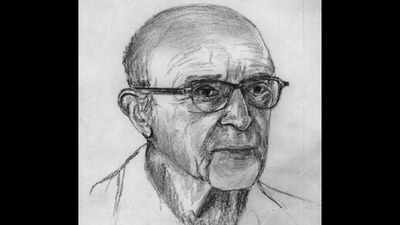
Quote of the day by Carl Rogers
“The only person who is educated is the one who has learned how to learn and change.”
What is the meaning behind the quote
At first glance, the quote can sound slightly surprising.Many people would assume an educated person is somebody with extensive knowledge. Society often rewards visible achievements. Degrees are framed on walls. Qualifications appear on job applications. Academic success becomes a recognised marker of accomplishment.Carl Rogers was looking at the issue from another angle.Knowledge matters, of course. Nobody becomes a doctor, engineer or teacher without learning a great deal. Yet knowledge by itself can become fixed. It can remain tied to a particular moment in time.Learning is different. Learning continues.The quote suggests that education is not defined by how much information a person has collected. It is defined by whether they can continue growing when circumstances change.That idea becomes easier to understand when thinking about real life rather than classrooms. Most people eventually face situations they were never specifically trained for. They encounter new technologies, new responsibilities and new challenges. There is no textbook waiting with all the answers.The people who adapt are often the people who know how to learn.That, more than any certificate, is what Rogers seems to value.
Life has a habit of rewriting the plan
Few people end up exactly where they expected.Someone studies one subject and builds a career somewhere completely different. Another person enters a profession that barely existed when they were a student. Some discover new interests in middle age. Others return to learning after decades away from formal education.Life rarely follows a straight line.This is one reason rigid definitions of education can feel incomplete. If knowledge alone were enough, adaptation would be simple. Yet anyone who has experienced major change knows otherwise.The challenge is not always finding information. The challenge is adjusting.That adjustment requires flexibility. It requires curiosity. Sometimes it requires admitting that old assumptions no longer fit current realities.These qualities are rarely measured by examinations, yet they often determine how well people navigate change.
Some of the most important lessons arrive later
People often speak about education as though it belongs mainly to childhood and early adulthood.In reality, some of the most important lessons arrive much later.A business failure may teach something no classroom ever could. A difficult conversation may change the way a person views relationships. Moving to a different city can challenge assumptions that once seemed obvious.These experiences do not always feel educational while they are happening.In fact, many of them feel confusing, frustrating or inconvenient.Only afterwards does their significance become clearer.Carl Rogers spent much of his career studying personal growth. His work frequently focused on how people develop through experience rather than simply through instruction. That background helps explain why the quote places such emphasis on learning itself.Learning is not limited to formal settings.It often appears in ordinary life, sometimes when people least expect it.
Curiosity matters more than people realise
Some individuals seem to remain curious regardless of age.They ask questions. They explore unfamiliar subjects. They read about things that have nothing to do with their jobs. They enjoy discovering how the world works.This habit often goes unnoticed because curiosity is quieter than achievement.Certificates can be displayed. Curiosity cannot.Yet curiosity frequently sits behind long-term growth.A curious person continues gathering new perspectives. They remain open to information that challenges existing views. They are often more comfortable entering unfamiliar territory because exploration feels natural rather than threatening.The opposite can also happen.Some people become attached to what they already know. New ideas are treated with suspicion. Change feels unwelcome. Over time, learning slows.The quote can be read as a reminder not to lose that sense of curiosity. Education is not merely about reaching a certain level of knowledge. It is about maintaining the ability to keep expanding it.
Change is often uncomfortable
Many inspirational messages talk about change as though it is exciting and straightforward.Real life tends to be messier.Change often arrives with uncertainty. A person may feel inexperienced again. They may need to abandon familiar routines. They may discover that skills which once served them well no longer provide the same advantage.These moments can be unsettling.Most people prefer competence to uncertainty. They prefer knowing what they are doing.Learning requires entering spaces where certainty does not yet exist.That is one reason many individuals resist change even when they know it is necessary. Change forces people into situations where they must learn again.Rogers appears to recognise this reality.The quote does not separate learning from change because the two are closely connected. Genuine learning often changes something. It alters understanding, behaviour or perspective.Without change, learning remains incomplete.
The modern world rewards adaptability
One reason the quote feels particularly relevant today is that modern life changes quickly.Entire industries evolve within a few years. Digital tools appear and disappear. New forms of communication reshape the way people work and interact.Previous generations certainly experienced change, but the pace often feels different now.As a result, adaptability has become one of the most valuable skills a person can possess. Employers talk about it. Educators talk about it. Professionals across different fields talk about it.The reason is simple.Nobody can predict every challenge they will face.What matters is whether they can respond when those challenges arrive. The ability to learn becomes a form of preparation for an uncertain future.
A quieter way to think about education
Something is refreshing about Rogers’ definition because it moves away from status.The quote does not mention prestige. It does not mention qualifications, wealth or titles. Instead, it focuses on a quality that remains available throughout life.A person can continue learning at twenty, forty, sixty or eighty.They can remain open to new experiences. They can revise opinions when evidence changes. They can approach unfamiliar situations with curiosity rather than fear.That approach does not guarantee success.What it does offer is growth.Perhaps that is why the quote continues to resonate. It treats education not as an achievement to display but as a habit to maintain.Knowledge matters. Experience matters.Yet according to Carl Rogers, the truly educated person is not the one who believes learning is finished. It is the one who understands that learning never really ends.
Other famous quotes by Carl Rogers
- “The curious paradox is that when I accept myself just as I am, then I can change.”
- “The good life is a process, not a state of being.”
- “Experience is, for me, the highest authority.”
- “What is most personal is most universal.”
- “People are just as wonderful as sunsets if you let them be.”