
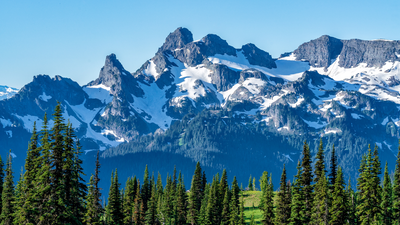
Every holiday leaves a footprint. In India’s mountains, that footprint is becoming harder to ignore. It can be seen in trash left behind by tourists, snack wrappers between rocks and plastic bottles thrown on mountain trails. Not only this, in recent years, it has become increasingly common to see headlines about landslides, road accidents, overflowing tourist destinations, and hours-long traffic jams. But in all this, a difficult question often remains unaddressed, is overtourism leading to all this? Or our inability to manage tourism properly is the reason? Environmentalists believe the issue goes beyond tourist numbers. There are no lines to define the limits of our ecosystem. The real challenge is not the tourism itself, but the gap between the popularity of these destinations and the need to protect them.
Mountains Under Pressure
When landslides strike or roads collapse after heavy rainfall, the tendency is to blame nature alone. But it is not always fair to look it as an environmental crises or human interference only. “It is not an either-or situation, both contribute,” says Ishan Shanavas, an author, environmentalist and founder of Eco-Inspire, a national environmental education venture. “You have of course, larger level climate changes which are definitely affecting the environment. And you have deforestation. So, I think it’s wrong to characterize it as an either-or, both effect the disasters that we see from my understanding.” The Himalayas are among the world’s youngest mountain ranges and are naturally prone to erosion and geological instability. Adding to this, changing weather patterns, road construction, deforestation and growing tourism-related infrastructure, the risks can multiply.
Is overtourism the real problem?
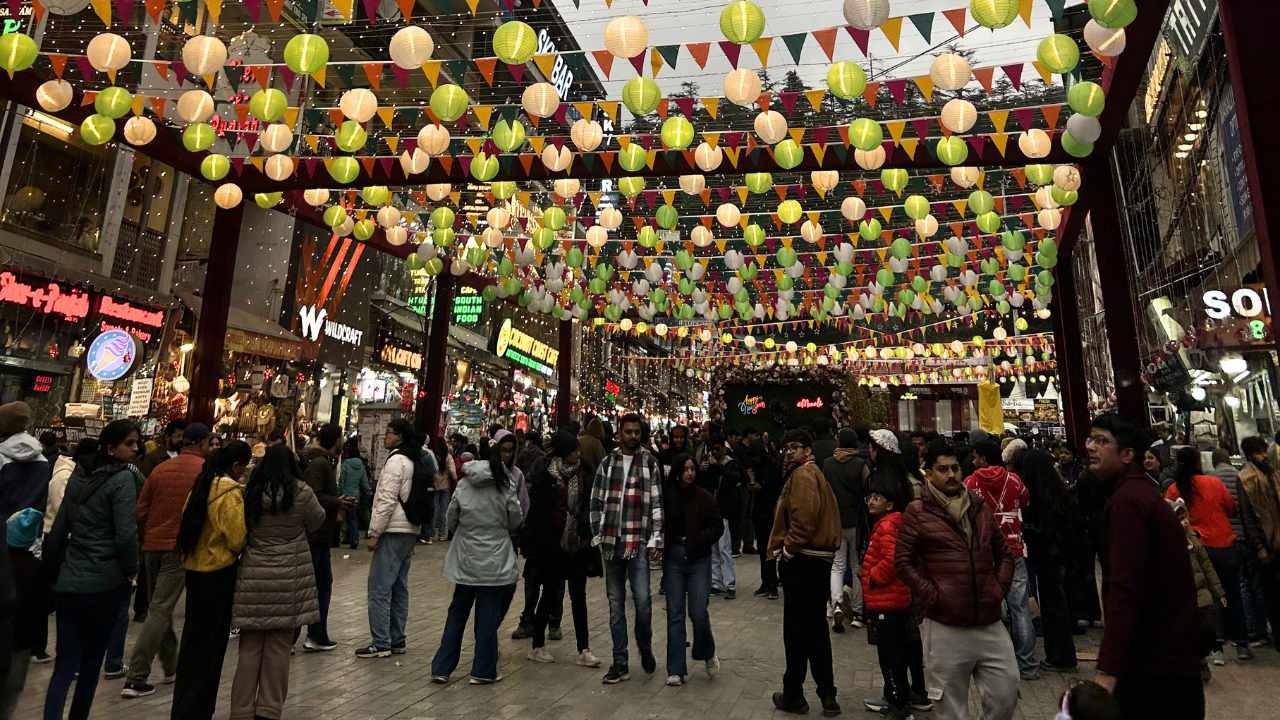
Image Credit: Sneh Rishav
The word “overtourism” has become a catch-all phrase for everything from traffic congestion to environmental degradation. But environmentalists believe the discussion should be more nuanced.In the interview, Shanavas says, “Trying to manage the amount of tourism and and trying to manage the waste generated. That is a challenge that we face.”His observation highlights an important distinction. Tourism itself is not the enemy. In fact, mountain economies across Himachal Pradesh, Uttarakhand, Jammu and Kashmir, Ladakh, Sikkim and Arunachal Pradesh depend heavily on visitors for livelihoods.The question is whether these tourist destinations have the system, and infrastructure to handle the growing tourist numbers. If a destination sees massive footfall of tourists but lacks adequate waste management, or awareness, the consequences become visible over time. Plastic bottles, snack wrappers, disposable packaging and single-use products are increasingly becoming part of mountain landscapes that were once pristine natural beauty. Unlike cities, however, mountains do not have the same capacity to absorb and process waste. “In cities you have active municipal bodies and they’re supposed to be active in cleaning all of this. But in some of the deep interior parts of the mountains removing waste is much harder.” The problem we can say is little of geography and more of behaviour. Remote villages, high-altitude routes and rugged terrain make waste collection expensive and logistically difficult. A discarded bottle in a city may eventually enter a collection system. A discarded bottle in a remote valley may remain there for years.
Trekking trails that need attention
While overcrowded hill stations often dominate headlines, trekking trails, remote campsites and interior mountain routes are increasingly becoming repositories of discarded waste.Ishan says, “It just takes 10 tourists without this ethos to go and permanently damage that place because it just takes perhaps 20 pieces of garbage to forever alter that ecosystem because no one is there to pick it back up.” The concern extends beyond this as many trekking routes pass through wildlife habitats and ecologically sensitive zones, that affects the local communities and animals depending on that ecosystem.
What happens if nothing changes?
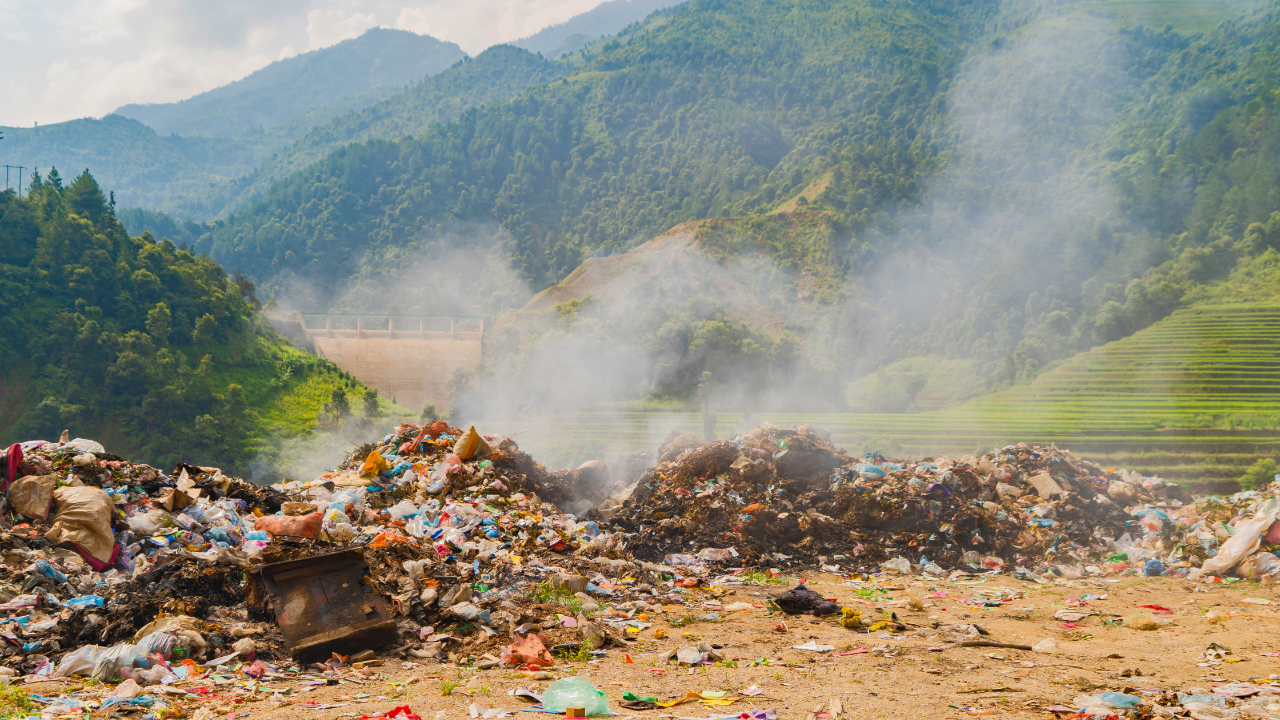
Image Credit: Canva
The future that environmentalists envision is not necessarily one of dramatic collapse, but of gradual degradation.“If we don’t pick it up, it will become so much of an eyesore that we might just end up with a Bhalswa landfill up there,” the environmentalist says, referring to Delhi’s garbage mountain. If waste generation continues to grow without appropriate disposal systems, even the most beautiful landscapes get compromised. “I visited Shimla for the first time exactly 10 years ago. By now we have read enough news articles on how hills are now hot. Half expecting disappointment, and half hopeful, I visited Shimla only to realise that I got robbed of that joy of reaching the cool, breezy Shimla. A three-hour-long traffic jam killed the hill-station for me. I’ve never wanted to visit Shimla after that disappointment.” says Precious Rongmei, an avid traveller and birder. The irony in story of mountain tourism is striking, people visit the mountains to enjoy clean air, peaceful surroundings and beautiful landscapes, but their growing footprint can slowly damage the very places they come to see. Hence, tourism will become a victim of its own success. But, beyond this there are some people who are conscious tourists, and there are organizations that are trying to help. That balance is important. Across India, local communities, volunteers, environmental groups and responsible travellers are already working to reduce the footprint of tourism. The challenge lies in scaling those efforts.
What can be done to improve the situation?
Part of the solution lies in changing behaviour before travellers even reach the mountains. “I would like to see travel agencies encourage tourists to be more mindful,” Ishan says.Travel operators, trekking companies and even airlines serving mountain destinations can play an important role in promoting responsible tourism. Simple actions such as encouraging travellers to carry reusable water bottles, reduce disposable packaging and bring their waste back can collectively make a significant difference.Another idea is creating incentives for responsible behaviour. “If you can deposit waste in a certain area then there is some incentive. I think that is an interesting line to think along.”Interestingly, this idea is already being tested in Himachal Pradesh. The state government has introduced the Himachal Pradesh Deposit Refund Scheme 2025, which requires consumers to pay a refundable deposit on selected non-biodegradable packaging. The deposit is returned when the empty packets are returned to collection systems. This scheme is around an idea of “polluter pays” to improve the recycling of waste. While these measures might not immediately solve the problem, but takes a significant step towards change through prevention.
Collective action is a means of power
While governments, local authorities and travel operators all have a role to play, small behavioral change and a sense of responisibility is also the need. A small action by thousands can cumulatively impact the environment. Simple behavioural changes can go a long way. Carrying reusable water bottles, avoiding excessive plastic packaging, disposing of waste responsibly and ensuring that trash is brought back from trekking routes are small steps that can collectively reduce pressure on fragile ecosystems.“We need to start reversing the tide,” Ishan says. The idea is not to discourage people from exploring the mountains but to encourage them to do so more responsibly. The future of India’s mountains will depend on a collective effort, from authorities that create better systems, businesses that promote responsible travel and tourists who recognise that every bottle, wrapper and piece of waste has an impact. Because in fragile mountain ecosystems, the true measure of responsible tourism is not the photographs people take home, it is what they leave behind