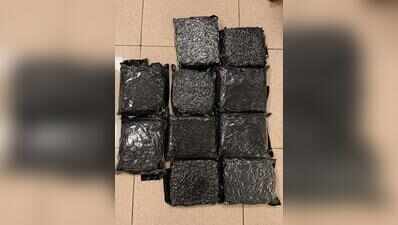
Hyderabad: Two Bangkok-Hyderabad flights accounted for nearly seven in every 10 hydroponic cannabis seizures recorded at Rajiv Gandhi International Airport (RGIA), Shamshabad, between Nov 2024 and June 2026, indicating a courier-driven supply chain that repeatedly relied on the same arrival routes.An analysis of 33 seizure cases shows that two particular international flights — one by an Indian carrier and the other a Thailand airline — featured in 22 cases, accounting for about 134.2 kg of cannabis — nearly 70% of the total quantity seized during the period.Investigators believe traffickers repeatedly chose these flights because they offered convenient direct connectivity, frequency and favourable arrival timings. The 33 cases involved around 40 passengers or accused persons.While the Indian carrier-operated flight appeared more often, the Thai flight carried larger consignments. Ten cases linked to the Thai flight resulted in seizures of about 77.8 kg, averaging 7.8 kg per case, while 12 cases involving the Indian carrier-operated flight accounted for about 56.4 kg, or 4.7 kg per seizure.On Jan 24, 2025, a seizure of 8.4 kg was linked to passengers Puthiyottil Ashraf Shoukkathali, Mahat Karki Anuradha and Mahat Aasha. In another case, couriers Mubashshir Abbas Sayyed and Shabbar Raza Rizvi were intercepted on the Thai airline with 13.9 kg, valued at ₹13.9 crore. Investigators found that syndicates often split consignments among multiple passengers travelling together.Thailand featured as the source in 28 of the 33 cases, accounting for about 169 kg, or nearly 88% of the total quantity seized.Direct Bangkok-Hyderabad travel remained the dominant route, though some passengers arrived via Abu Dhabi, Kuala Lumpur and Hanoi. Three cases mentioned Kuala Lumpur without reference to Bangkok, while Hong Kong figured in one case. One Dubai-linked case stood apart from the broader import pattern.Investigators suspect indirect routings may have been used to avoid scrutiny of direct Bangkok arrivals, though seizure data alone does not establish the motive. In a separate Narcotics Control Bureau (NCB) case, investigators alleged a courier travelled via Dubai to escape attention after a series of interceptions involving direct Bangkok flyers.A senior Directorate of Revenue Intelligence (DRI) official had earlier described the tactic as “airport-hopping”, with traffickers shifting routes through airports such as Hyderabad, Kolkata and Bengaluru when enforcement tightened elsewhere.A 2025 case also suggested Hyderabad was being used as a transit point for moving contraband onwards to Mumbai.Most consignments were concealed in checked-in baggage using false compartments, vacuum-sealed packets or consumer product packaging. Cannabis packets were recovered from cornflakes cartons, cookie boxes, food packages and clothing. In several instances, packets were distributed across luggage to reduce detection risk.One Sept 2025 case exposed another vulnerability. While one checked-in bag was examined upon arrival, a second delayed bag reached the airport later, leading to the recovery of an additional 6 kg.Investigations show that couriers were often recruited with offers ranging from ₹20,000 to ₹40,000 per trip, apart from travel, accommodation and food expenses. Telangana police later alleged recruiters targeted individuals facing financial difficulties.Officials said women were also frequently used as couriers, as syndicates believed they attracted less suspicion during airport checks.Most carriers collected their baggage and attempted to pass through the green channel before exiting the terminal. One March 2025 seizure was made directly at the green channel.Investigators say the risk chain extends well beyond customs checks, covering baggage retrieval areas, transfer corridors, terminal exits and handovers outside the airport. Several cases pointed to receivers waiting outside the terminal to move consignments by road, bus or domestic flights to other cities.A July 2025 NCB case alleged that accomplices were waiting to transport a consignment to Mumbai, while a 2026 Telangana Eagle Force investigation claimed a courier initially exited the airport with 12.7 kg before being intercepted later with an associate.April seizure opened wider network probeThe April 7, 2026, arrest of Sodha Mohsin Bahadurbhai triggered a wider investigation into an alleged international drug trafficking network.Customs officers intercepted Mohsin after his arrival from Bangkok on TG-329 and seized 13.2 kg of hydroponic ganja packed in 22 vacuum-sealed packets. Officials said he was identified through behavioural profiling. Another alleged organiser was subsequently arrested.The Eagle Force later linked Mohsin to an alleged network headed by brothers Hemang Pramod Keluskar and Sudhanshu Pramod Keluskar. Investigators alleged the brothers sourced cannabis in Thailand, recruited couriers across India and moved funds through hawala and cryptocurrency channels.Police further alleged that another courier, Harshad Mansukhbhai Prajapati, managed to leave the airport with about 12.7 kg before being intercepted with an associate near the BHEL crossroads while allegedly heading towards Mumbai.Investigators later claimed the syndicate used 88 couriers across 172 Bangkok-linked trips since 2023.These remain allegations under investigation and are yet to be tested in court. However, investigators believe the cases reveal an organised supply chain built around recruited couriers, concealed baggage and post-arrival handovers, with financiers, recruiters and receivers remaining the primary targets of ongoing probes.GFXAirport and narcotics reports used the terms “hydroponic weed”, “hydroponic marijuana”, “hydroponic cannabis”, “OG Kush weed” and “hydroponic ganja” interchangeably for imported cannabis linked largely to Thailand-based supply chains.Hydroponic cultivation ordinarily refers to growing plants without soil by using water-based nutrient solutions. A Customs officer said such cannabis was being supplied in different flavours, with flavouring infused during cultivation.