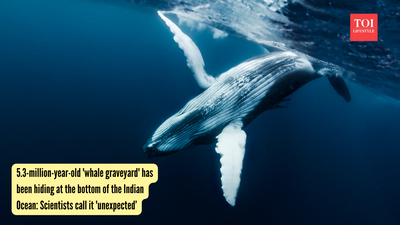
The deep ocean is the largest living space on Earth, and also the least understood. Sunlight never reaches it. The pressure down there could crush a submarine like a tin can. For most of human history, it was easier to map the surface of the Moon than the floor of our own seas.Even though it might be one of the most mysterious places to explore, in that cold and crushing darkness, life still finds surprising ways to survive.One of the strangest truths about the deep sea is that death down there is not an ending. When a great creature dies and sinks to the bottom, it does not simply vanish. It becomes a feast
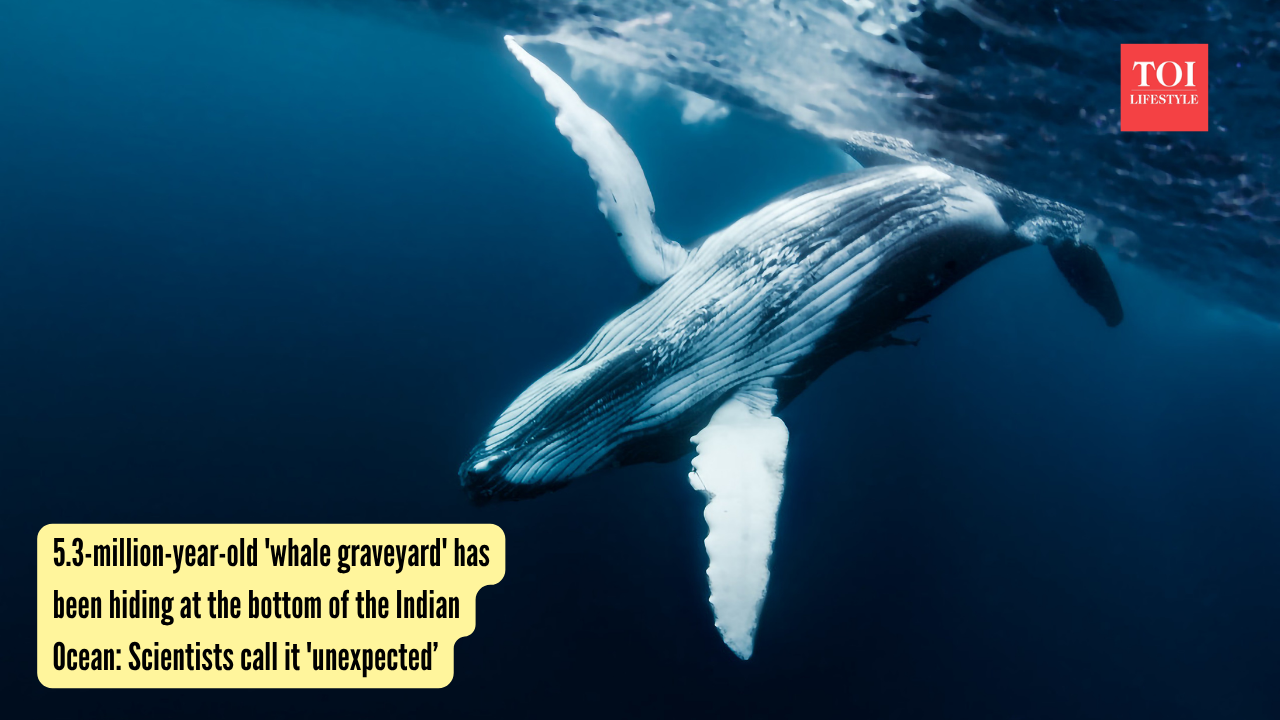
Representative Image
A recent expedition to the Indian Ocean helped us know about the hidden gems of the ocean depths.What the researchers found on the seabed was bigger, deeper, and older than anyone expected.
What is a whale fall ?
When a whale dies, its body can set off an interesting chain of events. The carcass may float at the surface for a while, attracting sharks and other predators, before it weathers, sinks, and settles on the seafloor, where deep-sea scavengers move in to feast. In the food-starved deep volumes of the ocean, a single whale becomes an oasis of nourishment that can support life for years. Scientists call these events “whale falls”.
Scientists discovered a whale graveyard
According to a study published in Nature, a team led by Xiaotong Peng of the Chinese Academy of Sciences uncovered a vast whale necropolis in the Diamantina Zone, extending about 1,200 km along the floor of the southeastern Indian Ocean.Using a crewed submersible called the Fendouzhe, they first spotted whale remains in February 2023, then made 32 more dives over the following month. According to Nature, the site sits at depths between roughly 4,600 and 7,000 metres and holds five modern whale-fall communities and 476 fossil cetaceans.
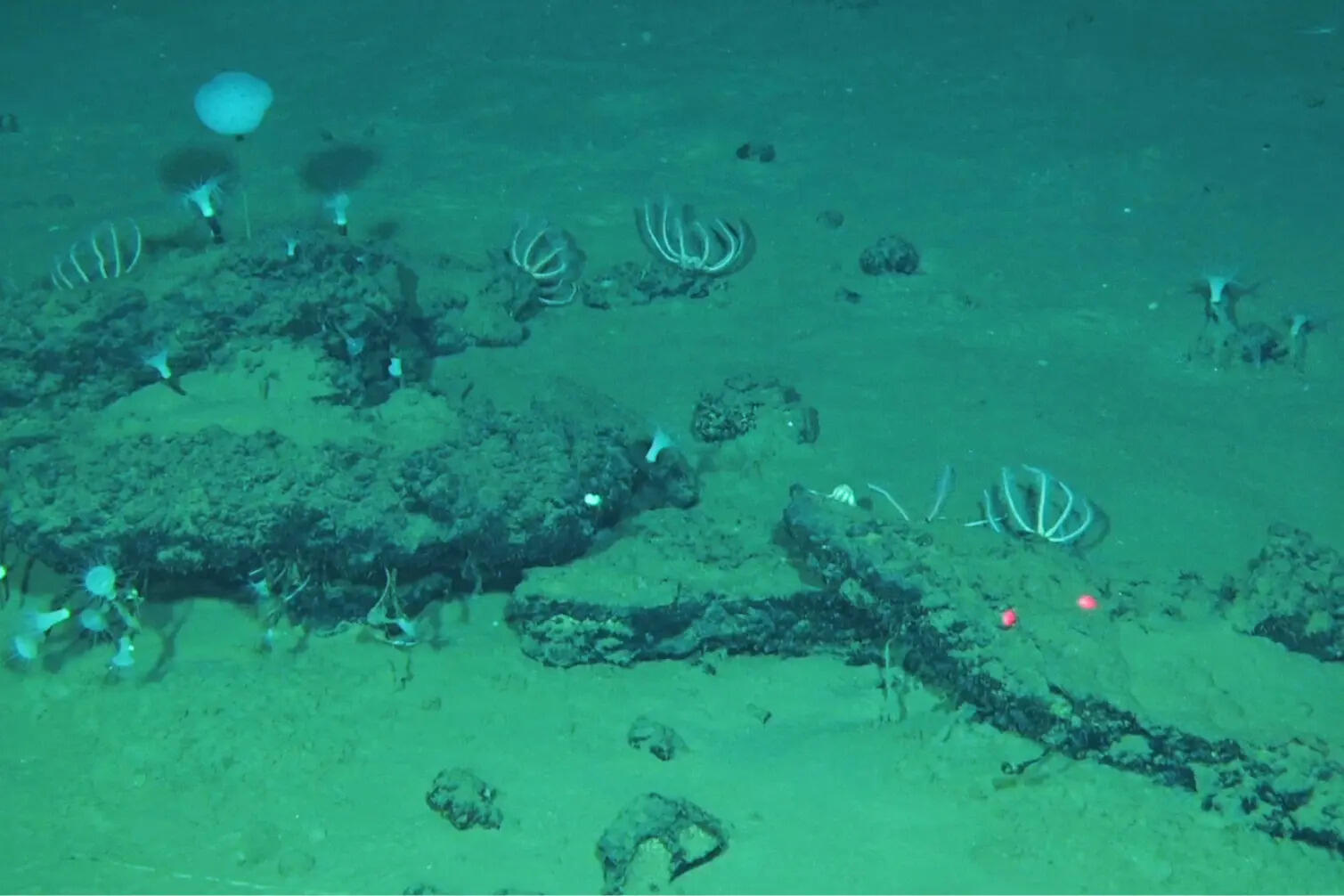
An ancient whale graveyard in the Indian Ocean teems with life
The active whale falls were anything but lifeless
The carcasses were getting well along with odd-looking creatures, including jellyfish, brittle stars, and bone-boring worms, many of which may be entirely new to science. According to the Nature study, these communities are dominated by brittle stars, bone-boring worms, and animals that draw energy from chemicals rather than sunlight.
The bones tell a deep story in time
From 43 recovered fossils, the team identified five beaked whale species, among them the Andrews’ beaked whale and the strap-toothed whale, plus the sei whale, a baleen species. Their largest discovery was a five-metre Antarctic minke whale, and they named a brand-new, now-extinct species, Pterocetus diamantinae. Using isotopic dating, according to the Nature study, whale falls have occurred in this region since at least 5.3 million years ago, making it one of the deepest and oldest whale graveyards ever recorded.
Why so many whales ended up here, and why it matters
So why this spot? The answer likely lies in the V-shaped trench of the Diamantina Zone, which funnels carcasses to the seafloor, in an area that is also a popular feeding ground and the fact that many deep-diving beaked whale species are known to inhabit this part of the ocean. It also tells how much carbon whale falls lock into the deep, and gives a rare evolutionary window into beaked whales.‘