
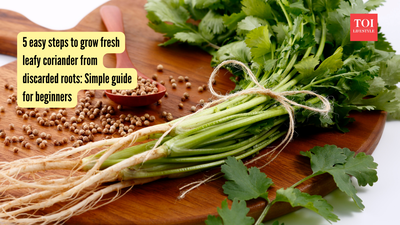
Fresh coriander has a special place in Indian kitchens. It adds bright green colour, aroma, and a final touch that makes simple food feel complete. Many of us buy it every week without thinking much about the cost or how quickly it finishes.But the good news is that it can also be grown easily at home to save repeated trips to the market, providing us with fresher leaves and making daily cooking a little easier.While we look forward to planting seeds in small pots, surprisingly, these herbs can be grown from their roots as well, which we often tend to throw away as garbage.For Mona, who has spent years growing vegetables and herbs at home, coriander is one of the easiest and most rewarding plants for beginners, and she revealed some easy tips to keep the coriander coming back to the kitchen to The Better India.Here are some easy tips to grow coriander leaves from discarded roots:
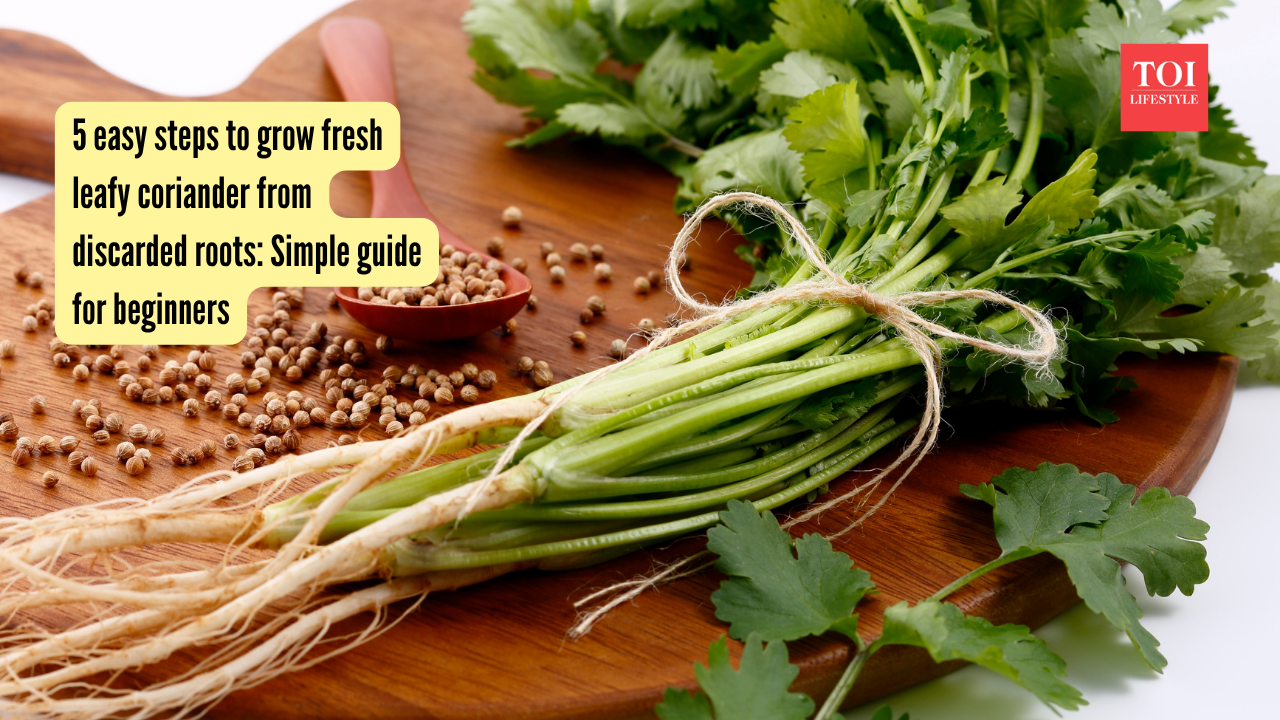
Representative Image
Choose between seeds and fresh roots
Coriander can be grown in two simple ways: from seeds or from the roots of a fresh market bunch. Seeds are the more traditional choice and usually give healthy growth over time. Mona says that root propagation is faster and works well when the roots are still fresh and intact.Usually, people grow it from seeds. Mona carefully chooses coriander roots that are fresh when she gets a new bunch from the market.With this method, since roots are already developed, they start producing new shoots quite early, within a few days.
Use a small pot with rich soil
Coriander does not need a large container, so it can easily grow on balconies and in small homes. A pot or grow bag with good drainage is usually a good choice. The soil should be loose, well-draining, and mixed with compost or vermicompost. Healthy soil helps the plant grow fuller, greener leaves. Drainage holes are important because coriander does not grow well in excess water for long periods.
Sow seeds or roots correctly
Coriander seeds can be lightly crushed before sowing, because each seed capsule contains two seeds. Scatter them evenly and cover them with a thin layer of soil or compost. Keep the soil moist, and seedlings usually appear within seven to 14 days.If using roots, choose a bunch with healthy and fresh roots. After using the leaves, leave about 3- 5 cms of coriander stem and plant them with the stems slightly above the soil line. Fresh roots can begin sending out new shoots within a few days when kept in a bright spot.
Give it sunlight and steady water
Coriander grows best in four to six hours of sunlight a day. Morning sun is gentler in hot weather, so that is often the better choice. Water regularly, but do not let the soil become soggy. The top layer should feel slightly dry before watering again. In warmer months, the plant may need water more often, especially in containers that dry out quickly.
Harvest often and feed lightly
Once the plant has enough leaves, start snipping the outer ones for cooking. Regular harvesting helps in fresh growth, and the plant keeps producing for a longer time.One important tip is to remember to avoid pulling out the whole plant unless it is finished. Adding a little compost every few weeks can also support healthy growth.