
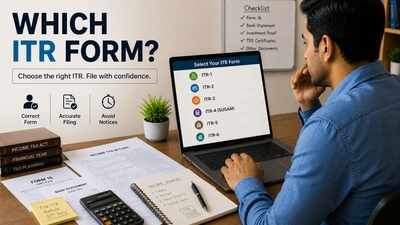
ITR filing FY 2025-26: Any easy mistake to make when filing your income tax return is the form that you choose for ITR. This can especially be the case for salaried taxpayers who can get confused between ITR-1 and ITR-2. There are a total of seven income tax return filing forms and each year there are changes in some of these forms, so it’s important to be informed if your ITR form for a financial year is different from the previous year. For example, till a few years ago, those with capital gains arising from sale of assets like mutual funds etc. were required to file ITR-2 even if their salary income was below Rs 50 lakh.“While selecting the ITR form which is applicable in their case, taxpayers must pay close attention to eligibility conditions linked to their income profile, residential status, and nature of transactions,” says Richa Sawhney, Tax Partner, Grant Thornton Bharat.Also Read | ITR filing: How to pay zero tax under new and old tax regime – know all about Section 87A rebate“Given that these factors can vary from year to year, taxpayers should reassess all parameters annually to ensure accurate reporting. This will also ensure smooth processing of their return. The choice of form should not be treated as a mechanical carry-forward of the previous year’s position. It is also important to note that for AY 2026–27, returns will be governed by the provisions of the Income-tax Act, 1961,” Richa Sawhney tells TOI.
ITR filing FY 2025-26: Which is the right tax return form for you?
The ITR Forms applicable for AY 2026 -27 are as follows:
ITR-1 (SAHAJ)
Eligible persons: Resident Individual (Other than not ordinarily resident)Who can file?
- Total income does not exceed Rs 50 lakhs
- Income from Salary or family pension
- Income from house property (not own more than two houses)
- Income from other sources (except winning from lottery or income from race horses)
- Long term capital gains under section 112A not exceeding Rs 1.25 lakhs
- No loss brought forward or carry forward
Who cannot file?
- Income from business or profession
- Foreign assets, foreign income or signing authority in account located outside India
- Director in any company or holding unlisted equity shares
- Assessable for income on which TDS deducted in hands of any other person
- If the agriculture income exceeds Rs 5,000
- Unexplained money, investments etc.
- Taxes deducted on cash withdrawals or deferred tax on ESOP for eligible start up
- Claimed relief or deduction of tax under the tax treaty with foreign country/specified associations
ITR -2
Eligible persons: Resident individuals including not ordinary residents, and Non-Resident; HUF Who can file?
- Income from Salary, Pension, House property, Capital Gains, Income from other sources
- Individuals not eligible to file ITR-1, i.e. with total income exceeding Rs 50 lakhs, with foreign assets/income, income from more than two house properties etc.
Who cannot file?Individual and HUF with income from business or professionAlso Read | ITR filing FY 2025-26: Old vs new income tax regime – how salaried taxpayers can lower tax outgo
ITR -3
Eligible persons: Individual and HUF Who can file?
- Income from all sources of income including business or profession
- Loss brought forward or carried forward under any head of income
Who cannot file?Individual/HUF eligible for ITR-1, 2 and 4
ITR-4 (SUGAM)
Eligible persons: Resident Individual and HUF (other than not ordinarily resident) , and Resident Firm (other than LLP)Who can file?
- Income from business or profession under presumptive scheme of tax i.e. section 44AD, 44ADA and 44AE
- Total income does not exceed Rs 50 lakhs
- Income from Salary or family pension
- Income from house property (not own more than two houses)
- Income from other sources (except winning from lottery or income from race horses)
- Long term capital gains under section 112A not exceeding Rs 1.25 lakhs
- No loss brought forward or carry forward
Who cannot file?
- Foreign assets, foreign income or signing authority in account located outside India
- Director in any company or holding unlisted equity shares
- Assessable for income on which TDS deducted in hands of any other person
- Agriculture income exceeds Rs 5,000
- Unexplained money, investments etc.
- Taxes deducted on deferred tax on ESOP for eligible start up
- Claimed relief or deduction of tax under the tax treaty with foreign country/specified associations
Also Read | ITR filing FY 2025-26: What documents are required to file your income tax return? Quick checklist
ITR -5
Persons not being Individual or HUF or Company or persons filing ITR-7 i.e. Firms (including LLP), AOP or BOI, Local Authority etc. are required to file ITR-5.
ITR -6
Companies are required to file ITR-6.
ITR -7
Charitable and religious trusts, Political parties, Research associations, Mutual funds, Securitization trusts, Educational institutions, Hospitals etc. are required to file ITR-7.