
Is India going to face 100% tariffs for its continued imports of Russian crude oil? A latest move by the US Senate has sparked buzz on countries like China and India, which import Russian crude oil in huge quantities, possibly being subject to 100% tariffs.The move comes at a time when the US-Iran war has disrupted crude oil flows via the Strait of Hormuz. Middle East countries which act as major suppliers of crude oil to India have been forced to either reduce their oil trade or re-route it. India has stepped up Russian crude oil purchases to make up for the deficit, helped in part by the US sanctions waiver which lapsed recently. However, India has continued to procure Russian crude. In fact, in June crude oil imports from Russia hit an all-time high of 2.6 million barrels per day and are expected to average near these levels in the whole of July too.What is the bill about, what does it say and what does the 100% tariff threat mean for India? Let’s take a look:
What is the US sanctions bill for Russian crude?
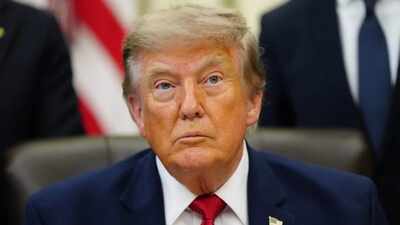
The US Senate has moved a step closer to giving the Donald Trump administration a new trade measure that could be used against countries importing Russian oil. The bipartisan Lindsey O. Graham Sanctioning Russia and Iran Act of 2026 would empower the Trump to impose tariffs of up to 100% on imports from major purchasers of Russian energy.Also Read | 12.5% to 10%: Why Trump admin imposed reduced tariff rate on India & what it meansEven if enacted, the legislation would not automatically trigger tariffs. Under Section 113, the US President would have discretionary authority to levy tariffs of up to 100% on imports from countries buying Russian crude oil and natural gas. The provision allows the administration to decide whether tariffs should be imposed, identify the countries to be targeted and determine the applicable tariff rate.On July 28, the Senate voted 86-12 to invoke cloture, a procedural step that ends debate and allows legislation to proceed to a final vote. Since only a simple majority is required for passage in the 100-member Senate, the bill is widely expected to be approved, according to a Global Trade Research Initiative (GTRI) analysis. It would then need to clear the House of Representatives and receive the President’s signature before becoming law.Before any action is taken, the Office of the United States Trade Representative (USTR) would be required to identify and review the five largest importers of Russian energy every 180 days. Based on current trade flows, those countries are expected to include China, India, Slovakia, Hungary and Azerbaijan. After the review, the President would decide whether to impose tariffs, set the tariff level and determine whether any exemptions should be granted.The proposed legislation allows exemptions for countries that source less than 15% of their total energy imports from Russia and can demonstrate that they are reducing their dependence. Unless Congress extends the provision, the tariff authority would remain in effect for five years.Beyond trade measures, the bill also broadens US sanctions on Russia. It provides for secondary sanctions on shipping firms, insurers and vessels linked to Russia’s “shadow fleet”, expands sanctions targeting major Russian banks, oligarchs and senior political figures, and extends the Iran Sanctions Act through 2031.
100% tariffs threat: What does it mean for India?
GTRI founder Ajay Srivastava is of the view that although China remains the largest importer of Russian crude, India could face greater scrutiny under the proposed legislation. The Trump administration has previously imposed trade measures on India while exempting China. In July 2025, it levied a 25% tariff on Indian imports while leaving China out of the action, before withdrawing the measure in February 2026. “Because the bill gives the President broad discretion over whether to impose tariffs and which countries to target, India could again become a more likely target despite importing far less Russian oil than China,” Ajay Srivastava says.The implications for India are significant. Russia accounted for 30.3% of India’s crude oil imports in FY2026, supplying oil worth $40.8 billion out of the country’s total crude imports of $134.7 billion, making it India’s largest crude supplier. Imports of discounted Russian oil have played a key role in reducing India’s import bill, strengthening energy security and helping keep inflation under control. GTRI notes that the Trump administration is increasingly relying on trade and economic instruments to advance its strategic goals. “Reciprocal tariffs, Section 301 investigations, forced-labour measures, sector-specific duties, and now Russia-related sanctions reflect an increasingly broad toolkit of economic pressure,” Srivastava says.“India should avoid recalibrating its policies in response to every new US action. Decisions on crude oil imports must be driven by India’s economic interests, energy security, and strategic autonomy—not by the threat of additional US tariffs. As long as Russian crude remains commercially viable, New Delhi should continue sourcing it while managing differences with Washington through dialogue and negotiation, rather than making unilateral concessions under pressure,” he adds.