
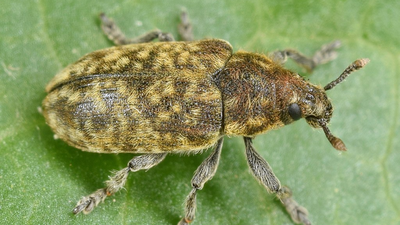
A European beetle released across North America in 1969 to control invasive pasture weeds became an ecological problem after expanding its diet to more than 30 native plant species, including at least seven rare or threatened thistles. The thistle head-feeding weevil (Rhinocyllus conicus) was introduced by wildlife and agricultural authorities as a biological control agent against musk thistle (Carduus nutans), an aggressive Eurasian weed that damages livestock rangelands. Instead of staying focused on its target plant, the insect established breeding populations on native North American plants, causing ecological damage across western nature reserves. According to botanical records from the US Department of Agriculture Forest Service Fire Effects Information System (FEIS), Rhinocyllus conicus larvae feed inside flower heads and consume developing seeds before they can spread. Research archived by the University of Maryland Digital Repository shows that this feeding can sharply reduce seed production in native Cirsium thistles, threatening species such as Pitcher’s thistle (Cirsium pitcheri) and Platt’s thistle (Cirsium xcanescens).
Thistle weevil introduction timeline
1969: R. conicus released in the US to target invasive musk thistle1970s to 1980s: Weevil released across western states and Canada to protect rangelands1990s: Studies confirm feeding on more than 30 native speciesPresent: Federal releases halted, but native plants remain under pressure
Agricultural mandate turns into ecological threat
Musk thistle was accidentally introduced to North America in the late 19th century. It quickly spread through pastures, roadsides, and open fields, reducing available livestock forage. To reduce the need for chemical herbicides, federal researchers approved the import of Rhinocyllus conicus from southern Europe after early laboratory tests examined which plants it could attack. Between 1969 and the mid-1980s, state agencies and university extension services released millions of weevils across agricultural areas in the US and Canada. The insect established self-sustaining populations quickly. Its ability to fly long distances also allowed it to spread beyond farmland into national parks and wildlife refuges.
Weevil impact breakdown
The intended target was musk thistle (Carduus nutans), but the weevil eventually began feeding on more than 30 native Cirsium species. Among the affected plants were C. pitcheri, C. ownbeyi, and C. hydrophilum. The main damage comes from larvae consuming developing seeds inside flower heads, reducing the plants’ ability to reproduce. The insect has also spread across large areas of the US Midwest, Great Plains, and Rocky Mountains.
Destruction of seed production in rare plants
Field studies archived by the University of Maryland show that female weevils lay eggs on the bracts of young flower heads. After hatching, the larvae enter the flower head and eat developing ovules, reducing seed production by as much as 80 percent in affected plants. Many native North American thistles depend heavily on seeds to reproduce. Heavy feeding by Rhinocyllus conicus therefore placed additional pressure on small and isolated plant populations. Pitcher’s thistle (Cirsium pitcheri) is a federally listed threatened plant found mainly in sand dune habitats around the Great Lakes. Hydrophilus thistle (Cirsium hydrophilum) is an endangered wetland plant native to California marshes. Ownbey’s thistle (Cirsium ownbeyi) is a rare species found in rocky canyons across parts of Wyoming, Utah, and Colorado.1969: Initial USDA release of Rhinocyllus conicus in North America1978: Weevils observed feeding on non-target native Cirsium species1996: Major studies document severe seed reduction in native thistles2000s: USDA-APHIS removes R. conicus from approved biological control permits
Policy revisions and modern biological control standards
The spread of Rhinocyllus conicus to non-target plants helped change federal rules governing biological control programs in North America. The US Department of Agriculture’s Animal and Plant Health Inspection Service (USDA-APHIS) eventually revoked permits for interstate movement of the weevil, ending official release programs. However, stopping new releases did not remove the insect from the environment. Established populations of Rhinocyllus conicus continue to survive in the wild, putting ongoing pressure on native thistles across North America.