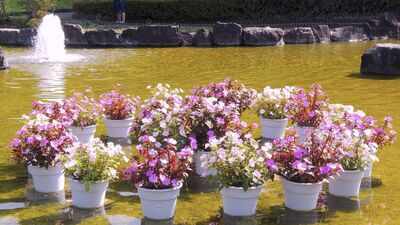
Japanese students at Nakui Agricultural High School in Aomori Prefecture developed a natural water-cleaning system after years of research, and tested it on a pond where recurring algae outbreaks had caused unpleasant smells. According to Japan for Sustainability(JFS), the experiment worked. The pond’s algae outbreaks were completely eliminated, and the system was subsequently installed at eight locations. Known as the ‘Bio-Engine,’ the approach brings together flowering plants, bacteria and fungi instead of relying on conventional machinery and energy. The project later attracted attention not only for cleaning water but also for transforming ponds into colourful spaces filled with flowers. The Nakui Agricultural High school’s environmental research group describes the system as water purification powered by plants and microorganisms, reflecting the idea behind its name. What began as a student research effort became a practical experiment with a wider environmental purpose.
Japanese students’ project combined water purification with flowering plants to eliminate algae outbreaks
The project was developed by ‘Team Flora Photonics’ at Nakui Agricultural High School, where students in the environmental research group explored ways to address water pollution. According to JFS, excessive nitrogen and phosphoric acid from household and industrial wastewater can enter lakes and reservoirs, encouraging the growth of algae and causing problems for affected water bodies. The students spent 5 years researching and testing an alternative approach to conventional water-treatment methods. They developed the ‘Bio-Engine,’ a system that relied on ‘SunPatiens plants,’ nitrifying bacteria and mycorrhizal fungi. In 2016, the team tested the system at a pond on the grounds of a local junior high school. The pond had repeatedly experienced algae outbreaks and unpleasant smells. JFS reported that the trial eliminated the outbreaks completely.Despite its name, the Bio-Engine was not a conventional machine. It was designed to clean water through the interaction of living organisms without relying on an external energy supply. As per the school’s environmental research group, the SunPatiens flowers were provided through the cooperation of seed company ‘Sakata Seed.’ The flowers were installed in a pond at a local park as part of the group’s water-purification work. The flowers also gave the project a distinctive visual character, turning water treatment into something that could also enhance the appearance of a pond. The students even compared their invention with engines made by major automobile manufacturers. This comparison highlighted the system’s unique appeal that ‘it performed an environmental function while incorporating living flowers.’
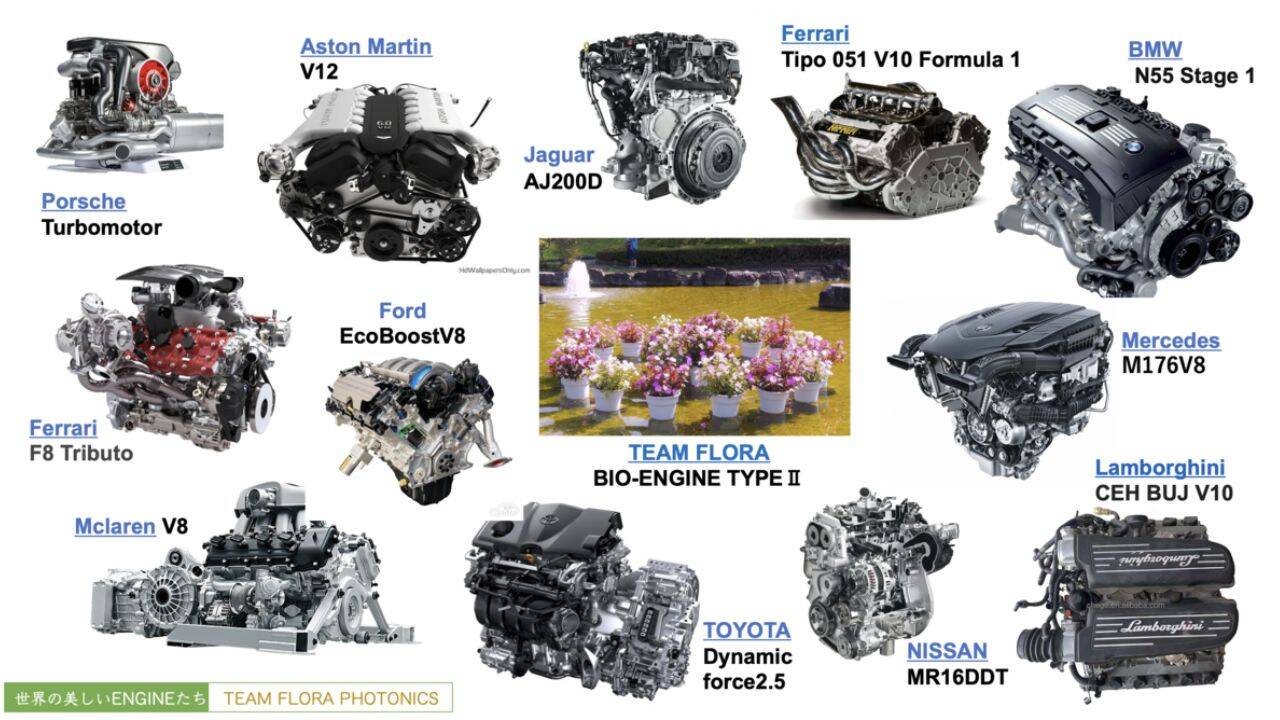
Image Credit: Hatena Blog
The water-treatment experiment expanded to eight sites
The successful pond trial was followed by the wider use of the Bio-Engine. According to JFS, the water-treatment system was eventually established at 8 locations. The project also received national recognition in 2017, when ‘Team Flora Photonics’ won the Grand Prize in a competition organised by the Faculty of Environmental Studies at Tokyo City University. The students had applied the system at ponds in places including a ‘town hall’ and a ‘library,’ while also carrying out environmental education activities. Judges recognised the group’s ambition to develop the system further and explore the possibility of commercialisation, potentially allowing the idea to be used more widely.
The project became an essential part of the school’s environmental research history
According to the school’s official blog, Bio-Engine remains an important part of the school’s research history. The combination of visible flowers and biological water treatment had helped make the project stand out. The story of this project offers a clear example of how student research can move beyond a school experiment. From the successful elimination of algae outbreaks to the installation of the system at eight locations, the Bio-Engine demonstrated a practical approach to improving water environments.