
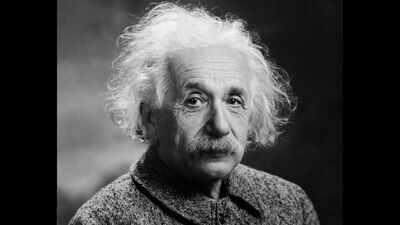
Albert Einstein‘s famous words offer a genuinely different way of looking at achievement. In a world where success is often measured through money, job titles and public recognition, this line asks people to look beyond what they have actually achieved and think honestly about what kind of person they have genuinely become. This particular quote comes from one of the final conversations Einstein ever had, recorded in LIFE magazine’s 2 May 1955 issue, in a piece titled “Death of a Genius,” written by editor William Miller shortly after Einstein’s death on 18 April that year. Success can genuinely bring attention, but value determines what that success actually means. A person can have a genuinely impressive career and still have very little positive influence on the people around them, while someone who quietly helps others may never become famous at all, yet their contribution can genuinely last considerably longer.
Quote of the Day by Albert Einstein
“Try not to become a man of success, but rather try to become a man of value”
The real story behind this quote by Albert Einstein
Miller had travelled unannounced to Einstein’s home in Princeton, New Jersey, a few months before the physicist’s death, bringing along his own son Pat, a Harvard freshman genuinely struggling with the meaning of life, together with William Hermanns, a poet and long-time friend of Einstein’s. Knowing that Einstein had always been one of Pat’s heroes, Miller genuinely hoped the physicist might be able to offer the young man some real wisdom. Einstein’s actual reply, addressed directly to Pat, ran considerably further than the single line usually shared today. “The important thing is not to stop questioning,” he said. “Curiosity has its own reason for existence. One cannot help but be in awe when he contemplates the mysteries of eternity, of life, of the marvelous structure of reality. It is enough if one tries merely to comprehend a little of this mystery each day. Never lose a holy curiosity. Try not to become a man of success but rather try to become a man of value. He is considered successful in our day who gets more out of life than he puts in. But a man of value will give more than he receives.” That fuller context genuinely matters, since it shows this was not a polished aphorism written for public consumption. It was real, spontaneous advice given to a genuinely troubled young man near the very end of Einstein’s own life.
What does Einstein’s quote genuinely mean
The quote draws a real distinction between success and value. Success is usually associated with an actual outcome, a promotion, a profitable business, or a personal goal reached. Value is genuinely different. It connects to what a person actually contributes and the real qualities they bring to the people around them. Einstein’s advice is essentially about changing the question people ask themselves. Instead of constantly asking how successful they are, they can genuinely ask what value they are actually creating. That shift can change how a person genuinely approaches both work and life. A student who focuses purely on getting the highest marks may eventually forget why they are learning at all, while a student genuinely focused on understanding an idea develops something that remains useful well beyond any single exam.
Why this quote still genuinely matters today
The pressure to appear successful has grown considerably in the digital age. Social media lets people display careers, holidays and achievements to enormous audiences, which can genuinely make success look like a constant competition. People may compare their salary or their home with a friend’s or a stranger’s online, even though external success never actually reveals whether someone is genuinely satisfied or making a meaningful contribution. Einstein’s quote offers a genuinely useful counterpoint here. A promotion may be valuable, but so is becoming the colleague other people genuinely trust. Financial success can provide real security, but it never automatically determines a person’s actual character.
Success and value are not genuinely opposites
Success and value do not have to work against each other. A person can genuinely be highly successful and highly valuable at the same time, and the important real distinction is what actually drives the pursuit of success in the first place. Consider two people competing for the exact same promotion. One may be focused entirely on getting the title itself. The other may be genuinely focused on developing real expertise and helping their team, and if that second person does not receive the promotion, they still leave the experience with genuinely stronger skills and relationships. This is really why Einstein’s idea stays so practical. Success is simply an outcome, while value is something a person can genuinely work on every single day.
Focus on what you genuinely contribute
Instead of measuring every achievement purely by status, it helps to think honestly about whether your work actually makes something better, whether that means helping a colleague, solving a genuine problem, or teaching someone a useful skill.
Build genuine character alongside your career
Skills can genuinely help someone get ahead, but qualities like honesty, reliability and patience are what actually influence how people remember them afterward.
Do not let someone else’s definition of success genuinely become yours
A high salary may matter enormously to one person and considerably less to another. Defining your own real priorities can genuinely prevent you from spending years chasing a goal that never actually mattered to you in the first place.
Keep genuinely learning
Value grows once knowledge and experience are actually shared with other people. Someone who keeps learning becomes genuinely better equipped to help others and handle a new challenge when it eventually arrives.
Other memorable quotes by Albert Einstein
- “The important thing is not to stop questioning.”
- “Imagination is more important than knowledge.”
- “Life is like riding a bicycle. To keep your balance, you must keep moving.”
- “Anyone who has never made a mistake has never tried anything new.”
How to apply Einstein’s quote in daily life
Applying this idea genuinely does not require giving up ambition altogether. It simply means adding another honest question to the pursuit of success. At work, it helps to ask whether you are genuinely becoming better at what you do, not just whether you are moving up the career ladder. In education, it helps to focus on real understanding rather than simply collecting a grade, since knowledge becomes considerably more valuable once it can genuinely be applied elsewhere. In relationships, value can genuinely be expressed through fairly simple things, keeping a promise, listening carefully, or being available when someone genuinely needs help. Even small actions can create real value. Sharing useful information with a colleague may never appear on a résumé, but it can still carry a genuine impact.
Why this advice still holds true today
Einstein’s quote challenges one of the most common ideas about achievement, that success is primarily about reaching a position other people genuinely admire. Titles, money and recognition can certainly be meaningful, yet they never tell the whole story on their own. A considerably more lasting measure of achievement may genuinely be what a person knows, how they treat others, and what they leave behind for the people who come after them. Trying to become a person of genuine value does not mean abandoning ambition entirely. It means giving that ambition a considerably stronger purpose, a lesson that clearly meant enough to Einstein himself that he chose to share it with a struggling young stranger in one of the very last conversations of his life.