
Brine deposits beneath the Gofar fault in the eastern Pacific Ocean gave scientists a never-before-seen electromagnetic image of an oceanic transform fault in 2025, and the result was not what researchers expected. Extremely salty fluid appeared to be trapped under the seafloor on one side of the fault but not the other, pointing to a hidden chemical system below the ocean floor. The discovery challenged the long-held view of these faults as simple, predictable boundaries between two tectonic plates, and it raised fresh questions about heat, fluids and molten rock in places where scientists did not previously think to look.
The Gofar fault slides like the San Andreas but ruptures with regularity every five to six years
The Gofar fault lies in the eastern Pacific Ocean, where two tectonic plates slide sideways past each other, much as they do along the San Andreas fault. Large earthquakes there have been strangely predictable, Woods Hole Oceanographic Institution says, with big ruptures arriving every five to six years. That regularity has made the fault an ideal place to study how earthquakes work, and researchers have gathered a wide range of data there, including recordings of many small earthquakes from seismographs placed on the ocean bottom.
Electromagnetic measurements reveal where salty seawater and other fluids hide beneath the seafloor
Unlike seismic data, electromagnetic measurements show how well a material conducts electricity. That matters because one leading explanation for Gofar’s behaviour is that differing amounts of seawater in the seafloor change how the fault sticks, slides and slips, producing earthquakes of different sizes. Salt makes seawater conduct electricity far better than the surrounding rock, so the readings point to where fluids are lurking. The team towed a transmitter deep behind a research ship to send an alternating current through the water, while receivers on the seafloor recorded how buried structures altered the signal.
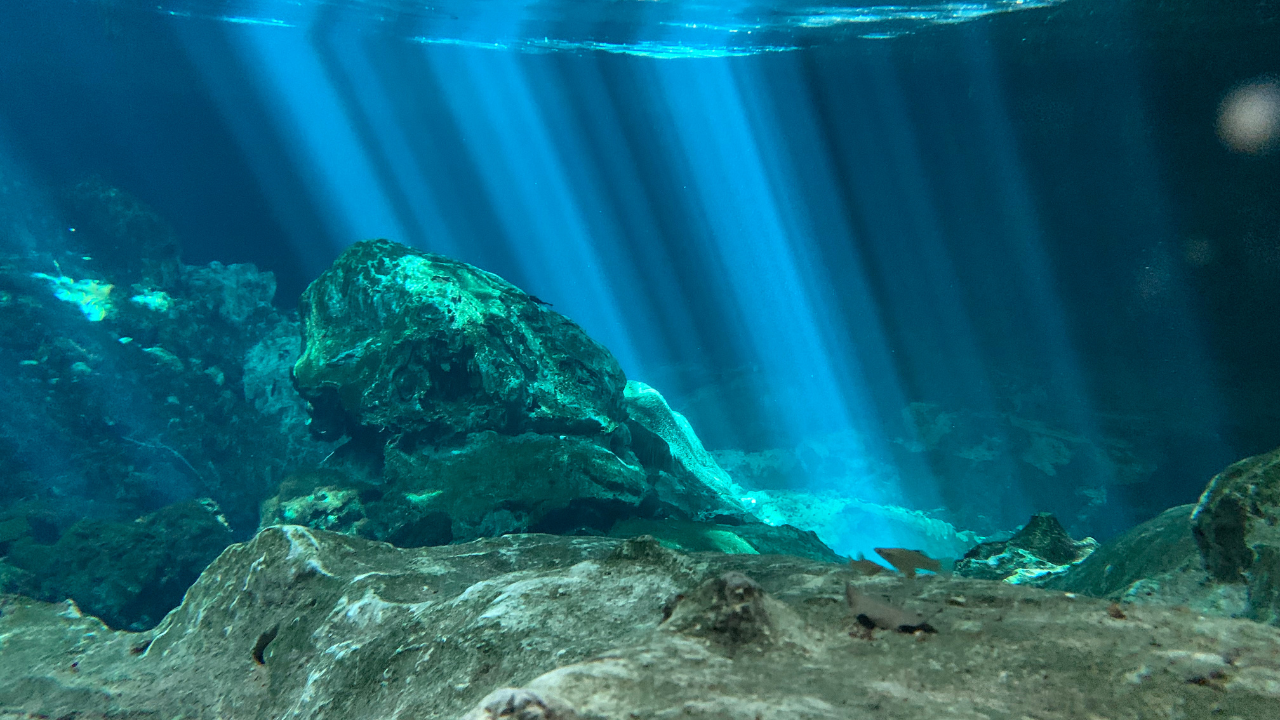
The team found extremely conductive blobs beneath the seafloor on one side of the fault (Image: Canva)
Extremely conductive blobs appeared on only one side of the fault, defying all expectations
Earlier models of such faults suggested one portion would be slightly more conductive than its surroundings. Instead, the team found extremely conductive blobs beneath the seafloor on one side of the fault and none on the other, while other geophysical data from the area showed no matching anomalies. Christine Chesley, a postdoctoral researcher in geology and geophysics and lead author of the study ‘Evidence for crustal brines and deep fluid infiltration in an oceanic transform fault’, said in a Woods Hole Oceanographic Institution news release: “It was shocking to see such a stark contrast across the fault.”
A lot of salt and heat from nearby magma may explain the conductive pockets of brine
Working out the cause took some deductive reasoning. Chesley explained that conductivity this high is not normally seen under the seafloor unless magma is involved, yet seismic velocities appeared unaffected. The team concluded that the blobs needed a great deal of salt to conduct so well, which suggested accumulations of brine. Making brine requires a heat source, and the researchers think it was magma close to the transform fault. Such faults had generally not been considered hosts of magmatic or hydrothermal (hot water-driven) activity, so the idea marked a notable shift.
Do you believe the discovery of brine deposits under the Gofar fault will lead to new insights in earthquake science?
3k+ users shared opinion today
5k+ users already voted today
3k+ users shared opinion today
Transform faults may need a new framework, but their link to the nearby ridge remained unseen
Oceanic transform faults are the least studied of the three major plate boundaries, alongside divergent boundaries such as East Africa, where plates move apart, and convergent boundaries such as the Himalayas, where plates collide. The findings suggested a new framework was needed to understand them. Rob Evans, a senior scientist in geology and geophysics and co-author, said electromagnetic measurements almost always change how scientists view the processes that shape the Earth. The team had a striking image of this section of the Gofar fault but had not yet seen how it connected to the adjacent mid-ocean ridge, and it hoped further funding would support more research. The study, published in Science Advances and announced in April 2025, was funded by the National Science Foundation’s Division of Ocean Sciences, with contributions from several universities and research institutions, including the University of Delaware, Boise State University and Scripps Institution of Oceanography.