
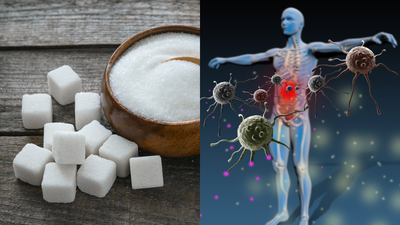
Craving while being unwell is real: the distaste of medicine, bitter pills and syrups. At that moment, we just want to eat something good. While the disease is already making us suffer, the restrictions on our diet make recovery almost not worth it anymore. And we end up eating all the junk and sweets that we normally avoid. But do you know that a sugar-rich diet might just be worsening your gut health?According to a new study, eating more sugar while taking antibiotics may intensify the disruption those drugs cause to beneficial gut bacteria. There’s a vast ecosystem of bacteria in our gut that evolved with us and helps us digest food, support immune function and perform other essential processes. And the antibiotics that we commonly take cannot always distinguish between harmful bacteria and the enormous community of beneficial microorganisms in our intestines. In some cases, the disruption allows other germs to gain an advantage.
How Sugar May Make Antibiotics Harder on Your Gut
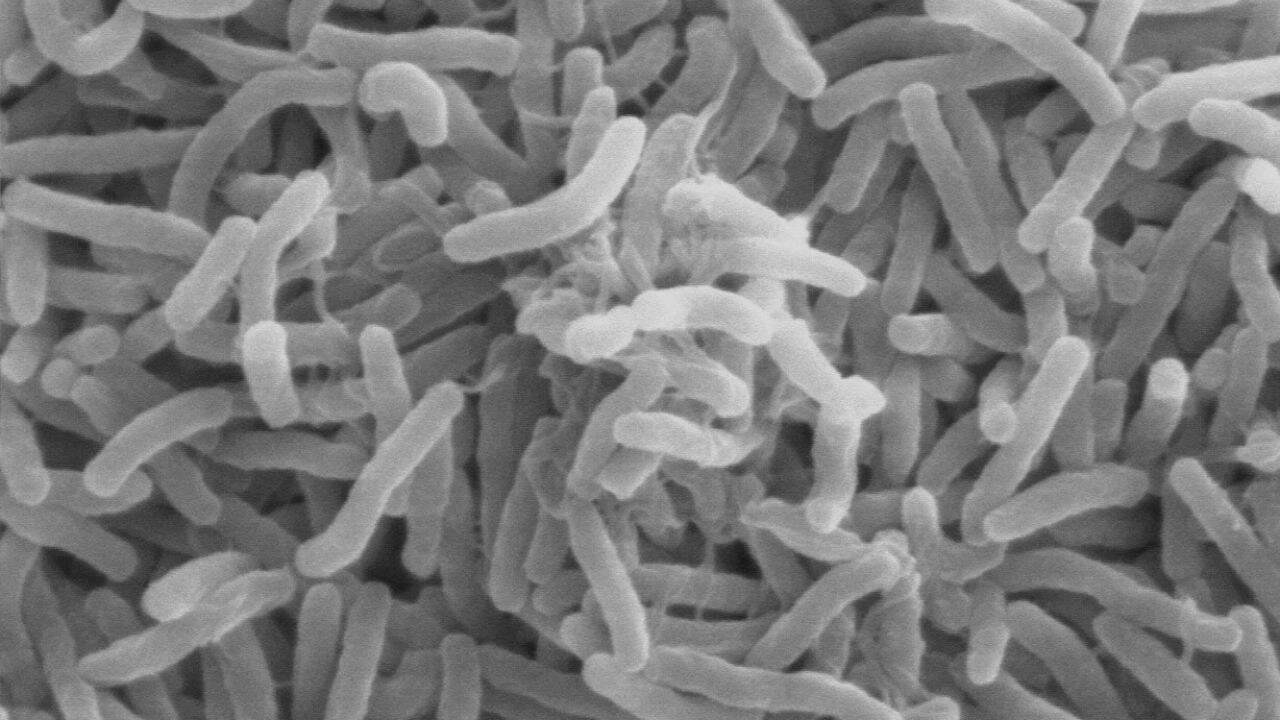
Pictorial representation of Bacteria Image Credit: Wikipedia
The study, published in the journal Nature, examined how sugar consumption was associated with changes in the gut microbiome during antibiotic treatment. Researchers found that among patients receiving broad-spectrum antibiotics, higher sugar intake was associated with lower gut bacterial diversity.Researchers from NYU Langone Health, City of Hope and Memorial Sloan Kettering closely monitored 9,419 meals consumed by 173 hospitalised cancer patients and tracked changes in their gut microbiomes. They also analysed stool samples from a subset of these patients.For every additional 100 grams of sweets consumed in the preceding 48 hours, the researchers’ model predicted an additional 24.1% decrease in mean gut microbiome alpha diversity in the context of broad-spectrum antibiotic exposure. Alpha diversity is a measure of the variety and distribution of microorganisms within a sample, not a type of bacteria.The more diverse the gut microbiome is, the better it may help maintain a balance between different bacterial populations. The researchers investigated Enterococcus, a group of bacteria that includes species capable of causing serious infections, particularly in vulnerable patients. When antibiotics disturb the gut microbiome, some bacteria can gain an advantage over others. The researchers wanted to understand whether sugar could further influence this process.Experiments with laboratory mice supported this possibility. Mice given sucrose alongside antibiotics experienced a substantially greater increase in enterococcal levels than those receiving antibiotics without the added sucrose. These findings suggest that sugar may influence how certain bacteria respond when antibiotics have already disrupted the gut’s microbial balance.However, this does not mean that sugar cancels out the effects of antibiotics or that eating sweets during treatment will automatically lead to an infection. Rather, the study showed how sugar intake was associated with changes in the gut microbiome during antibiotic exposure.
What Happens to Gut Bacteria During Antibiotic Treatment
Antibiotics representative image ()
Antibiotics are among the most commonly used medicines for treating bacterial infections, but their effects go beyond the harmful bacteria responsible for the disease. Depending on the antibiotic, they can also affect beneficial microorganisms living in the intestine. When antibiotics reduce these bacterial populations, they can leave behind an environment in which certain microbes find it easier to multiply.One group that scientists are particularly interested in is Enterococcus. While these bacteria can live in the gut without causing problems, certain species can also trigger serious infections, especially in people with weakened immune systems.The new study suggests that sugar intake could influence this process, potentially giving certain bacteria an additional advantage during antibiotic treatment. However, there is an important caveat: the human participants were undergoing blood stem-cell transplantation and were particularly vulnerable to infections. Whether the same pattern occurs in otherwise healthy people taking antibiotics for common infections remains to be investigated.
Can Your Diet Help the Gut Recover After Antibiotics?
From the research, one thing is clear: diet may play a role in how our gut microbiome responds to antibiotics. To maintain gut health, many people try probiotics to support their gut. That could be helpful in some circumstances, but this study did not establish whether probiotics could prevent the changes observed in patients. Cutting back on sugar-rich foods during an antibiotic course could be worth investigating as a simpler approach, but more research is needed before scientists can establish whether reducing sugar intake leads to better outcomes for people taking antibiotics.The study combined observations from human patients with experiments in mice. While the mouse experiments helped researchers investigate a possible link between sugar and bacterial growth, animal findings do not automatically translate to humans. Further studies involving broader patient populations will be needed to understand how widely these results apply.For now, the research highlights the importance of examining diet alongside antibiotic use. It does not establish that everyone should avoid sugar completely, or that sugar will make the treatment ineffective. Instead, it gives us a reminder that how the body responds to antibiotics may depend not entirely on the medicines alone, but also on what we eat. When doctors tell us to avoid something during a course of medication, instead of taking it as a challenge, we should consider the reasons behind the advice and the research around it. Ultimately, the food we eat contains compounds that may interact with the biological processes affected by our medicines.