New perspectives on the relationship between Indigenous Australians and animals they shared their environment with are emerging from the discovery of a dingo buried nearly 1,000 years ago in western New South Wales. The animal, known as Garli in the Barkindji language, was deliberately buried with people continuing to add river mussel shells to the animal’s burial place for centuries, archeologists working on the remains discovered. The discovery offers a rare glimpse into how Barkindji ancestors cared for dingoes and honoured their connection with them long after death.
A 1,000-year-old dingo burial revealed an Indigenous tradition
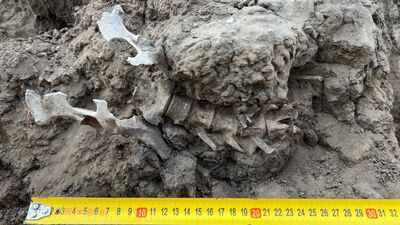
The discovery was made in Kinchega National Park, near the Menindee Lakes along the Baaka, also known as the Darling River, in western New South Wales, Australia. The remains belonged to a male dingo that lived approximately 963 to 916 years ago, according to radiocarbon dating.The findings are detailed in a study titled ‘Garli: A millennium-old dingo burial on the Baaka (Darling River), Kinchega National Park, Menindee Lakes, western New South Wales,’ published in the journal named Australian Archaeology. The research was led by dingo specialist Dr Loukas Koungoulos, with archaeologists and Barkindji community members contributing to the investigation.According to the study, this is the first published archaeological record of a dingo burial from the Baaka River region. It also provides direct dating evidence that such practices were established in Barkindji Country nearly a millennium ago.As reported by the University of Sydney, the burial was found after erosion exposed the animal’s remains along a road cutting. Barkindji Elder Uncle Badger Bates and National Parks and Wildlife Service archaeologist Dan Witter first identified the site around 2000 or 2001.Following further erosion and flooding, archaeologists undertook an excavation in September 2023 at the request of the Menindee Aboriginal Elders Council.
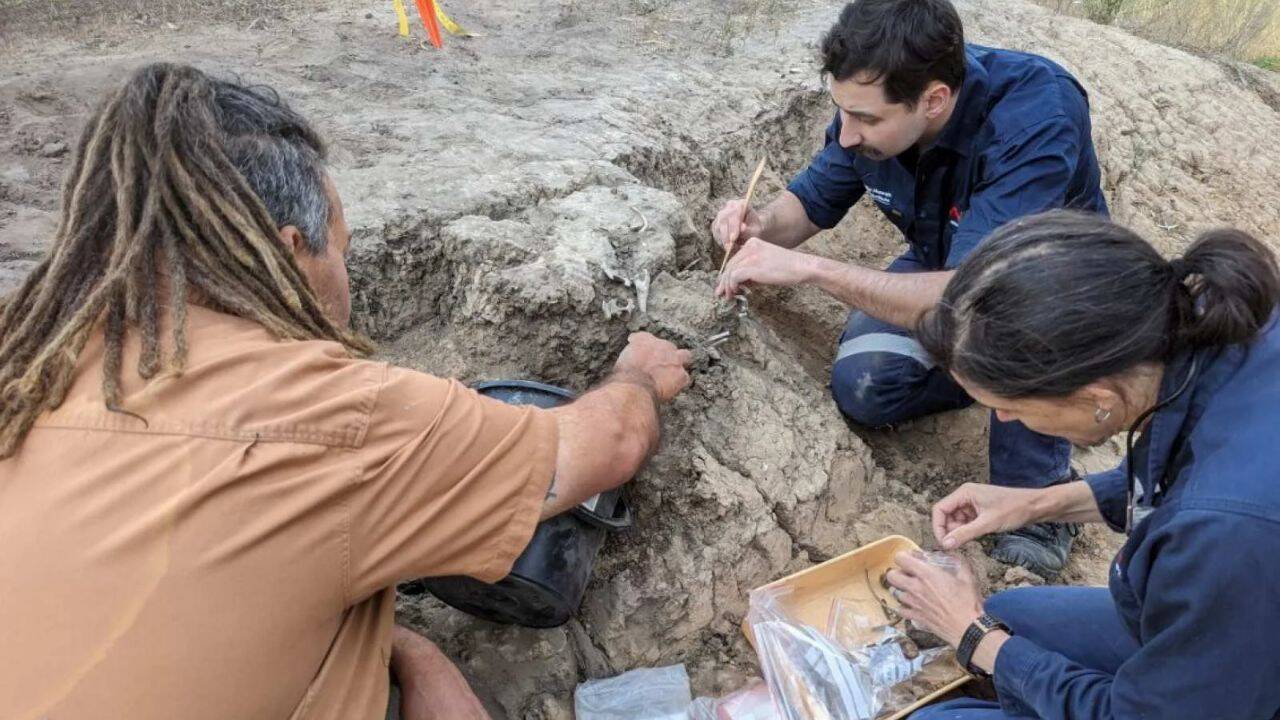
Dave Doyle, Loukas Koungoulos and Amy Way excavating the garli. Image Credit: Sam Player/University of Sydney
What did the animal’s remains reveal about its life
The researchers found several clues suggesting that the dingo had lived alongside people for much of its life. Analysis of its skeleton indicated that the animal was between 4-7 years old when it died, an advanced age for a dingo.The teeth were extensively worn, especially the molars. This pattern suggests that its diet included a lot of abrasive material, possibly including bones, or food mixed with sand and sediment. This differs from the typical tooth-wear pattern observed in wild dingoes, whose diets are more closely associated with catching and consuming prey.The researchers suggest the animal may have been a regular scavenger around human camps or may have been directly fed by people. Such access could have provided a more reliable source of food while reducing the effort and risks associated with hunting.The skeleton also showed signs of healed injuries to the ribs and lower leg. Such injuries suggest the animal suffered from severe trauma. The researchers suggest that it may have been injured while hunting, potentially during an encounter with a kangaroo.Although the injuries do not prove that people treated the animal, its survival and advanced age are consistent with a long period of living alongside humans. Together, the evidence of its diet, healed injuries and age supports the interpretation that the dingo was tamed and had become part of a human community.
Why did people continue adding shells to the burial site
One of the most distinctive aspects of the discovery was the location and subsequent history of the burial. The dingo was placed in a riverside midden, an accumulation of discarded materials, including food remains and shells, created through human activity.The midden continued to be added to for about 500 years after the animal’s burial, according to the study. Radiocarbon dating of the dingo’s remains established its age, while the analysis of mussel shells and sediment helped researchers understand the site’s longer history.Barkindji Elders proposed that the continued addition of river mussel shells represented a ‘feeding ritual’ intended to honour the buried dingo as an ancestor. This interpretation gives the archaeological evidence cultural significance beyond the physical act of burial.The University of Sydney report describes the practice as the first archaeological evidence of such a dingo-feeding tradition anywhere in the world. The interpretation comes from working with Barkindji custodians, whose cultural knowledge helped researchers understand the site’s significance.The study does not claim that every detail of the ritual can be established from the remains alone.
How does the discovery change the understanding of dingo burials
Before this research, documented dingo burials in the Murray-Darling Basin were concentrated largely around the Murray River, particularly its lower reaches. The newly studied burial extends the known geographical range of this practice further north and west along the river system.The researchers point out that the few burials that have been excavated and dated make it difficult to pinpoint when the tradition began, or how it moved between regions.The study also differentiates between taming and biological domestication.We do not know from the surviving bones whether Garli had developed the physical or genetic characteristics associated with domestication, but the evidence suggests that Garli lived closely with people.The loss of much of the skull also limited the researchers’ ability to investigate possible anatomical differences. They interpret the animal as evidence of a longstanding social relationship between dingoes and Aboriginal people without claiming that it represented a fully domesticated population.
The burial reflects a lasting connection with Country
The excavation was conducted in partnership with the Menindee Aboriginal Elders Council and the National Parks and Wildlife Service. Barkindji Elders guided the work and emphasised the importance of treating the remains with cultural respect. A smoking ceremony was held before excavation, and the dingo was returned to the country earlier in 2026, according to the University of Sydney.