
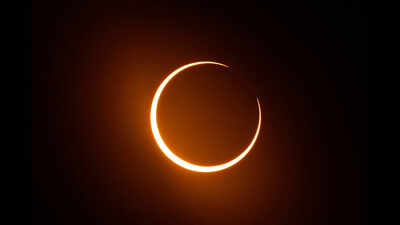
Nasa is urging Americans to watch the August 12 total solar eclipse, even though most of the US will not see totality. The reason is simple: Europe is about to witness its first total solar eclipse in 27 years. The last total eclipse visible from central and western mainland Europe was in 1999. On August 12, the Moon’s shadow will again sweep across parts of Europe, including Iceland and northern Spain. The rare event will give millions of people a chance to see the Moon completely cover the Sun. NASA will also livestream the eclipse, allowing Americans and other viewers outside the path of totality to watch it online.The eclipse will last for a maximum of 2 minutes and 18 seconds. Nasa is highlighting the event as both a major science event and a rare skywatching experience.
Europe will see total solar eclipse after 27 years
The August 12 eclipse is special because it marks the return of totality to central and western mainland Europe after 27 years. The previous total solar eclipse visible from these parts of Europe took place on August 11, 1999. Since then, no total eclipse path has crossed central or western mainland Europe.This time, the path of totality will pass over parts of Greenland, western Iceland and northern Spain, before reaching the Balearic Islands. A small part of Portugal will also fall within the path. For people standing inside the narrow path, the Moon will completely block the bright face of the Sun. Daylight will briefly turn dark and the Sun’s outer atmosphere, known as the corona, will become visible.
Where and when to watch the total solar eclipse
As mentioned, the total solar eclipse will take place on Wednesday, August 12, 2026. The Moon’s shadow will travel across the Northern Hemisphere before reaching Europe. Totality will be visible from parts of Iceland and Spain, while much of the rest of Europe will see a partial solar eclipse.The longest totality will last about 2 minutes and 18 seconds, with some of the best views expected from Iceland.
How to watch the total solar eclipse
People outside the path of totality will not have to miss the event. Nevertheless, Nasa will livestream the total solar eclipse, with coverage beginning at 1:15 p.m. EDT. The broadcast will include live views from locations along the eclipse path, along with commentary from Nasa scientists and eclipse experts.The European Space Agency will also provide live coverage from Spain, giving viewers another way to follow the event.
Will Americans see the August 12 eclipse
The US will not see totality on August 12. However, parts of the country will experience a partial solar eclipse. Alaska and 26 US states are expected to see at least part of the eclipse. Canada will also see the partial eclipse across all its provinces and territories.It is important to state that anyone watching a partial solar eclipse must use certified eclipse glasses or a safe solar filter. Looking directly at the Sun without proper protection can cause permanent eye damage.
August 12 starts a rare eclipse period
The 2026 eclipse is also the beginning of an unusual period for eclipse watchers. On August 2, 2027, another total solar eclipse will cross southern Europe, North Africa and the Middle East. Totality will last as long as 6 minutes and 23 seconds near Luxor, Egypt, making it the longest land-based total solar eclipse between 1991 and 2114.The third event will arrive on July 22, 2028, when totality crosses parts of Australia and New Zealand.