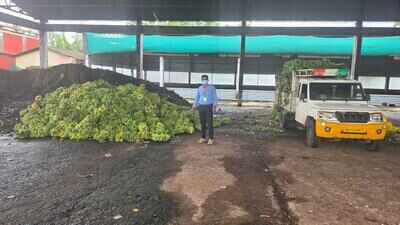
A huge quantity of bananas has been seized in Karnataka after food safety officials reportedly found fruit that had been artificially ripened using chemicals.The raid took place in Udupi district, where officials carried out surprise inspections at shops and godowns in Alevoor, Kemthur and Duglipadavu villages. The action followed information that bananas were being ripened artificially.Officials seized 10,890 kg of bananas, worth around Rs 8.71 lakh. The stock has now been kept under official seizure, with further action expected under food safety rules.For anyone who buys bananas regularly, the incident also brings up a pretty simple question: Is there a way to tell if the fruit has ripened naturally?The answer isn’t always straightforward. You can’t confirm the use10,000+ Kg Of Bananas Seized In Karnataka Over Chemical Ripeningof chemicals simply by looking at a banana. But there are a few things you can check before putting a bunch in your shopping bag.
Don’t be fooled by a perfectly yellow peel
A banana that’s naturally ripening doesn’t necessarily turn the exact same shade of yellow all over.You might see a little green near the stem, some yellow and perhaps a few brown marks. That’s perfectly normal.If the entire bunch looks unusually uniform and yellow, it may make you curious, but it isn’t proof of chemical ripening either. Bananas can naturally look different depending on their variety and how they’ve been stored.
Give the banana a quick sniff
A ripe banana usually has that familiar sweet, fruity smell.If it looks completely ripe but barely smells of anything, that’s one thing you can keep in mind. But again, don’t rely on smell alone. Temperature, storage and the stage of ripeness can all affect a banana’s aroma.
Cut it open if something feels off
Sometimes, the outside and inside don’t seem to match.A banana might look beautifully yellow but remain unusually firm inside, taste less sweet than expected or have a slightly sour flavour. Naturally ripened bananas generally become softer and sweeter as they ripen.So if the peel is screaming “ripe” but the fruit doesn’t feel or taste that way, it’s worth paying attention.
Notice what happens after you bring it home
Another thing you may notice is how quickly the banana changes.Some artificially ripened bananas can develop dark patches soon after appearing ripe. But naturally ripened bananas can also turn brown, especially in warm weather, so this isn’t a reliable test by itself.In other words, one sign isn’t enough to tell you what’s going on.
So, how can you really know?
You can’t be completely certain just by looking at a banana. Colour, smell, texture and taste can offer clues, but they aren’t a substitute for proper food testing.The Karnataka seizure is still a good reminder to be a little more aware of what we’re buying. Choose fruit from sellers you trust, avoid produce that looks unusually ripe while feeling completely unripe, and don’t assume that the brightest yellow banana is necessarily the freshest or naturally ripened one.Sometimes, a banana that looks a little imperfect may simply be the more natural-looking choice.