
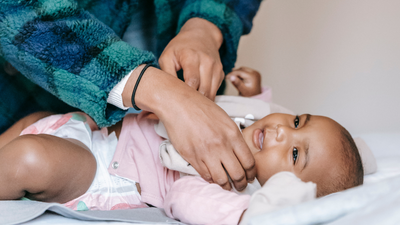
When it comes to taking care of a baby, new parents spend time providing the right nutrition or using the right products. Amid all this, many parents overlook one important factor that affects a child’s health. Choosing the right clothes for a baby seems simple, but in reality even the smallest issues with clothing can impact the child’s health. According to pediatric experts, what babies wear influences everything from skin health and sleep quality to body temperature and comfort. Many mothers only learn these lessons through experience. Here are real-life scenarios that countless parents relate to, along with the science behind why these clothing choices matter.
23 Jun 2026 | 13:53
Do you think awareness is the biggest tool in parenting? Or is experience more important?
Representational image: Canva
“I ignored clothing labels”
For Kajal Shirwalkar, a mother of twin boys from Mumbai, labels seemed unimportant. But she later realized her mistake. Unlike adults, babies wouldn’t be able to describe if the cloth fits them right or not. Kajal noticed that the clothes of both of her babies had become tighter around the neck and arms. It is because some of the clothes shrank after washing. Kajal’s lesson reminds parents that clothing labels can provide washing instructions. Following the recommended care instructions can ensure clothes remain comfortable, safe, and suitable for a growing baby.
“I dressed my baby boy in too many layers.”
For the many parents who welcome their baby in winters, the biggest issue is how to keep the baby warm. Like many parents, Riya Trivedi, a first-time mother from Gurugram, was advised to keep her baby bundled in layers. “”I was terrified he would catch a cold, so I always made him wear two sweaters, socks, and a cap indoors,” says Riya. But one day Riya noticed that her child had developed tiny red bumps over his neck. When she took him to the pediatrician, she found out that the baby was overheating. This is because babies lose heat differently than adults, but they can also overheat very quickly, which can lead to heat rash, irritability, poor sleep, and increased risk of overheating during sleep.Pediatricians generally recommend dressing babies in one more light layer than an adult would comfortably wear in the same environment rather than relying on multiple thick layers.
“I kept using hand-me-down clothes without checking them.”
Recalling her experience with her second child, Monika Gupta, a mother of two from Noida says she thought using hand-me-downs of her first child were the best options to put on her second child. However, one day Monika noticed her baby had something in his hand. When she checked, it was the button that came out of the top he was wearing.fortunately she noticed this in time. This is important because loose buttons, damaged zippers, broken snaps, loose threads, stretched elastics, or torn seams, as these can pose choking, scratching, or entanglement hazards. While hand-me-downs are practical, economical, and environmentally friendly, parents should always check them before having their child wear them.
“Washing new clothes before making baby wear them is important”
Sneha Rawat from Dehradun, who recently became a first-time mother, realised her mistake before it caused any harm to her baby. It’s all thanks to her mother-in-law’s traditional beliefs. While the excitement to put on new clothes on a baby is exciting, Sneha’s mother-in-law believes washing clothes before the first wear purifies them. What Sneha initially considered a traditional belief turned out to be a simple yet important health precaution. Washing baby’s clothes with mild detergent before using them can help remove potential irritants, and make clothes softer and safer. The experiences these mothers shared tell us that choosing clothes for a baby isn’t about finding the right size or the most comfortable fabric. From washing to storing and maintaining, small decisions can save your baby from potential health risks.
How to choose the right clothes for your baby
- Choose soft, breathable fabrics such as 100% cotton or muslin to reduce sweating and skin irritation.
- Pick the right fit. Clothes should allow babies to move freely without leaving marks on their skin.
- Dress according to the weather. In winter, one extra light layer than an adult is usually enough, while in summer, lightweight clothing works best.
- Avoid loose buttons, beads, ribbons, and drawstrings that may become choking or strangulation hazards.
- Always read clothing labels for fabric composition and washing instructions.
- Wash all new clothes before first use with a mild, fragrance-free detergent.
- Inspect hand-me-downs carefully for loose buttons, damaged zippers, broken snaps, loose threads, or stretched elastic before using them.
- Prioritise comfort over fashion. Simple, well-fitting clothes are often the safest choice for babies.