
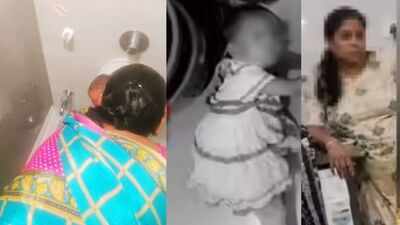
BENGALURU: The disturbing videos, purportedly showing toddlers being abused inside a daycare centre functioning out of a Bengaluru technology campus, have understandably triggered nationwide outrage. The allegations themselves are shocking enough: caregivers locked kids in bathrooms, put them in a front-loading washing machine, sprayed water into their mouths with a jet from a toilet and threatened them into silence. Police will establish, through investigation, the veracity of the videos and individual culpability.But regardless of the outcome of this case, the incident has raised a much bigger question facing urban India. As millions of working parents increasingly rely on daycare centres, especially those operating within corporate campuses, are India’s childcare systems growing faster than the safeguards that are meant to protect the country’s youngest and most vulnerable children?
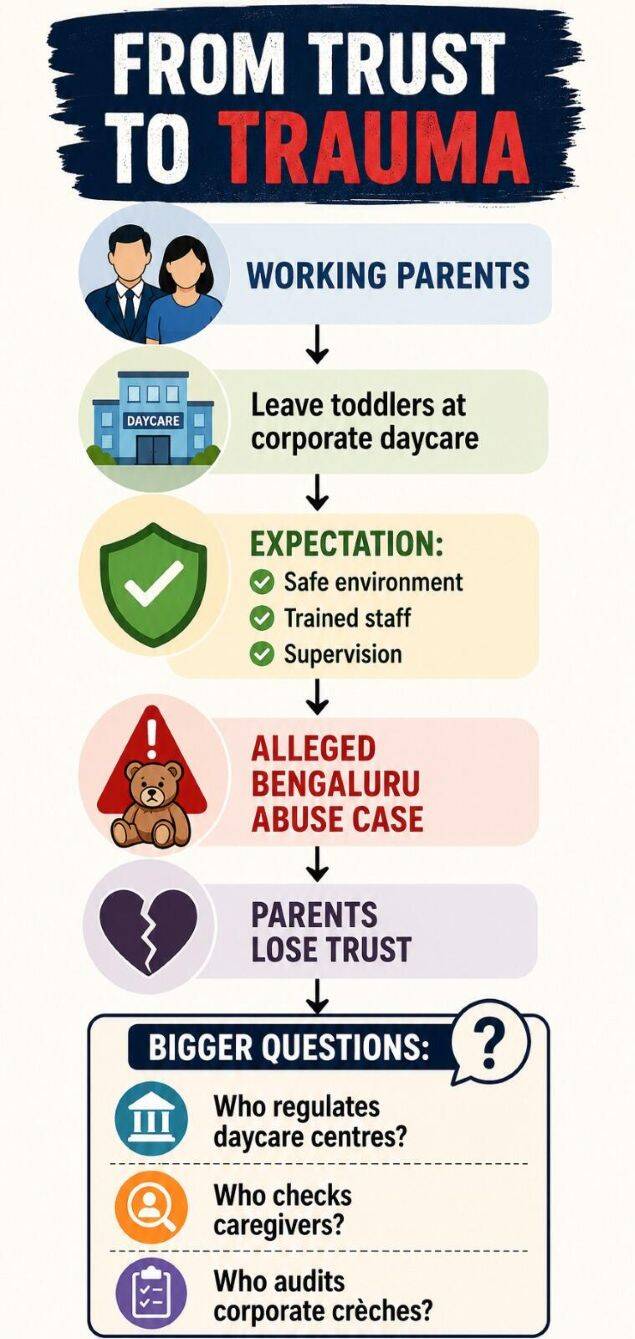
From trust to trauma
A necessity, not a luxury A generation ago, access to daycare was confined primarily to metropolitan cities and a relatively small slice of working families. Today it is the much needed support system for urban India. The reasons are easy to comprehend. These days, in many cities, dual-income households are the norm, not the exception. More women are in the workforce. Joint families are becoming less common and nuclear families are on the rise. Fewer grandparents around to look after young children. Often, professionals change cities for their work and live hundreds of kilometers away from their large families.Workplace daycare centres are now an integral part of the lives of thousands of employees working in India’s technology sector, finance, healthcare and corporate services. Corporate campuses are increasingly touting childcare facilities as an employee-friendly perk to attract and retain talent.It sounds like a perfect setup for parents. The child is close to the jobsite parents can stop in during breaks and emergencies can be handled quickly. The logic is simple. A daycare centre inside a reputed corporate campus must have high safety standards. The Bengaluru incident has put a question mark on that very assumption.
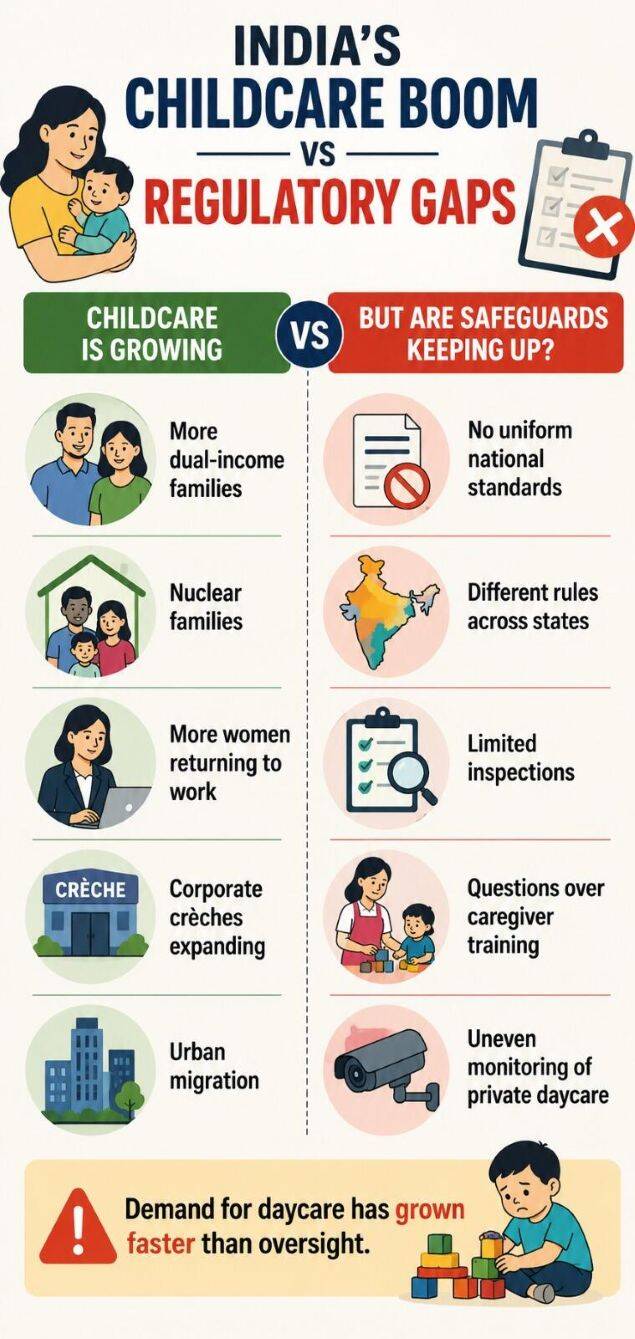
India’s childcare boom vs regulatory gaps
The trust parents can’t verifyWhat is probably the most disturbing thing about daycare abuse is that it often goes unnoticed. Unlike school-going children, toddlers between the ages of two and three often are not able to explain what happened to them. They might not have the words to articulate their fear or mistreatment, or to tell whether it is discipline or abuse.Parents are, then, relying almost entirely on trust. They compare the interiors of daycare centres, with their bright classrooms, cheerful carers, security gates, CCTV cameras and the experiences of colleagues. But none of these necessarily say what happens when parents leave.Children may become unusually quiet, anxious, withdrawn, or fearful, but these behavioural changes are easily attributed to separation anxiety or adjustment problems. That leaves a dangerous information gap, where abuse, if it exists, can go on unnoticed for weeks or months.
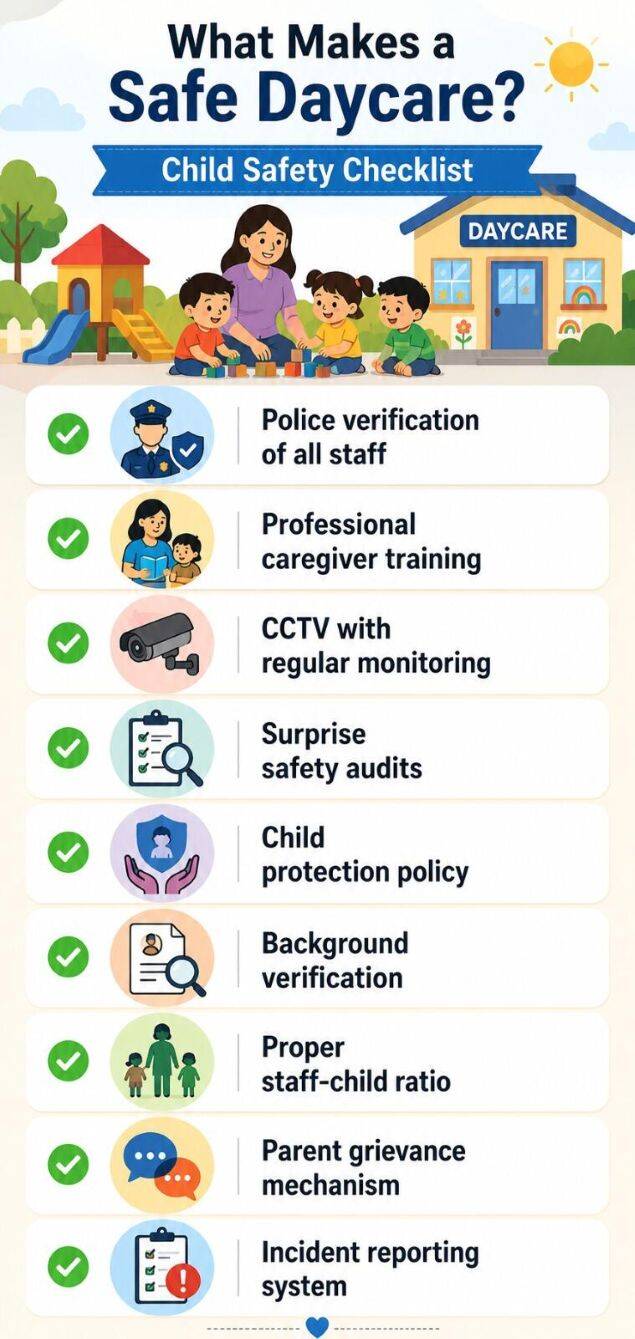
What makes safe daycare
India’s childcare boom has outgrown regulationThe Bengaluru case also brings to the fore a lesser-known fact: India’s childcare industry has grown exponentially but there is little in terms of regulation. While schools are governed by relatively well-defined regulatory frameworks, daycare centres must operate under a patchwork of state-level rules, municipal regulations, and local licensing requirements. Standards vary widely from state to state and enforcement is often lax.There are still lots of big questions.Who licenses daycare centers?Are inspections carried out regularly?How often do you do training or evaluation of caregivers?Yes, both background check and police verification are necessary.Once a centre is up and running, who checks that it complies?Parents tend to assume that periodic inspections are being done. In fact, how much oversight there is really depends on where the daycare is and who is running it. The result is that often, quality is more dependent on the operator than on regulatory oversight.Corporate responsibility extends beyond the provision of space. The alleged abuse took place at the offices of a major technology company, but the daycare was operated independently.This is a key governance question raised by that distinction. The companies provide workplace daycare facilities. Is it enough to provide place and infrastructure? Or does it extend to requiring the childcare provider to meet high standards of child protection?Many organizations hire specialized vendors to provide daycare services. However, you cannot outsource reputational risk. Employees generally view daycare facilities as part of the employer’s ecosystem. They trust them because they trust the firm.This makes due diligence particularly important. Perhaps more attention deserves to be paid to independent audits, surprise inspections, caregiver certification, background checks, grievance mechanisms, CCTV surveillance and clear child safety protocols. It’s not just about employee welfare anymore. It’s about child protection.Cameras will not create accountabilityThe alleged abuse ironically surfaced because of videos that surfaced. More and more modern daycare centres promote CCTV surveillance as a major safety feature. Some even let parents watch live video from cameras. But CCTV alone can’t stop abuse. You have to watch the footage actively. Recordings shall be kept for appropriate periods. Remove blind spots.Parents need to know who watches footage, how complaints are investigated and how quickly suspicious behaviour leads to intervention. Technology can capture abuse in the moment. It does not substitute for human responsibility.The caregiver’s challengeIndia also has a quiet structural problem – shortage of trained childcare professionals. Demand for day care has skyrocketed, but the supply of qualified caregivers has not necessarily kept up. The question then is one of recruitment standards. What is the expected educational background? What is the spectrum for child psychology training? Staff are trained in positive behavioural management not punishment. Are police verification and reference checks done uniformly? How often are caregivers trained to refresh their skills?There are lots of day care workers who work hard with many children for little pay. Burnout and fatigue are real workplace issues. But that cannot be an excuse for abusive behaviour. Instead, it points to the need for improved recruitment, supervision, training and accountability across the childcare system.Compliance vs qualityWith the amendments to the Maternity Benefit Act, India’s childcare landscape too changed by mandating that certain establishments employing a specified number of workers should provide crèche facilities.It was a laudable goal: to help women continue their careers after childbirth. But the rapid growth of workplace daycare has also created a new problem. Has the growth in facilities been matched by equally stringent quality standards?Or have some organisations been all about compliance with the rules, with day-to-day management left to third-party operators? The Bengaluru case is likely to fuel that debate.The voiceless victimsOne of the biggest tragedies of the very young children cases is the victims are often unable to tell their own stories. Developmental psychologists have long stressed the importance of early experiences in the first five years in shaping emotional development, attachment, trust and learning.Fear during this formative period may be manifested by disturbed sleep, regression in behaviour, anxiety, excessive clinginess or reluctance to go to day care. Toddlers can’t tell us what happened, so adults need to be even more vigilant for warning signs. Behavioral changes that cannot be explained should be investigated, not ignored.Towards a more robust child protection framework: This episode also raises an important policy question. Today, schools are increasingly equipped with child protection policies, complaint mechanisms, background checks and formal reporting systems. Should day cares be held to similar standards?For years, experts have called for stronger safeguards, such as mandatory caregiver certification, periodic audits, surprise inspections, child protection officers, independent complaint mechanisms, minimum staff-child ratios and compulsory reporting of serious incidents. Uniform national standards could also cut wide variations in quality between different states and operators. Rather than making childcare providers fearful of regulation, the objective should be to reassure parents that minimum safety standards are consistently enforced.Multiple criminal investigationsThe Bengaluru case will be settled through due process of law. Allegations should be fully investigated, evidence examined carefully and responsibility attached where wrongdoing is found. But regardless of the legal outcome, the episode has already revealed an uncomfortable truth.India’s cities are increasingly being built for working parents. Workplace daycare centers are no longer a luxury, but a necessary part of the economic life of cities. Millions of parents give their most precious possession to strangers for eight to 10 hours a day. That trust cannot be based on reputation, branding or corporate addresses alone.It must be built on transparent systems, rigorous oversight, trained caregivers and accountability beyond paperwork. The Bengaluru incident is not about five caregivers or about one daycare center. The question is whether the childcare ecosystem in India is changing fast enough to match the changing realities of urban families.It’s not just a welfare issue for a country that aspires to be a global economic powerhouse, and is encouraging more women to join the workforce, to make sure that its youngest citizens are safe in the very places that are supposed to protect them. It tests governance, corporate responsibility and public confidence.