
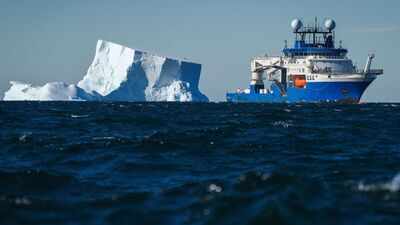
In January 2025, a massive event occurred at the Antarctic that changed what we know about life in the extreme cold. An iceberg the size of Chicago, named ‘A-84,’ broke away from Antarctica’s George VI Ice Shelf. As this massive block of ice, roughly 19 miles long and 11 miles wide, drifted into the sea, it revealed a hidden world. For centuries, more than 200 square miles of the seafloor had been buried under a slab of ice 150 metres thick, completely cut off from the sun and the open ocean.After conducting a deep research on this seafloor, scientists found out that it was not a barren wasteland, but a colourful landscape of marine life that has left the global scientific community speechless.
How did scientists find the ‘A-84 iceberg ’ location in such a small time
It was a stroke of incredible luck. While most scientific expeditions are planned years in advance, this discovery happened because of a research pivot at sea. An international team was already working nearby in the Bellingshausen Sea on board the Schmidt Ocean Institute’s research vessel, the Falkor (too).When the team realised the A-84 iceberg had calved, they changed their original plans and rushed to the site. They reached the newly exposed area on 25 January, 2025 less than two weeks after the break, making them the first humans to ever investigate this specific region of the seabed. Dr Jyotika Virmani, executive director of the Schmidt Ocean Institute, noted that such moments offer a rare chance to witness the ‘untouched beauty’ of our marine world for the first time.
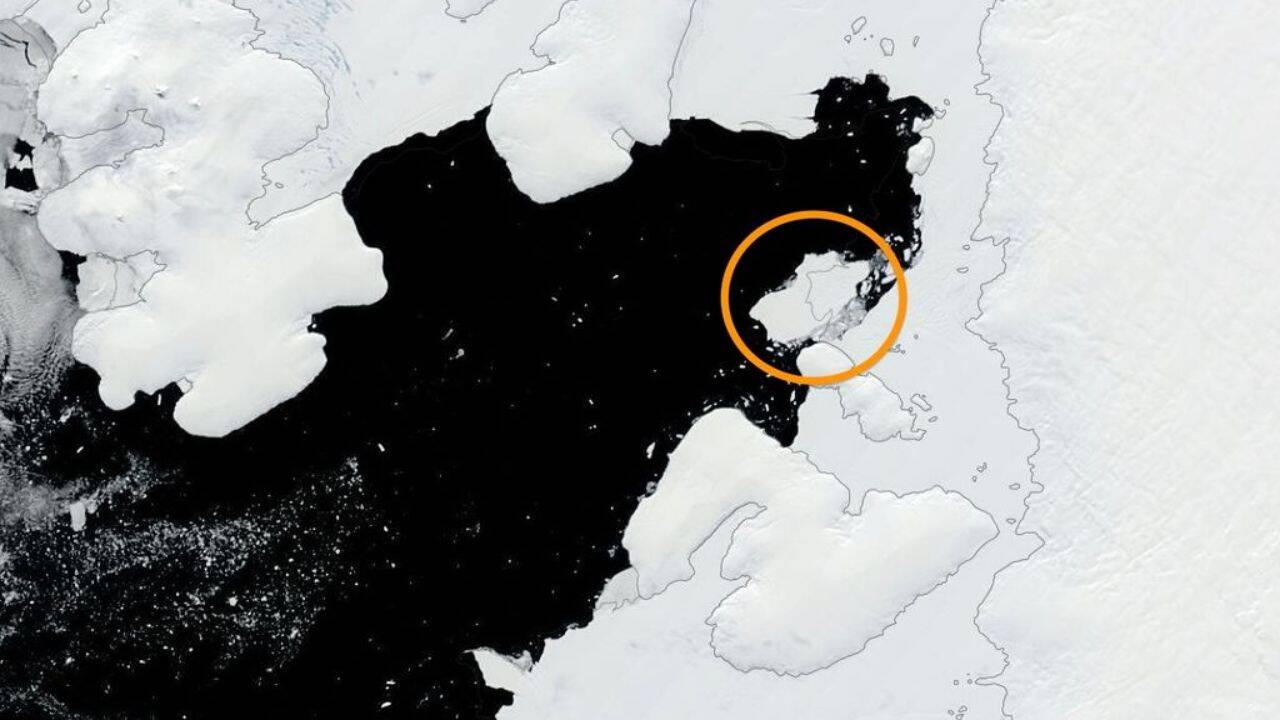
Image Credit: NASA’s Earth Science Data and Information System (ESDIS)
What tools did they use to explore the deep seafloor formerly beneath the A-84 iceberg
To see what was happening nearly 1,300 metres below the surface, the team deployed a high-tech underwater robot called ‘SuBastian.’ This remotely operated vehicle (ROV) acted as the scientists’ eyes and hands in the freezing, pitch-black water.For eight days, the robot continuously explored the seafloor, sending back high-definition livestreams of a marine world that was hidden under the iceberg for perhaps hundreds of years. This expedition marked the first time an ROV had been used to conduct such a detailed study of an area that had been hiding under the ice.
Why the breaking away of massive icebergs threatens the future of our coastal cities
On one hand, the discovery of a hidden ecosystem is thrilling. On the other hand, the breakaway of such icebergs serves as a warning of the environmental crisis happening at the poles. The Antarctic ice sheet is currently disappearing at an alarming rate, losing approximately 150 billion tons of ice mass every year. Research suggests that the equivalent of three Olympic-sized swimming pools of glacier ice is melting into the ocean every single second, a primary driver of global sea level rise. For low-lying coastal cities such as New York and Mumbai, this instability poses a direct and catastrophic threat of sea level rise that can lead to devastating flooding and the eventual displacement of millions of people. Understanding the historical behaviour of these ice shelves is now critical for creating the policies needed to protect our coastlines before the damage becomes irreversible.
What kind of creatures are living down on the seafloor
Many scientists were not sure if any life could survive in such a harsh, isolated region. However, the cameras revealed a vibrant, thriving ecosystem. The seafloor was crawling with a diverse group of animals of all shapes and colours like the ‘Giant phantom jellyfish’ that can have a ‘bell’ over a metre wide and ribbon-like arms that stretch more than 10 metres long. Another animal was ‘ancient sponges’ that grow at a rate of less than two centimetres a year and that’s why their massive size suggests they have been thriving for decades or even centuries.The team spotted bright octopuses, giant sea spiders, icefish, cup corals, and snails. The researchers believe that they have already identified at least six new species, with many more still waiting to be analysed in the lab.
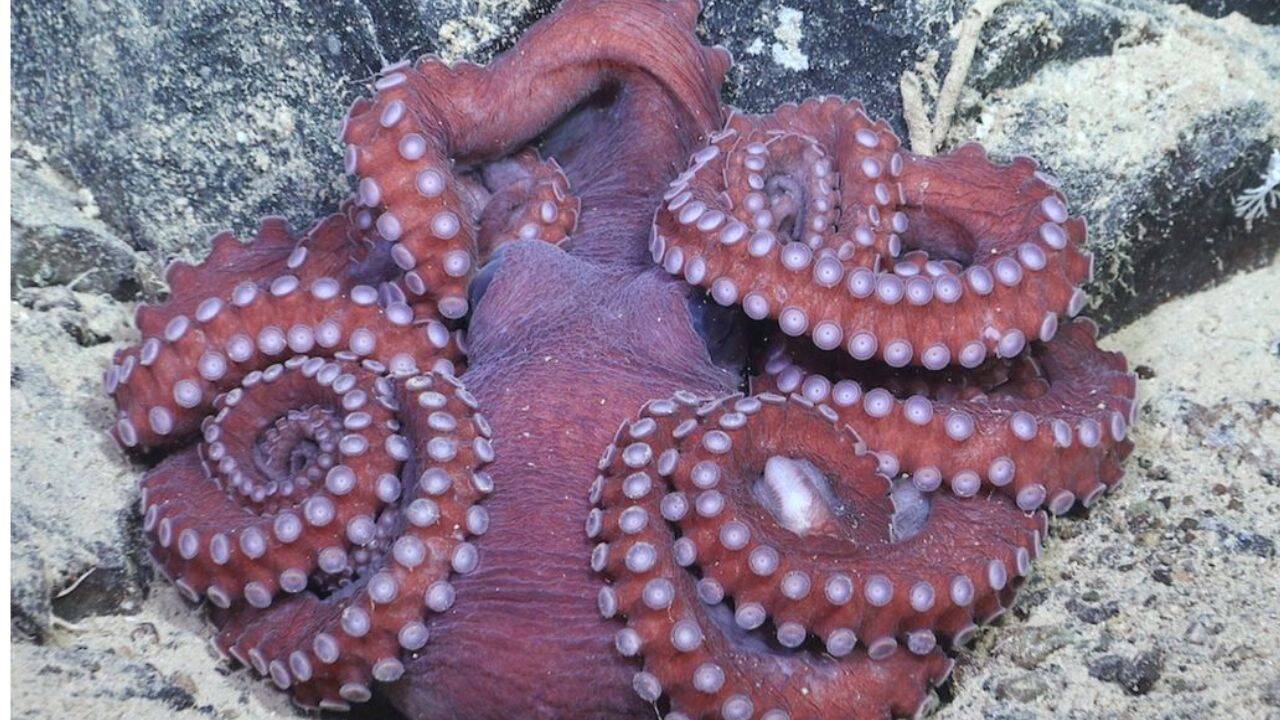
Image Credit: Schmidt Ocean Institute.
How can these animals survive under this iceberg without any sunlight
This is the biggest mystery of the expedition. In most of the ocean, life depends on the bits of food and nutrients that sink down from the ocean surface exposed to the sun. But with 150 metres of solid ice blocking the sunlight for centuries, no food could fall from above.Then how did they eat? Scientists are still working out the exact answer, but they have a strong theory. They suspect that powerful ocean currents and meltwater (water formed by the melting of snow) are carrying nutrients from the open ocean deep under the ice shelf to feed these hungry communities. Preliminary data from the research confirmed a strong flow of meltwater in the region, which possibly fuels the high biological productivity observed by the robot.
Why is this seafloor discovery important for our future
While the discovery of new species is exciting, the mission had a serious scientific purpose related to our changing climate. The Antarctic Ice Sheet is melting at an alarming rate, and every time an iceberg like A-84 breaks off, it contributes to rising sea levels globally.By studying the newly exposed seafloor and taking sediment samples from the ground, scientists can look back in time. This ‘geological diary’ helps them understand how the ice moved in the past, making it easier to predict how much the sea level might rise in the future. Dr Aleksandr Montelli, a co-leader of the expedition, explained that this work is critical for creating policies regarding climate change.