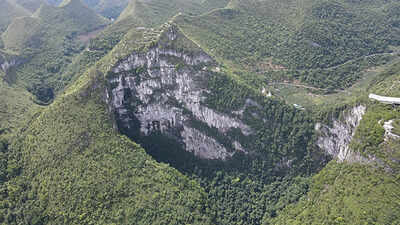
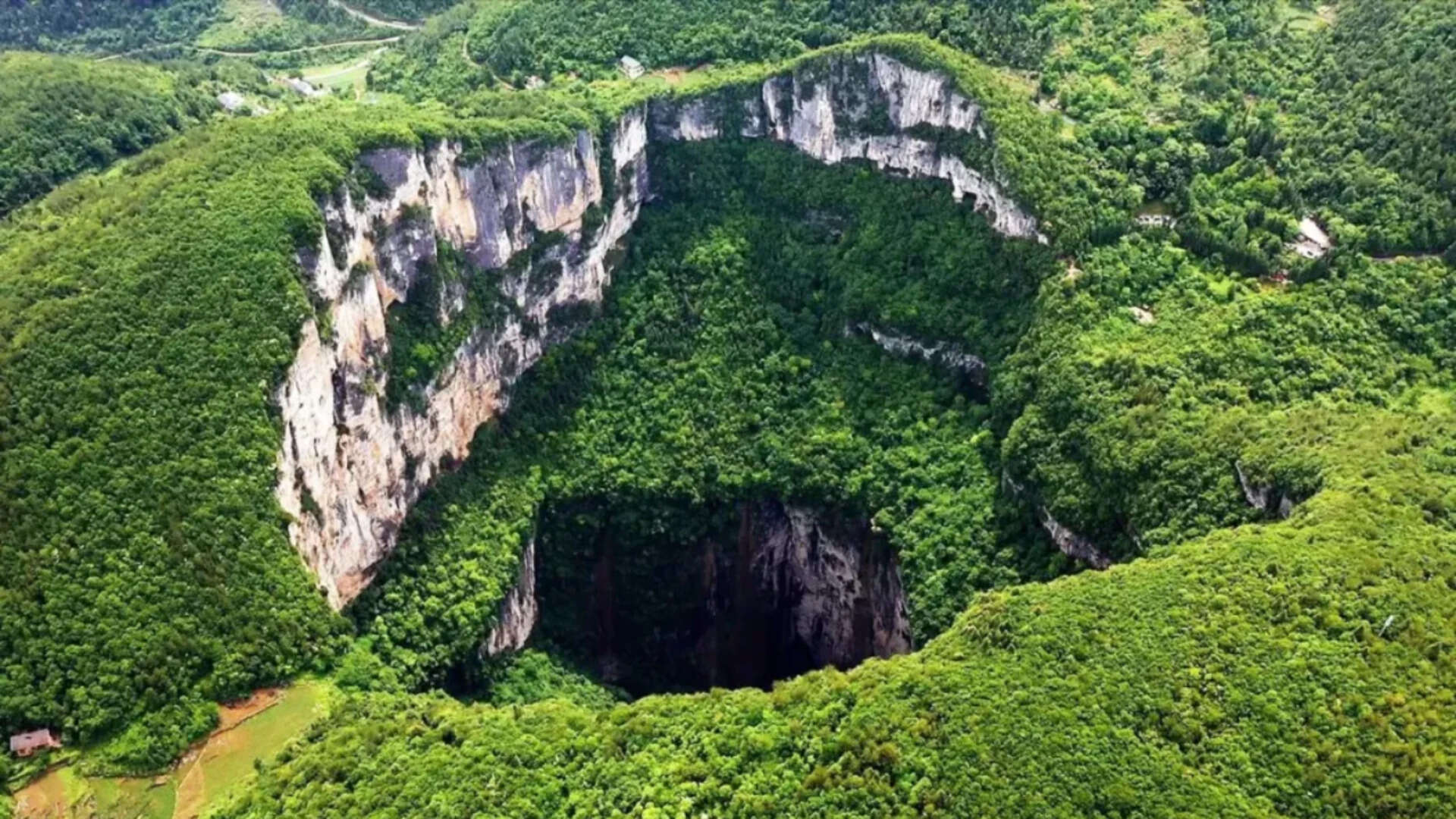
China’s huge sinkholes, known as tiankengs (“heavenly pits” in Chinese), are both helping and harming one of the region’s most endangered plants at the same time. They protect the rare Magnolia aromatica tree from climate change, but they also keep its populations isolated, reducing its ability to adapt in the future.A new study by researchers from the South China Botanical Garden of the Chinese Academy of Sciences and the Guangxi Institute of Botany found that these deep, forest-covered sinkholes protect the tree from rising temperatures and drought. However, the sinkholes also prevent trees from exchanging genes with other populations, making them more vulnerable to losing genetic diversity.The findings, published in the journal Current Biology, suggest that this isolation is slowly reducing the species’ ability to evolve and threatening its long-term survival.To study the genetic effects of living inside these giant sinkholes, scientists created a high-quality reference genome for Magnolia aromatica and analysed the DNA of 112 trees from 26 populations across south-west China, including trees growing both inside and outside the tiankengs.
A genetic paradox deep in the karst
Magnolia aromatica is a rare evergreen tree that grows in the limestone landscapes of Guangxi, Guizhou and Yunnan provinces. The genetic study identified four different evolutionary lineages across its range, with two found mainly in the Leye Tiankeng landscape.The results revealed a surprising genetic pattern. Populations inside the tiankengs had moderate overall genetic diversity compared with populations outside the sinkholes. However, trees growing deep inside the sinkholes had lower genetic diversity and a much higher number of harmful mutations than nearby trees growing on the surface. This is mainly because the isolated populations have very little gene flow and are strongly affected by genetic drift.“Tiankengs are not simply safe havens,” said co-author Kang Ming from the South China Botanical Garden. “They provide a stable environment that helps endangered plants survive, but their enclosed geography can also isolate populations and slowly reduce the genetic diversity needed for future adaptation.”
Thriving in deep shade
Despite this isolation, the sinkholes remain essential for the tree’s survival because of their unique climate. The bottom of a tiankeng is cool, humid and shaded by steep cliffs.The researchers found that the tree has adapted to these low-light conditions. Genes under natural selection in sinkhole populations were linked to photosynthesis and carbon fixation.

Massive sinkholes in China hold ‘heavenly’ forests with plants adapted for harsh life underground
Shading experiments supported these findings. Magnolia aromatica seedlings died quickly under strong sunlight but survived and grew well under 50% to 90% shade, with the best growth in the deepest shade.“This helps explain why Magnolia aromatica can thrive in the cool, humid forests at the bottom of tiankengs,” said first author Zhu Xian-Liang. “The species appears to depend strongly on shaded environments, especially during the early stages of growth.”
Connecting the shelters to save the species
The researchers say the tree’s long-term future remains uncertain. By combining species distribution models, genomic data and mutation predictions, they examined how climate change could affect the species.Their models showed that future climate change will make some habitats less suitable, leaving several populations poorly adapted. Even more worrying, harmful mutations are expected to increase over time. This gradual loss of genetic health could add to the direct effects of climate change and further threaten the species’ survival.The study shows that protecting isolated refuges alone is not enough to save endangered species facing rapid environmental change. To stop Magnolia aromatica from becoming trapped in an evolutionary dead end, conservation efforts must go beyond protecting the sinkholes themselves.While the tiankengs should remain protected as safe habitats, scientists say conservation must also protect nearby outside populations and natural corridors that allow plants to exchange genes. Protecting these surrounding karst landscapes is important for maintaining the genetic diversity the species needs to adapt.“Our results suggest that conservation should protect both the shelter and the connections around it,” Kang said. “For endangered karst plants, maintaining gene flow between populations may be just as important as protecting the special habitats where they survive.”
Chinese researchers uncover sinkhole evolutionary trap
China’s giant ‘hidden worlds’
China has more than 300 known tiankengs, more than any other country in the world. Most are found in the country’s southwest, where water has slowly shaped limestone rocks over millions of years. Some tiankengs are so large that they contain their own forests, streams and unique ecosystems deep below the ground.Scientists have found many rare plants and animals inside these giant sinkholes, including species that are rarely seen anywhere else. In 2022, explorers discovered an ancient forest inside a giant tiankeng in Guangxi. The forest had trees about 40 metres tall and thick plants covering the ground. The discovery showed that some sinkholes may still be home to plants and animals that scientists have not yet studied or even discovered.Scientists say these hidden ecosystems are valuable because they help us understand how plants and animals survive in isolated places. They also provide clues about how species may cope with climate change and help researchers develop better ways to protect nature in the future.
A nutrient-rich environment in a sinkhole?
Another reason plants can survive inside tiankengs is the nutrient-rich environment. Earlier research found that the soil at the bottom of these giant sinkholes contains higher levels of important nutrients such as nitrogen, phosphorus, calcium, magnesium and potassium than the surrounding landscape. As a result, plants absorb these nutrients more easily, allowing them to grow faster and taller despite receiving very little sunlight. Scientists also found that plants inside tiankengs contain less carbon than those growing on the surface because the cool, humid conditions reduce water loss, meaning they do not need as much carbon-rich tissue to survive. These nutrient-rich conditions help create some of the healthiest and most productive plant communities in China’s karst landscapes.