
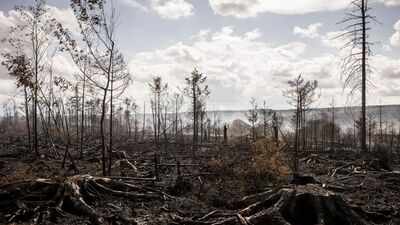
Europe’s intensifying summer wildfires are exposing a danger that has survived generations: unexploded bombs, mines and other wartime munitions buried beneath forests and former battlefields. Heat and drought are now increasing the risk of these buried weapons exploding.Blasts linked to old munitions have been reported in France, Belgium, Germany and the Netherlands as fires swept across areas once heavily fought over during the two world wars, news agency AP reportedSarah Njeri, a peace and conflict scholar at London’s School of Oriental and African Studies, said climate change was disturbing conditions that had kept many weapons dormant for decades.“Climate change is now doing the work of unburying and reactivating what was previously stable,” Njeri told AP.Wildfires can ignite old explosives through intense heat, while flames can also strip away vegetation that has concealed wartime debris. This year’s fire risk was amplified by heavy rains in January, which encouraged vegetation growth before summer heat, drought, low humidity and strong winds turned it into fuel, according to a study by the World Weather Attribution group.In Belgium’s eastern Liege province, governor Hervé Jamar said “a few sporadic detonations” had recently been heard. Emergency services were adapting their response to account for buried munitions, although he said firefighters were not in danger.The risk is particularly acute in the High Fens, a forested peatland along the Belgian-German border that saw fierce fighting during World War II, including the Battle of the Bulge.Local historian Bernard Collard said unexploded weapons remained scattered across the landscape. In the four years after Germany surrendered in 1945, such munitions killed six civilians, he said.“When you go into a forest like this, you are not sure where the explosives are,” Collard said.Belgium continues to deal with the legacy. Its defence ministry receives requests from the region about once a week for assistance in removing explosives. Across the country, the Explosive Ordnance Disposal and Destruction Service responds to more than 3,000 calls each year and disposes of 200 to 250 tonnes of wartime munitions.Jonas Tepe, a spokesperson for North Rhine-Westphalia in Germany, told the news agency that unexploded ordnance becomes particularly dangerous during wildfires because heat can trigger explosives.Climate-driven drought is also exposing weapons hidden underwater. In Slovakia, falling Danube levels revealed two naval mines, while authorities in Hungary closed Budapest’s Margaret Bridge after a World War II bomb emerged from receding water. German authorities likewise found a wartime bomb as the Rhine fell.