
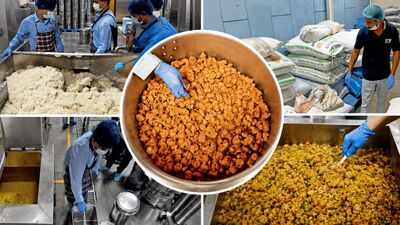
A contamination scare has brought fresh scrutiny to Delhi’s school lunch programme,from hygiene and serving size to eggs, vegetables and budget constraints.NEW DELHI: Recently, a dead lizard was found in the midday meal served to students at a govt school in west Delhi’s Hari Nagar, once again putting the city’s school meal programme under scrutiny.Such incidents often trigger debates over hygiene and food safety. But beyond that are other questions. Even if an ideal setup is in place, what if not every child is getting the same amount? What if the menu could be more nutritious? What if adding eggs was an option? What if adding more vegetables could make a difference?
What the scheme promises
Under the PM Poshan scheme, every primary school child is entitled to a meal containing 20g of pulses, 50g of vegetables and 5g of oil or fat, together providing around 12g of protein and 450 calories. For upper primary students, the entitlement increases to 30g of pulses, 75g of vegetables and 7.5g of oil or fat, delivering 20g of protein and 700 calories.The weekly menu rotates among rajma-rice, puri-chhole, vegetable daliya, kadhi-rice, sambhar-rice and other dishes, along with roasted chana, peanuts, panjiri, millet chivda, fruits and cookies.
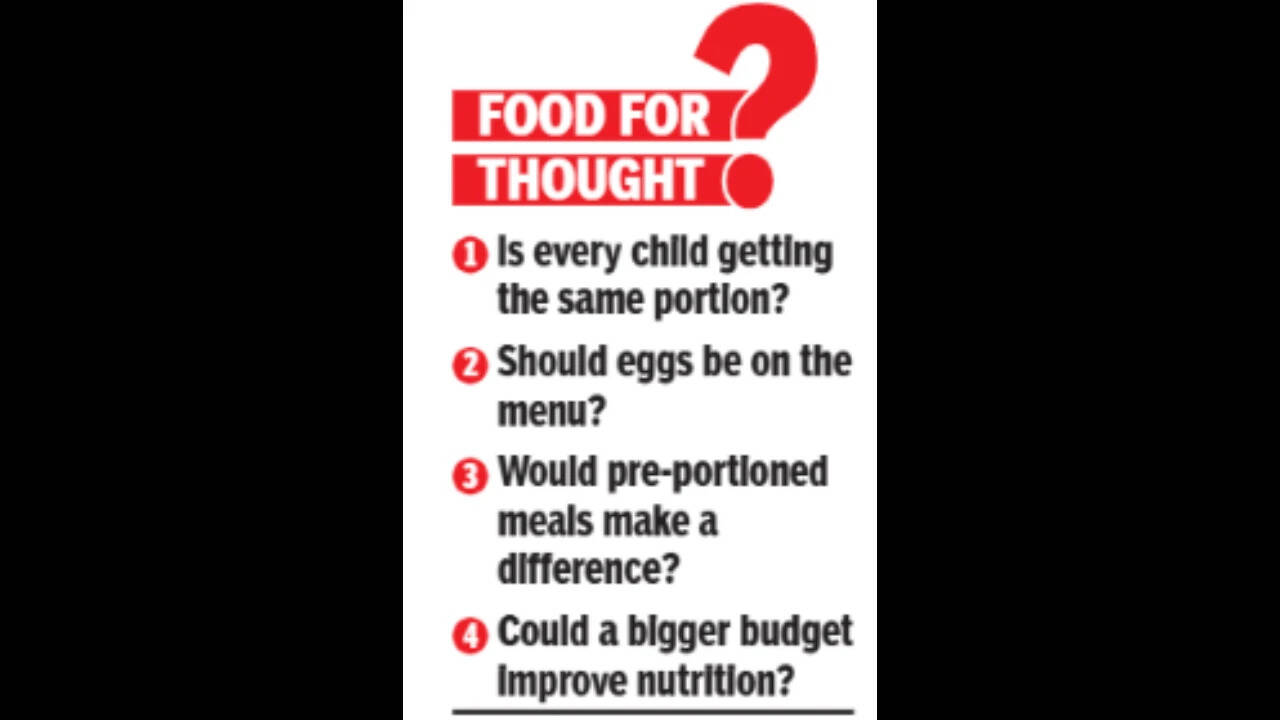
Food for thought
“Midday meal menus are generally prepared after due consultation, with an effort to ensure that kids receive the essential nutrients they need, especially proteins. Looking at this menu, I can see that the protein requirement is being addressed to some extent through chana dal and a few other sources,” said Shalini Garwin Bliss, a nutrition expert.She added, “A balanced meal is not just about protein. There is scope to increase the vegetable content, as vegetables provide vitamins, minerals and fibre essential for a child’s growth and immunity. Ingredients such as matar, soya and paneer can be used more often. Even small additions can make a meaningful difference.”
Does every child get the same meal?
Meals in many schools are served from large containers into whatever lunchbox or plate a child carries. Although the serving ladle is standard, lunchboxes differ in size and portions can vary. One server may fill the ladle generously, another may level it. Officially, however, every child is recorded as having received the same meal.That means nutrition can become an estimate rather than an entitlement. Those distributing the meals in schools acknowledge that the focus is mainly on the quality of ingredients, hygiene, cooking processes and the total quantity dispatched from central kitchens. What happens between the serving vessel and the child’s plate is rarely measured, teachers said.
Is cost per meal a factor?
Every item on a child’s midday meal plate comes with a price tag. Behind the rotating menu is a tight financial calculation that balances nutrition with affordability.According to The Akshaya Patra Foundation, the gross cost of preparing one meal is 17 per child. Of this, the govt contributes 8.56, while 1.88 is offset through interest and other income. The remaining 6.56 per meal is raised by the foundation through donations.The programme cost stands at 15.57, with administrative overheads at 0.58 and outreach costs at 0.85. Based on the national average of 232 school working days, the foundation estimates that 1,500 can fund one child’s midday meals for an academic year.The numbers illustrate why menu planning is as much an exercise in financial prudence as it is in meeting the prescribed nutritional norms.“We try to give as much nutrition as we can in the budget. Whether items such as eggs or paneer can be included depends on the budget available,” said Arun Singh Panwar, CEO of Ekta Shakti Foundation, which serves meals to around 30,000 children every day.
The menu debate
The discussion over what belongs on the menu gained fresh momentum in June after the newly elected West Bengal govt entrusted the preparation of PM Poshan meals in Kolkata Municipal Corporation schools to the ISKCON-linked Annamitra Foundation.As the organisation serves only vegetarian food, eggs, which were earlier served once a week, were dropped from the menu. Instead, children were to receive vegetarian protein sources such as soy chunks, paneer, rajma and pulses.The move sparked a nationwide debate over how best to meet children’s nutritional needs.“As for eggs, their inclusion depends on govt policy and regional preferences. But from a nutritional standpoint, eggs are one of the best sources of high-quality protein and energy for growing children. Wherever they are acceptable and feasible under the policy, we recommend including them as part of a balanced diet,” said Bliss.For Panwar, the debate is less about any single ingredient and more about whether the overall meal meets nutritional requirements.“The menu differs from state to state. What matters is whether the overall meal meets children’s nutritional requirements,” he said.
In the classroom
Teachers, meanwhile, say the quality of meals has improved over the years.Ajay Veer Yadav, general secretary of the Government Schools Teachers’ Association, remembers a very different system.“The food was often watery, the khichdi poorly cooked and sometimes even cold. It often felt like the meals were supplied just to complete a formality,” he recalled.He also pointed to improvements in monitoring.“With student attendance now online, discrepancies are much easier to detect during audits.”Parents, too, are divided over what should be on the menu. While some believe the existing meals are nutritious and varied enough, others feel they should include more protein and greater variety, with options such as eggs, milk, fruits or other protein-rich foods.Another teacher said the next focus should be on improving nutritional quality rather than simply ensuring meals reach schools.“The midday meal should not be viewed merely as a welfare scheme but as an investment in children’s health and learning.”For now, there are no easy answers. Hygiene failures make headlines and eggs dominate political debates. But the question remains: Is the nutrition promised on paper reaching every child’s plate?