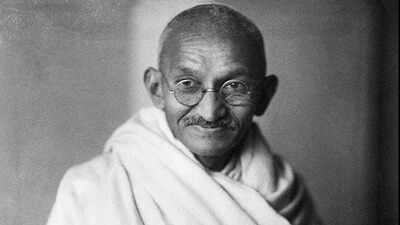
A fast unto death announced by Mahatma Gandhi in Pune’s Yerawada jail in 1932 was to change the course of India’s political history. Imprisoned for the Civil Disobedience Movement, Gandhi announced the fast in a Sept 13 letter to British PM Ramsay MacDonald that was shared with the press. His aim was to oppose a separate electorate for Dalits, proposed under the Communal Award of August 1932.“I have to resist your decision with my life,” Gandhi wrote, saying his fast would begin on Sept 20. “As a man of religion that I hold myself to be, I have no other course left open to me.”The award classified Dalits as a minority whose representatives would be elected only by Dalit voters, just as Muslims, Christians and Sikhs would elect their own representatives. Gandhi believed this would divide Hindu society; BR Ambedkar supported it as a safeguard for Dalit political representationGandhi acknowledged that he might be wrong. If his judgement was “warped”, he wrote, his death would be “a penance for my error” and would lift the burden from those who had “child-like faith” in his wisdom.His week-long fast led to the Poona Pact, negotiated by Madan Mohan Malaviya and Ambedkar and accepted by Gandhi. It abandoned a separate electorate but reserved seats for Dalits within the general electorate, becoming a milestone in Dalit representation and a precursor to reservations for SCs and STs in independent India.
Suspending Satyagraha
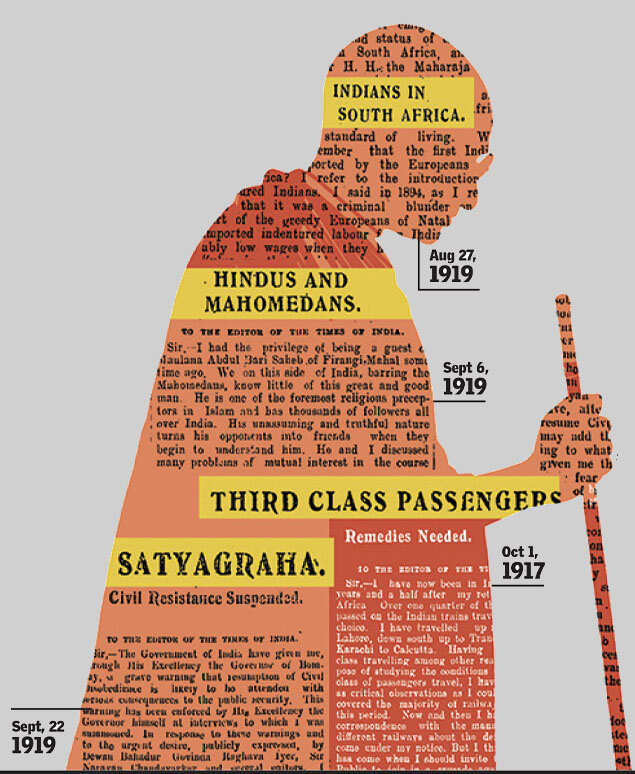
Gandhi also used a letter to the press to announce the suspension of Satyagraha against the Rowlatt Act. Writing on July 21, 1919, he asked satyagrahis to “swallow the bitter pill” and halt their campaign after protests had turned violent.The act allowed the colonial government to detain political prisoners for two years without trial. Gandhi’s campaign against it, launched in March 1919, was his first nationwide political mobilisation after returning from South Africa. Despite his appeals for peaceful hartals, fasts and prayers, violence erupted in several places. Gandhi was prevented from entering Punjab and arrested; the Jallianwala Bagh massacre on April 13 made the situation explosive. Attacks on police stations and railway property, and deadly clashes between protesters and authorities, led him to pause civil disobedience.
For Gandhi, non-violence was not merely tactical. Amid divisions within Congress and Subhas Chandra Bose’s different course, he wrote from Sevagram on July 21, 1941
In the July letter, published under the headline “SATYAGRAHA. Civil Resistance Suspended”, Gandhi disclosed that the governor of Bombay had conveyed “a grave warning” from the Government of India that renewed civil disobedience could threaten public security.Writing from Mani Bhavan in Bombay, Gandhi conceded that the suspension was painful. Yet he remained unyielding on the law: “Satyagrahi will pay for its removal with their lives if it cannot be removed by lesser means.” He also warned the Raj: “If my occasional Civil Resistance be a lighted match, Rowlatt legislation…is a thousand matches scattered throughout India.”For Gandhi, non-violence was not merely tactical. Amid divisions within Congress and Subhas Chandra Bose’s different course, he wrote from Sevagram on July 21, 1941: “With me, no doubt non-violence is an end in itself, though it is also a means for the attainment of the freedom of the country.” A year earlier, he had underlined its voluntary nature: “Non-violence cannot be imposed upon anyone. It has to come from within.”
The South Africa Years
Gandhi’s letters to the editor predated his emergence as a leader of India’s freedom struggle. During his 21 years in South Africa, where he first used Satyagraha as a method of resistance, he repeatedly drew attention to discriminatory laws against IndiansIn a Dec 19, 1901 letter, he described the restrictions in the Transvaal, where Indians could not hold land, were required to live and trade only in designated areas, and were barred from footpaths. In the Orange River Colony, he wrote, an Indian could not even enter without special permission, except as a domestic servant or labourer.After returning to India, he continued to write about the poor conditions of Indians legally settled in South Africa. In an Aug 29, 1919 letter, he blamed the “greedy Europeans of Natal” for importing Indian indentured labour at miserably low wages while ignoring local Zulu workers, all in pursuit of “enormous profits”.
Cow Slaughter And Eid
Gandhi’s correspondence also addressed social fractures, particularly Hindu-Muslim relations. In a 1919 letter written around Bakrid, he recounted a conversation with Maulana Abdul Bari of Lucknow’s Firangi Mahal, a prominent supporter of the Khilafat Movement.
Share your thoughts in the comments
Be respectful · TOI community guidelines
Gandhi quoted the Maulana as saying: “Islam will fall to pieces if it ever takes and never gives…. If we take from you, we must give to you.” Abdul Bari had urged his followers to abstain from cow slaughter. On Bakrid, he sent Gandhi a telegram: “In celebration of Hindu-Muslim unity, no cow sacrifices in Firangi-Mahal this Bakri-Id.”More than a century later, these letters are more than historical records. They reveal Gandhi not only as a politician confronting colonial power but as a public figure wrestling with representation, violence, communal division and moral responsibility. Through TOI’s pages, his words travelled beyond the immediate battles of the freedom struggle, leaving an intimate record of how he tried to shape public opinion — and India itself.