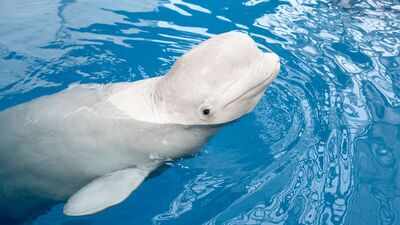
In the quiet pools of the New York Aquarium, a groundbreaking experiment was unfolding. It was 2001, and a team of scientists was about to test a question that had long fascinated researchers: could beluga whales, the white Arctic cetaceans known for their expressive faces and complex social lives, recognise themselves in a mirror?Over the course of several months, four female beluga whales, three adults named Kathy, Marina and Natasha, and Natasha’s 7-year-old daughter, Maris, were exposed to a large two-way plexiglass mirror and a transparent control surface. The researchers recorded and analysed their behavioural responses across 98 mirror sessions. What they found would add belugas to a rare and exclusive list of animals capable of mirror self-recognition (MSR), a cognitive skill long regarded as a sign of self-awareness. The research article titled ‘Evidence for mirror self-recognition in beluga whales (Delphinapterus leucas)’ was published in May 2026 on Plos.one Journals.The mirror test and its significanceA widely used test of self-awareness in animals is the mirror test, first developed by psychologist Gordon Gallup in 1970. The premise is pretty simple. If an animal can recognise the image in a mirror as itself, rather than another individual, it indicates a degree of self-awareness that was once considered unique to humans.To pass the test, an animal must show two key behaviours. First, it must demonstrate “contingency testing”, checking whether its own movements match those of the reflection. Second, it must show “mark-directed behaviour”, using the mirror to inspect a mark placed on its body that it could not see without the reflection.Only a handful of species have passed the mirror test, including humans, chimpanzees, bonobos, orangutans, gorillas, bottlenose dolphins, Asian elephants, magpies and, to some extent, the cleaner wrasse. Beluga whales had never been tested before.The experiment at the New York AquariumThe study, led by marine mammal expert and cognitive psychologist Diana Reiss, was conducted between February and November 2001 at the New York Aquarium of the Wildlife Conservation Society. The researchers affixed a mirror to a window in the belugas’ shared pools for two hours at a time and filmed how they responded. As a control, they also filmed the whales’ responses to transparent plexiglass put up in the same place, as per the study.In the initial phase of the experiment, the researchers wanted to find out which of the belugas, if any, would show signs of contingency testing and self-directed behaviour while keeping their eyes locked on their mirror self. Two of the four whales, namely Natasha, aged 21, and her daughter Maris, aged 7, exhibited a rich suite of self-directed behaviours at the mirror. They repeatedly examined their reflections, performed unusual behaviours such as blowing bubbles and barrel-rolling while watching themselves, and spent significantly more time in front of the mirror than the transparent control.In the second phase, aquarium trainers added a non-toxic, temporary mark to parts of the two belugas’ bodies they wouldn’t be able to see without a mirror. The mother, Natasha, on seeing her own reflection, recognised something was off. She repeatedly turned her head and body to inspect the mark in the mirror, showing clear mark-directed behaviour. She passed one of the initial mark tests in a series of tests given.Maris, the subadult, did not pass any of the mark tests, but the variety of self-directed behaviours she exhibited at the mirror provided suggestive evidence of her capacity for mirror self-recognition.
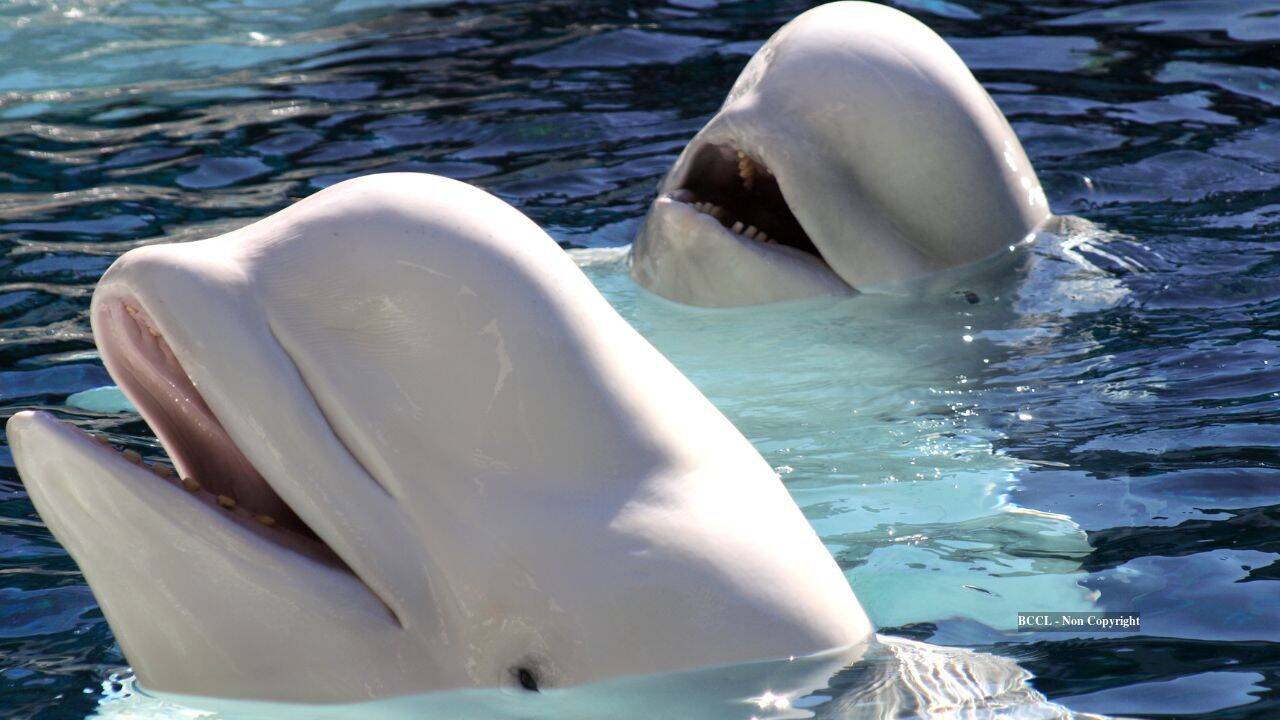
Beluga Whale (Representative image)
What the results meanThe self-directed behaviours exhibited by both whales and the mark-directed behaviour by Natasha provide evidence for the capacity of mirror self-recognition in beluga whales. This makes belugas the only non-delphinid cetacean species to be tested for MSR and to show such evidence, as per the study.The findings suggest that beluga whales possess a level of self-awareness previously undocumented in the species. This is significant because self-awareness is linked to other complex cognitive abilities, such as empathy, theory of mind and advanced social cognition. Belugas are highly social animals, living in complex groups and communicating with a wide range of vocalisations. The ability to recognise oneself may play a role in these social interactions, helping individuals understand their own actions in relation to others.A rare club of cognitionBeluga whales are now on the list of animals that have passed the mirror test, which is a reminder that non-human animals have rich cognitive lives. It questions the view that self-consciousness is purely human and emphasizes the evolutionary continuum of cognitive powers in species.But critics of the mirror test. It is argued that it is biased toward the needs of species that depend heavily on vision and might not be appropriate for animals that navigate through their world using other senses, such as smell or touch. But other researchers say that passing the test doesn’t mean an animal has a “human-like sense of self ” but that it understands the concept of reflection.Even with these discussions, the mirror test remains among the most widely used methods of testing self-awareness in animals. And the beluga’s performance in the 2001 study is just another piece of evidence that self-awareness is more common in the animal kingdom than once believed.A strange traditionMore than 20 years later, the 2001 beluga whale study continues to inspire new research into cetacean cognition. It reminds us that even in the relative safety of an aquarium animals can surprise us with their intelligence, curiosity and capacity for self-reflection.A picture of a beluga whale gazing into a mirror in the New York Aquarium’s tanks as the sun goes down is a potent symbol of the cognitive depths of these Arctic cetaceans. It reminds us that self-awareness is not a uniquely human characteristic, but a universal capability linking us with the rest of the animal world.