In 2016, New Zealand launched a major operation to remove an estimated 200,000 mice from the remote Antipodes Island. The mice were the only mammalian pest species on the island, but their impact on the ecosystem was significant.According to the country’s department of conservation, the mice were eating large numbers of invertebrates and plant seeds. They were also competing with native birds for food and were known to eat the eggs and chicks of seabirds. On Antipodes Island, their presence had contributed to a lack of invertebrates compared with nearby islands without mice.The operation was completed as planned, and in 2018, monitoring confirmed that the mice had been eradicated. The story did not end with the removal of the pests. Surveys carried out over the following six years showed native bird populations beginning to recover, with the numbers of Antipodes Island pipit and snipe more than doubling. The results were published in thw New Zealand Journal of Ecology.
Why mice were a problem
Antipodes Island is part of New Zealand’s subantarctic islands. The mice were most likely accidentally introduced in 1893, either from a shipwreck or from one of the many sealing gangs that visited the area. Over time, their numbers grew. On the 2,012-hectare main Antipodes Island, the population was estimated at about 200,000 mice in 2012.Their effect on the island went beyond simply competing with other animals for food. Research found that mice ate huge numbers of invertebrates and plant seeds that were important to the health of the island.Invertebrates include animals such as insects and other small animals without backbones. They form an important part of the food available to native species.The mice also competed with the island’s unique land birds, including the pipit, parakeet and snipe. They competed for the same food, making survival more difficult for these native species.Mice were also known to eat seabird eggs and chicks. The New Zealand Department of Conservation said mice had been implicated in the deaths of albatross chicks on other subantarctic islands, including Gough Island.
The 2016 operation
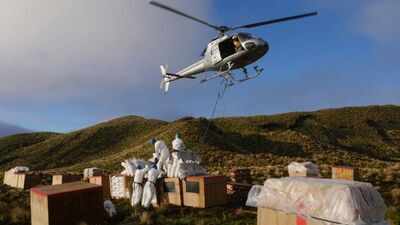
The effort to remove the mice was known as the Million Dollar Mouse campaign. It received support from several organisations and members of the public. Gareth Morgan, a New Zealand businessman and economist was also motivated to raise money.In the winter of 2016, a 13-member eradication team travelled to the main Antipodes Island. The team used helicopters to spread cereal bait containing the rodent toxin brodifacoum. The bait was released using specialised buckets attached beneath the helicopters.The team then had to wait through two mouse breeding seasons before checking whether the operation had worked. In February 2018, a monitoring team returned to Antipodes Island to check the results.The team used 200 inked tracking tunnels and searched the island for three weeks. It also used two rodent detection dogs from the Conservation Dogs Programme. The result confirmed that the Million Dollar Mouse campaign had successfully eradicated mice from Antipodes Island.But removing the mice was only the first step. Researchers then wanted to understand what happened to the island’s native species after the major pest was gone.
Native birds recover
The paper included in the 2022 special issue of the New Zealand Journal of Ecology examined the recovery of endemic birdlife on Antipodes Island.Surveys carried out over six years after the mice were removed showed several native bird populations rebounding. The numbers of Antipodes Island pipit and snipe more than doubled. The Antipodes and Reischek’s parakeets also showed recovery.Stephen Horn, National Eradication Manager at the Department of Conservation, said the results from Antipodes Island and other subantarctic island eradications showed that damage to ecosystems can be reversed after invasive pests are removed.“Eradication of invasive pests from islands is a key part of New Zealand’s Predator Free 2050 Strategy and removing pests from Auckland Island to complete a pest-free New Zealand Subantarctic remains a priority.”Since 1984, six introduced mammal species have been successfully removed from five subantarctic islands including Campbell, Antipodes, Auckland, Enderby and Rose.Professor James Russell of the University of Auckland, said the combined results provided important knowledge about managing multiple pest species across large areas.“This is critical for programmes such as New Zealand’s Predator Free 2050, but also for other island eradications around the world targeting diverse pests such as pigs, feral cats and mice,” he said.