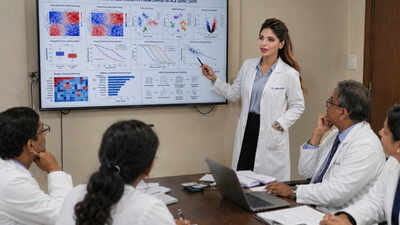
India’s healthcare system generates one of the largest volumes of patient data in the world. Every day, hospitals and clinics manage millions of consultations, diagnostic reports, laboratory investigations, and treatment records. However, despite this enormous amount of clinical information, only a relatively small number of physicians actively combine routine medical practice with data-driven clinical research and predictive healthcare analysis. Most doctors understandably remain focused on diagnosis and treatment, leaving the analysis of healthcare data primarily to research organisations and technology specialists.Healthcare experts believe this is gradually changing. As AI, predictive analytics, and digital health platforms become increasingly integrated into medical practice, physicians who understand both patient care and healthcare data are expected to play a more important role in improving disease detection, treatment planning, and public health outcomes.Among the physicians working in this emerging space is Dr Latha Kiran Krishna Rajendran, a Bengaluru-based doctor who works at Elova Hospitals, and whose professional interests extend beyond clinical practice into predictive diagnostics, disease pattern analysis, oncology, and public health research.Dr Latha manages between 40 and 60 patients every day, treating more than 10,000 patients annually across general medicine, paediatrics, preventive healthcare, and emergency care. “Such extensive clinical exposure provides an opportunity to observe recurring disease patterns, patient responses to treatment, and long-term healthcare trends that are often difficult to identify through isolated consultations,” she shares.According to medical researchers, physicians working in high-volume clinical environments possess valuable real-world observations that can strengthen evidence-based healthcare when analysed systematically. While hospitals increasingly invest in digital health technologies, the ability to interpret clinical information remains dependent on experienced physicians who understand the medical context behind the data.Dr Latha believes that every patient interaction contributes to a larger clinical picture. “Every consultation represents more than an individual diagnosis. When thousands of patient encounters are carefully studied over time, they help physicians recognise disease trends, evaluate treatment outcomes, and identify opportunities for earlier intervention,” she says.Predictive healthcare has become one of the fastest developing areas of modern medicine. Instead of focusing only on treating diseases after symptoms become severe, predictive approaches attempt to identify individuals who may be at greater risk based on clinical indicators, diagnostic findings, medical history, and population-level health patterns. This allows physicians to intervene earlier, often improving outcomes while reducing the burden of advanced disease.Although predictive analytics has gained considerable attention internationally, its adoption within routine clinical practice in India remains relatively limited. Industry observers note that while healthcare technology companies continue developing artificial intelligence solutions, comparatively fewer practicing physicians actively participate in translating day-to-day clinical observations into structured research and predictive healthcare models. As a result, professionals capable of bridging medicine and data science remain uncommon within the Indian healthcare ecosystem.Dr Latha’s work reflects this growing interdisciplinary approach. Alongside her clinical responsibilities, she has developed expertise in predictive diagnostics, healthcare data interpretation, scientific writing, and clinical research methodologies. She has also pursued professional training in artificial intelligence in healthcare to better understand how emerging technologies can support evidence-based clinical decision-making without replacing physician judgement.“Healthcare specialists emphasise that technology alone cannot improve patient care. Artificial intelligence systems require clinically meaningful data, responsible interpretation, and continuous validation by experienced healthcare professionals. Physicians who combine medical expertise with analytical thinking are therefore becoming increasingly important as hospitals adopt digital healthcare systems,” she opines.Experts believe India is well positioned to become a global leader in data-driven healthcare because of its large and diverse patient population. However, achieving this potential will require greater collaboration between clinicians, researchers, and technology professionals to transform routine healthcare information into practical medical knowledge that benefits patients nationwide. Professionals such as Dr Latha represent this emerging group of clinicians helping bridge the gap between traditional medical practice and the future of data-informed healthcare in India.