
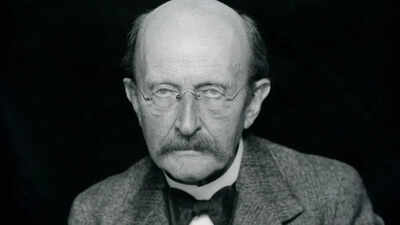
There are moments in education when everything suddenly feels heavier than expected.A student who once solved problems quickly begins to slow down. Pages take longer to finish. Concepts that once looked familiar stop behaving the same way when the numbers change or the conditions shift. Even confident learners eventually reach a point where guessing stops working.It is usually at that stage that something important happens. People either step back from the difficulty, or they lean into it.Max Planck, the German physicist who helped shape the foundations of quantum theory, once wrote something that quietly captures this shift. It is not about success in the usual sense. It is about what happens inside a person while they are still trying to understand.
Quote of the day by Max Planck
“It is not the possession of truth, but the success which attends the seeking after it, that enriches the seeker and brings happiness to him.”
The sentence does not behave like a typical motivational line.It does not promise certainty. It does not suggest that answers bring satisfaction. Instead, it points attention elsewhere, toward the act of searching itself.Planck is describing a situation most people recognise without naming it. The feeling of working through something difficult and slowly noticing that confusion is turning into something clearer, even if the final answer is still not in sight.There is a quiet suggestion here. What changes a person is not only what they finally understand, but what they go through while trying to understand it.
What it feels like while you are still figuring things out
Anyone who has prepared for a competitive exam knows the middle phase of learning.Not the beginning, when everything is new and simple. Not the end, when revision brings confidence. The middle is different.It is the stage where notes are covered in corrections. Where the same topic is revisited again and again because it refuses to settle. Where small improvements feel more meaningful than big breakthroughs.A similar thing happens outside classrooms too.A young engineer working on a first project often spends more time failing than succeeding. A writer rewriting the same paragraph five times slowly notices that clarity is not something that arrives suddenly. Even in daily life, learning a new skill like cooking or driving follows the same pattern. Progress is not loud. It is repetitive and slightly frustrating, until one day it is not.Planck’s idea sits inside that space. Not the result, but the slow shift that happens during effort.
Why this quote still fits modern life
Most people today are surrounded by results.Marks, salaries, rankings, follower counts, performance reviews. Everything is measured, compared, displayed.What is harder to measure is what happens in between those results.A student may not top a class but still learn how to think more clearly than before. A professional may not receive a promotion immediately but becomes sharper in decision-making after a difficult year. A small business owner may not see instant growth but slowly develops judgment that no textbook can teach.None of this shows up neatly in numbers.That is where Planck’s observation feels relevant. It pushes attention away from the finish line and back toward the process, where most real change actually happens.Even in science, breakthroughs rarely arrive as complete answers. They appear after long stretches of confusion, testing, and revision. The outcome looks clean only after everything else has been stripped away.
Lessons that sit inside this idea
- Lesson 1: clarity usually arrives late, not early
Most understanding does not begin with certainty. It begins with uncertainty that slowly becomes organised.People often mistake confusion for failure, when it is usually the starting point of learning.
- Lesson 2: progress can exist without completion
A project does not need to be finished to be meaningful. The act of working through it often changes how a person thinks long before it is done.That change is part of the outcome.
- Lesson 3: effort reshapes thinking in quiet ways
Repetition, correction, and small adjustments slowly build habits of thought.Over time, the way a person approaches problems begins to change, even in unrelated situations.
- Lesson 4: stopping early removes most of the value
Many people quit when things stop being immediately clear. Planck’s idea suggests that a large part of the value sits exactly in that unclear stage where effort feels unrewarded.
About Max Planck
Max Planck was a German theoretical physicist born in 1858.He is best known for introducing the idea that energy is emitted in discrete units, a concept that later became the foundation of quantum theory. This work changed how scientists understood matter and energy at the most fundamental level.His contributions marked a turning point in modern physics and influenced generations of research that followed.Planck was awarded the Nobel Prize in Physics in 1918 for his work in theoretical physics.Beyond his scientific contributions, he often reflected on how knowledge is built, especially the patience required to work through uncertainty.
Other inspirational quotes by Max Planck
- “Science advances one funeral at a time.”
- “When you change the way you look at things, the things you look at change.”
- “Experiment is the only means of knowledge at our disposal.”
- “All matter originates and exists only by virtue of a force.”
- “A new scientific truth does not triumph by convincing its opponents.”
How to apply this quote in daily life
Most people do not experience discovery in laboratories, but they do experience it in everyday learning.A new job feels confusing at first. A new skill feels uneven for weeks. Even relationships and responsibilities often require adjustment before they feel natural.The instinct is usually to judge early performance too harshly.Planck’s idea offers a quieter approach. Instead of measuring only the outcome, it becomes useful to notice what is changing during the process itself.Better focus. Better patience. Better judgment. These are not instant results, but they are real ones.
Final takeaway from the quote
Max Planck’s words do not celebrate certainty. They describe something more subtle. They point toward the middle of effort, where most people spend their time but rarely notice its value.The search is often messy, slow, and incomplete. Yet it is also where understanding quietly forms.Long after specific answers are forgotten, what often remains is what the search changed in the person doing it. That is the part Planck was pointing toward.Not possession. But pursuit.