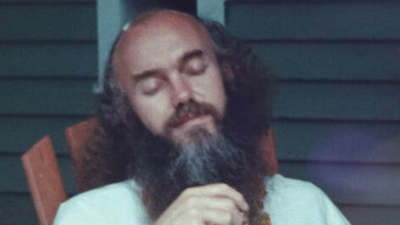
Most of us move through life as the “actor”: caught up in the drama, giving instant reactions to what is going on around us, not being who we truly are, and wanting the results to always go our way. In that mode, every problem feels personal, every setback feels like a big headline on who we are, and every emotion can pull us into a storm.Ram Dass was a spiritual teacher, a Harvard psychologist, a psychedelic, and a follower of Neem Karoli Baba who is credited with taking his teachings and the concept of Indian spirituality to the west.He once spoke about a beautiful idea to take up positions as the witness. The witness is the part of you that simply notices your thoughts, feelings, actions, and the whole story of your life, without immediately judging or getting carried away.
Quote of the day
Everything changes once we identify with being the witness to the story, instead of the actor in it
Ram Dass
What does the quote actually mean
In ordinary life, we usually identify with the “actor.” We say, “I am angry,” “I am failing,” “I am not enough,” as if our entire self is the emotion, the situation, or the role we’re playing. In that state, we react automatically, beginning to defend, blame, worry, or try to control everything. Our sense of worth rises and falls depending on what happens outside.The “witness,” by contrast, is the inner observer who notices and does not judge; it simply observes. Ram Dass describes it as “simple awareness, the part of you that is aware of everything, by just noticing, watching, just being present, being here now”. When we rest in this witnessing awareness, we are no longer completely submerged in the drama. We still feel, think, and act, but there is space around it. That space is where freedom begins.
Why this is especially relevant now
Today, many people live under constant pressure to be performative and look perfect. In such an environment, it’s easy to feel like you must always be “on point,” always proving yourself, always reacting. In such cases, anxiety, burnout, and a fragile sense of self are common results.But we do not need to become monks to practice this. We can start by pausing during the day and silently observing and being mindful. “Thoughts are happening,” “Feelings are moving through,” “A story is playing out.” Over time, that small change from actor to observer can change how you experience everything.