
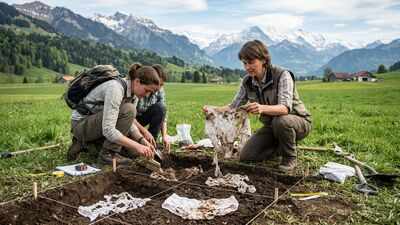
A pair of cotton pants is not usually considered scientific equipment. Yet across Switzerland, thousands of them spent weeks underground as part of an unusual experiment into the condition of the soil beneath people’s feet.More than 1,000 volunteers took part, burying underwear and teabags at sites ranging from private gardens and farmland to grasslands and lawns. The idea was simple: let soil organisms do what they naturally do, then measure what was left behind. Cotton provides plenty for microbes and other organisms to break down, making the fabric a surprisingly useful indicator of biological activity underground.The experiment has now helped researchers develop what they call the Underpants Index, a straightforward way of comparing decomposition and getting a sense of soil health.
How soil organisms reveal the hidden health of the ground beneath our feet
Soil may look relatively still from above, but it is anything but lifeless. It contains huge communities of bacteria, fungi, insects, worms and other organisms, all involved in processes that shape the ground around them. Those organisms help break down dead material and return nutrients to the soil. The speed at which that happens can therefore offer clues about what is going on beneath the surface.That matters because soil supports far more than crops. It plays a role in food production, stores large quantities of carbon and provides habitat for an enormous share of terrestrial life. Yet soil degradation is widespread, with erosion and poor land management among the factors contributing to its decline.Measuring its condition across large areas is not particularly easy. Conventional methods can require specialist equipment, sampling and laboratory analysis. The Swiss project took a rather more accessible route.
More than 2,000 underpants helped researchers measure soil health across Switzerland
The study published in Plants People Planet titled, ‘Soil health assessment using buried cotton underpants with the help of 1000 citizen scientists’, involved around 1,000 members of the public at roughly 1,000 locations across Switzerland. Together, they buried more than 2,000 pairs of organic cotton underwear supplied by Swiss supermarket chain Coop.The volunteers did not simply throw the pants into a hole and leave them there. Each location received two pairs, positioned vertically in the ground, alongside teabags used for a separate decomposition measurement. The waistband was left visible so the participants could find them again.One pair was dug up after about a month. The second remained underground for another month before being recovered. By then, the underwear had become a record of the activity taking place in the soil. Areas where biological processes were more active tended to leave the cotton more heavily broken down.The approach was adapted from the Tea Bag Index, an established method in which standardised teabags are buried and later weighed to estimate decomposition. Underwear offered something different: it was easy for members of the public to recognise, handle and understand without needing specialist equipment.

PC: University of Zurich
How land use affected the decomposition of buried underpants
The amount of decomposition varied depending on how the land was being used. Private gardens recorded some of the highest rates, while arable land also showed relatively rapid breakdown. These areas tended to have soils with more organic carbon, which was consistent with the researchers’ expectations.The underwear did not disappear completely. What remained could be examined after it was retrieved, providing a simple visual indication of how much decomposition had taken place during the experiment.The differences between sites were useful because they showed that the same piece of cotton could behave quite differently depending on the soil around it.
Why lawns had the lowest decomposition rates in the study
At the other end of the scale were lawns, which recorded the lowest decomposition rates among the land-use categories examined.That result fits with concerns surrounding intensively maintained turf. A lawn can look green and healthy while supporting a comparatively limited range of plant life, particularly where it consists largely of closely managed grass. Regular mowing and other forms of maintenance can also shape the conditions in the soil.The comparison with permanent grasslands and permanent crops was striking. Both recorded greater decomposition than lawns in the experiment. It adds another measurement to the wider discussion about how different forms of land management affect what happens below ground.
How the Underpants Index made soil research more accessible
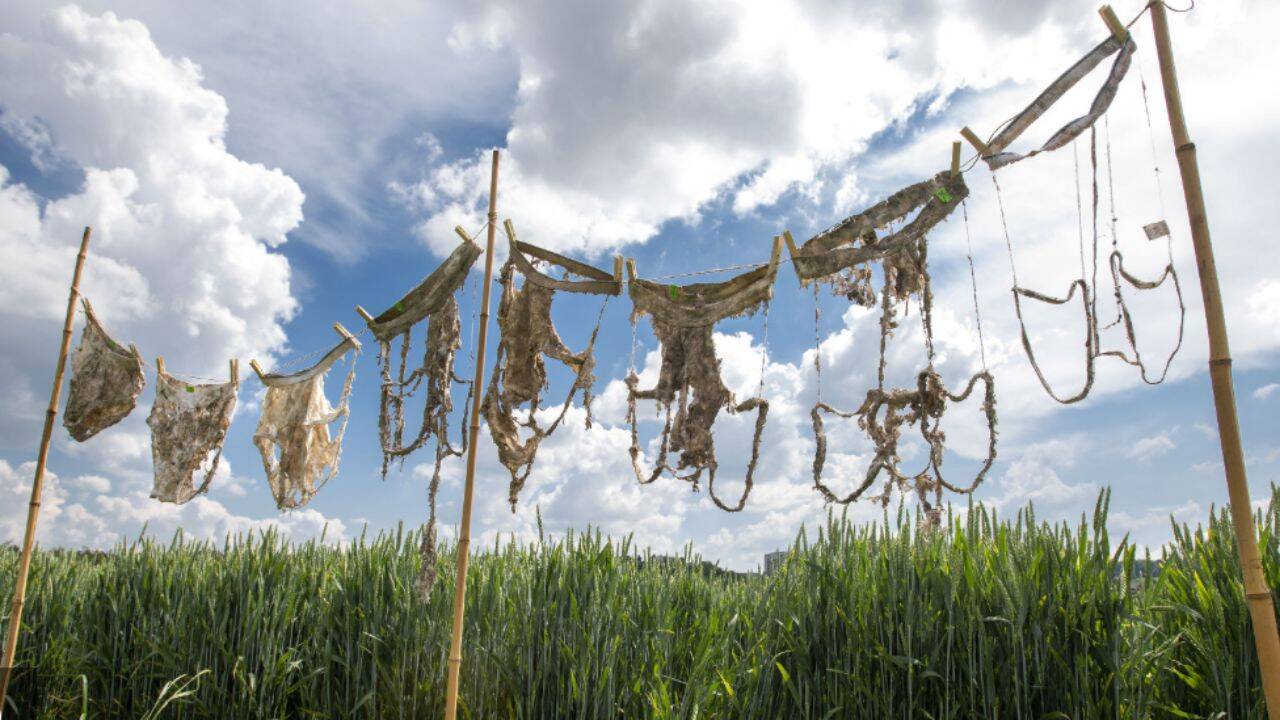
PC: University of Zurich
The researchers were not suggesting that underwear should replace established scientific techniques. The appeal of the method lies in its simplicity.Teabags have been used for years to examine decomposition, but carrying out the method consistently can involve particular handling requirements. A pair of cotton pants is less technical and, perhaps because of its unusual nature, more likely to capture the attention of people who would not normally take part in a soil survey.That made the project as much about public participation as measurement. Volunteers could bury the material, wait, retrieve it and see the physical evidence for themselves.The resulting Underpants Index is intended as a simple indicator rather than a complete diagnosis of soil condition. Soil health involves many characteristics, and decomposition is only one of them. Still, the experiment demonstrated that everyday materials can provide a useful window into a system that is normally hidden beneath the ground.