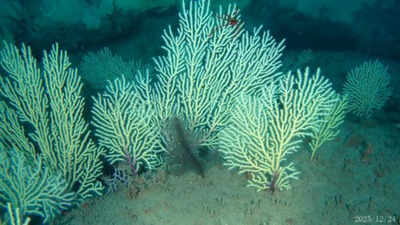
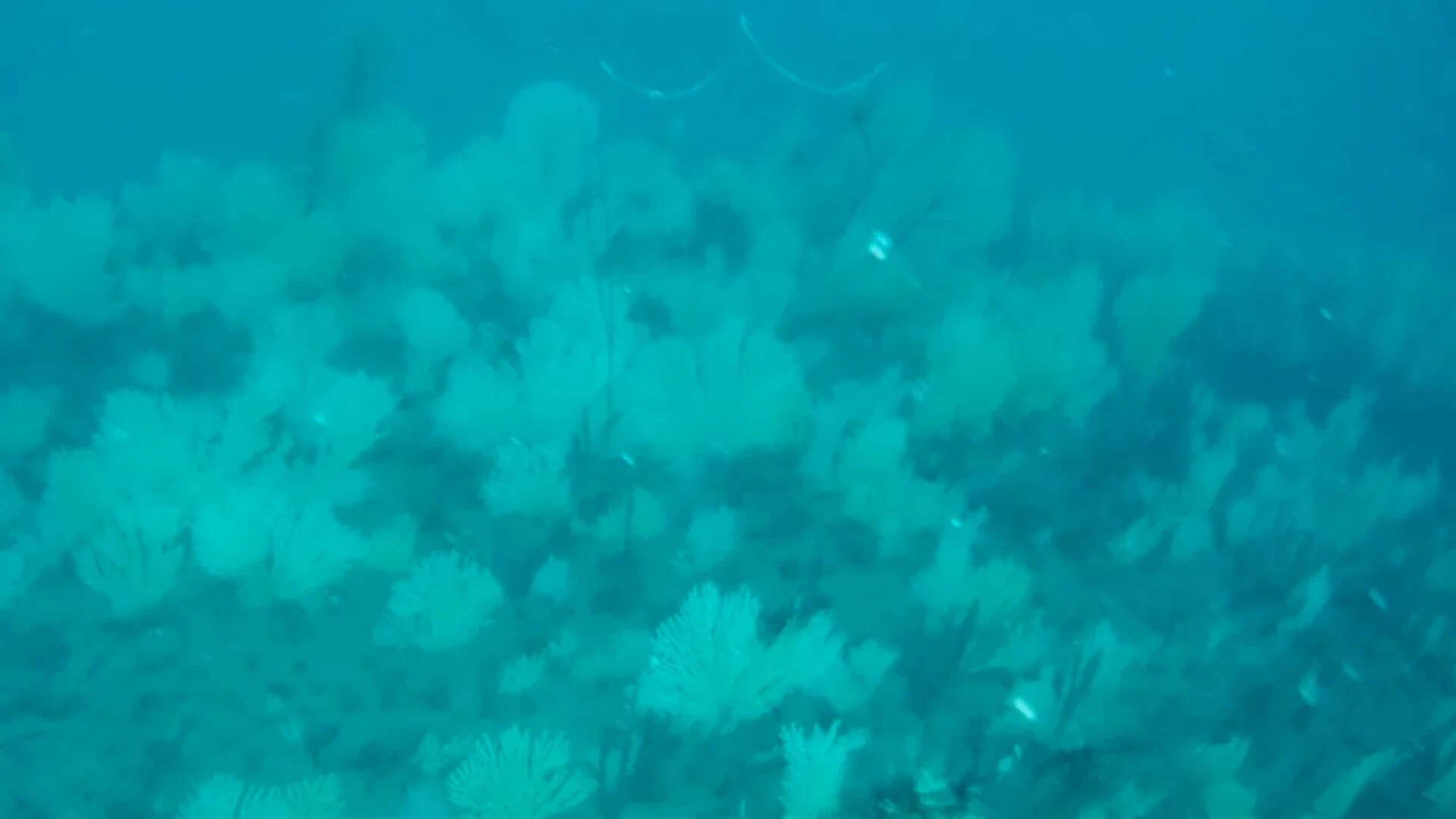
A deep-water coral reef off the coast of West Africa that was believed to be dead for six decades has been discovered alive and thriving more than 50 metres below the ocean surface.The forgotten reef was first identified off the coast of Benin during surveys in the 1960s that were searching for good fishing areas. At the time, researchers believed the deep-water reef was dead and stopped investigating it.A modern expedition by the Coral Reefs Rediscovering and Exploration project in Benin (COREB) returned to the site using sonar and deep-sea imaging technology. Instead of finding a lifeless reef, the team discovered a healthy marine ecosystem filled with fish and coral species, according to a study published in Frontiers in Marine Science.
High-tech breakthrough in the deep
Finding the forgotten reef required working in difficult conditions at sea. Researchers used sonar to scan an 11.5-kilometre section of the seabed where historical records suggested coral structures could be located.After the sonar detected two clear signals that could indicate rock or coral formations, the team deployed an underwater drone along with the National Geographic Exploration Technology Lab’s Deep Sea Camera System. These low-cost autonomous systems are equipped with high-definition cameras and lights inside strong glass pressure housings to capture clear images of the seafloor.Gérard Zinzindohoué, a researcher at the Institut de Recherches Halieutiques et Océanologiques du Bénin and the study’s lead author, described the moment the first video footage appeared.“It was not an easy field campaign,” Zinzindohoué said. “It was a mix of long days at sea, technical problems, and a lot of uncertainty. But then we saw structures on the sonar that looked like they could be reef signatures, which gave us hope that we were close.”“Next, we surveyed the structures with an underwater drone and the Deep Sea Camera System. That was a big moment for us, because suddenly we could actually see the seafloor,” he added. “I still remember seeing those first images. It was a mix of excitement and disbelief, because after all this time thinking about this reef, suddenly there was something real in front of us.”
Gérard Zinzindohoué
A hidden home for marine life
The site is a mesophotic coral ecosystem, a type of reef that grows much deeper than typical shallow coral reefs. Although these corals still need sunlight to survive, they have adapted to the low-light conditions found far below the ocean surface.“A mesophotic coral ecosystem lives deeper than the usual shallow coral reefs, in zones where light is much more limited,” Zinzindohoué explained. “Unlike typical shallow reefs, it does not always form a single continuous reef structure. Instead, it can appear as patchy or scattered coral communities spread across the seafloor.”Video footage confirmed that the reef is made up of scattered coral patches growing on rocky parts of the seabed. Researchers identified eight different coral types and eight fish species living within the habitat.The marine life recorded includes golden African snappers, blackbar soldierfish, Guinean angelfish, West African goatfish, Monrovia doctorfish, three-banded butterflyfish, and two species of damselfish.
Unlocking the secrets of West Africa’s coast
The discovery is the first confirmed record of a living mesophotic coral ecosystem on the continental shelf of the Gulf of Guinea. Researchers believe there could be many more undocumented reefs hidden along the West African coastline.“To our knowledge, this is the first confirmed record of a living mesophotic coral ecosystem on the Gulf of Guinea continental shelf,” Zinzindohoué said. “However, I think what we found is probably not an exception. It is more likely a reflection of how little we still know about coastal regions in West Africa and elsewhere. If we were able to find this reef again after 60 years, how many others are still undocumented or simply forgotten? So yes, I do believe there are likely more coral systems out there that we have not documented yet. But we should not assume they are everywhere. Each discovery needs to be confirmed. Without going back into the field, we are really just guessing.”Scientists have not yet collected physical coral samples, so confirming the exact species will require further testing. It also remains unknown whether the reef was actually dead in the 1960s and later recovered, or whether the original researchers simply misjudged its condition.Historical records suggest the full coral reef may stretch for about 40 kilometres parallel to the coastline, meaning the team has explored only a small part of the entire structure.“This is still an initial exploration,” Zinzindohoué said. “The historical reports suggested that this could be a continuous coral reef barrier extending roughly 40 kilometers parallel to the coast. We only surveyed a small section of this area and we had a limited number of visual transects. If I had all the grant money in the world, the first thing I would do is return to the site with a proper scientific diving and sampling program. These are ecosystems that are still poorly known in this part of the world, and every additional piece of information matters.”Zinzindohoué said the greatest importance of the discovery is what it could reveal about the region’s ancient oceans.“For me, the most exciting part is about understanding the reef’s history, and what it can tell us about how the ocean in this region has changed over time,” he said. “It feels like we have only just started to read an archive that has been there for a very long time.”