
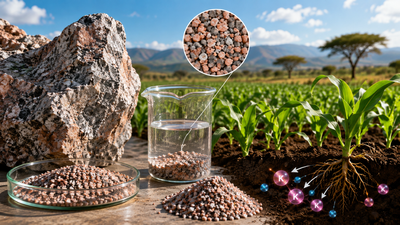
Food insecurity remains a daily reality for more than 300 million people across Africa, and the high cost of imported potassium fertiliser is part of the problem. Nearly all of the world’s potash is mined in Canada, Russia and Germany, leaving African farmers reliant on expensive, distant supply chains and a fertiliser that leaches quickly from the soil. According to the study published in ScienceDirect titled ‘Syenite rock as an alternative for potassium source: Synchrotron-based investigation and element release kinetics’, there is a cheaper, more sustainable answer buried closer to home. Their team has developed a method for converting potassium-rich syenite rock, abundant in parts of Morocco, into a fertiliser that releases its nutrients gradually rather than washing away. The researchers were able to pinpoint exactly how heat and chemical treatment free up potassium trapped within the rock’s crystalline structure. The findings suggest a locally sourced alternative to conventional potash could be within reach for farmers who have long depended on imports.
Why African farmers rely on expensive imported potash fertiliser
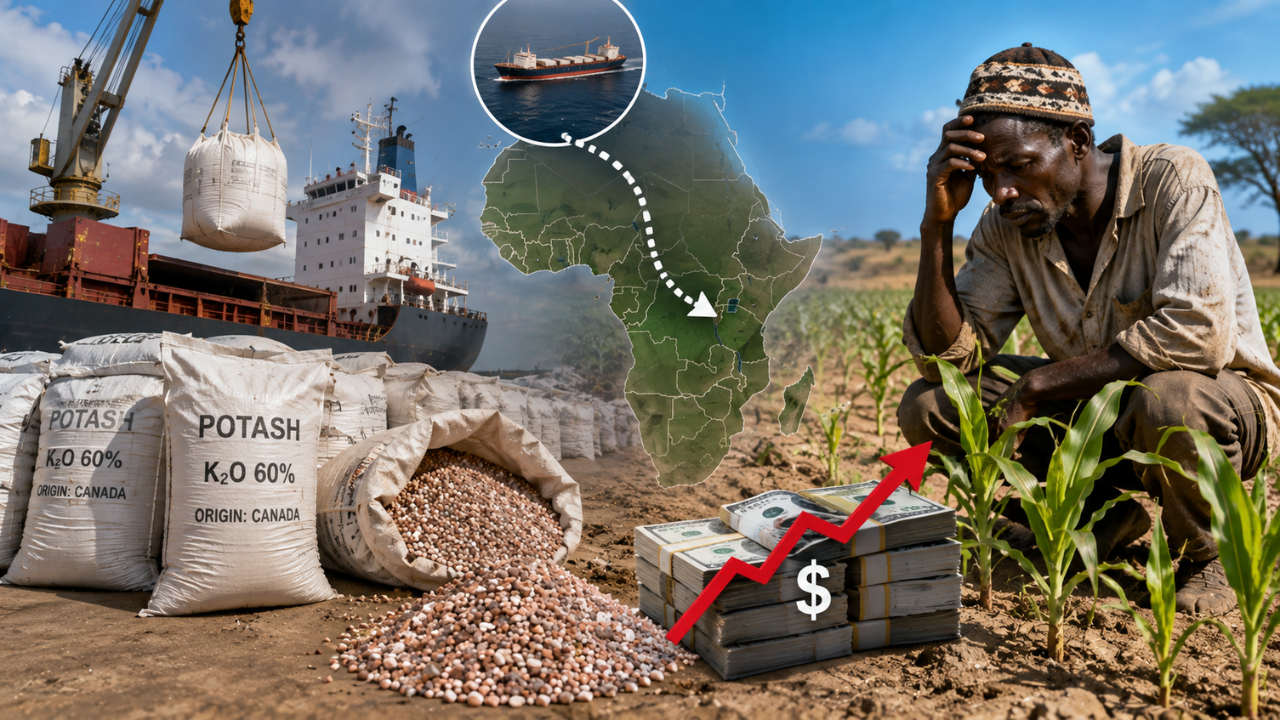
According to Canadian Light Source, conventional potash comes from underground deposits left behind by evaporated ancient seas, with the largest reserves found in Canada, Russia and Germany. This concentration of supply in the north makes the fertiliser costly for African farmers and leaves it exposed to disruptions far outside their control. Shipping the mineral across continents adds further expense at every stage of the supply chain, from freight to storage, costs that are ultimately passed on to smallholder farmers who can least afford them. There is also a chemical downside.Potash salts dissolve readily, so a large share washes away into groundwater and surface water before plants can take it up, meaning much of what is applied to a field never actually benefits the crop. The chlorine content adds to soil salinity and pollutes water sources over time, a further reason researchers have been searching for alternatives that release nutrients more gradually and with fewer environmental side effects.
Imag AI generated
How scientists unlock potassium from syenite rock for fertiliser
Syenite carries meaningful amounts of potassium within its feldspar minerals, but that potassium has long been locked inside a crystalline structure too stable to break down naturally, meaning it has historically been of little practical use to farmers despite its abundance. Elghali explained that although these potassic silicates contain a non-negligible concentration of the nutrient, their strong structure means they cannot supply enough to support plant growth on their own, leaving the potassium effectively inert unless it is chemically treated first.To unlock it, the researchers crushed the rock to expose more surface area, mixed it with water and either alkaline or acidic agents, then heated it to just under 200°C in a controlled hydrothermal process. This shifted the minerals from an insoluble to a soluble state, breaking down the feldspar structure and encouraging the formation of secondary phases capable of holding and gradually releasing potassium. Under the best conditions, close to 40 per cent of the potassium converted into more accessible silicate and carbonate forms, while calcium introduced during treatment was found mainly as portlandite, with further incorporation into calcium-aluminium-silicate hydrate phases as temperature and reagent ratios increased.
Treated syenite releases potassium gradually and supports plant growth
Once soaked in water, the treated rock released an initial burst of potassium and calcium, followed by a steadier release over time, along with additional nutrients such as silicon and magnesium that benefit soil health. Plants including corn and soya took up nutrients from the treated rock just as well as from standard potash fertiliser in laboratory testing.Elghali said the outcomes of both the leaching and agronomic tests point to the process working as intended. Larger field trials are planned next to confirm the fertiliser performs at scale, alongside further work to keep production straightforward and affordable. He added that the real measure of the project’s success would be its effect on people’s lives rather than its academic citations