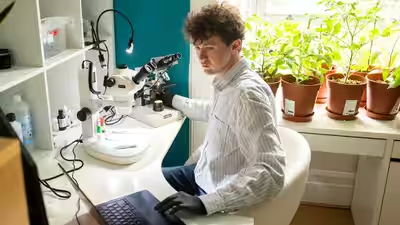

Finding a turtle nest in the wild is far more difficult than it sounds. Smithsonian researchers studying Eastern box turtles in Virginia have been using a combination of technology and surprisingly simple tools to locate nests and understand what happens to the eggs after they are laid. Their unusual field equipment includes a portable X-ray machine, plastic cups and spools of thread stretching 216 yards. These methods helped the researchers locate 16 nests during eight weeks of fieldwork. But what they found was concerning: predators had raided 13 of those 16 nests, sometimes within just hours after the eggs were laid. According to the Smithsonian’s National Zoo and Conservation Biology Institute, which reported the research, the findings are giving scientists a closer look at one of the threats facing Eastern box turtles.
Why turtle nests are hard to find
Eastern box turtles can spend considerable time searching for the right place to lay their eggs. A female usually digs a small hole in the soil, lays two to five eggs and then covers the nest before moving away. For researchers, the challenge is knowing when a female is ready to nest and where she will choose to do it. The turtles can move through large areas, making it difficult to follow their movements closely enough to find a nest before predators do.According to the Smithsonian’s National Zoo and Conservation Biology Institute, the Smithsonian team has been studying 56 tagged Eastern box turtles across five sites. The turtles are fitted with radio transmitters and GPS tags, allowing researchers to track their movements and identify females that may be preparing to nest.
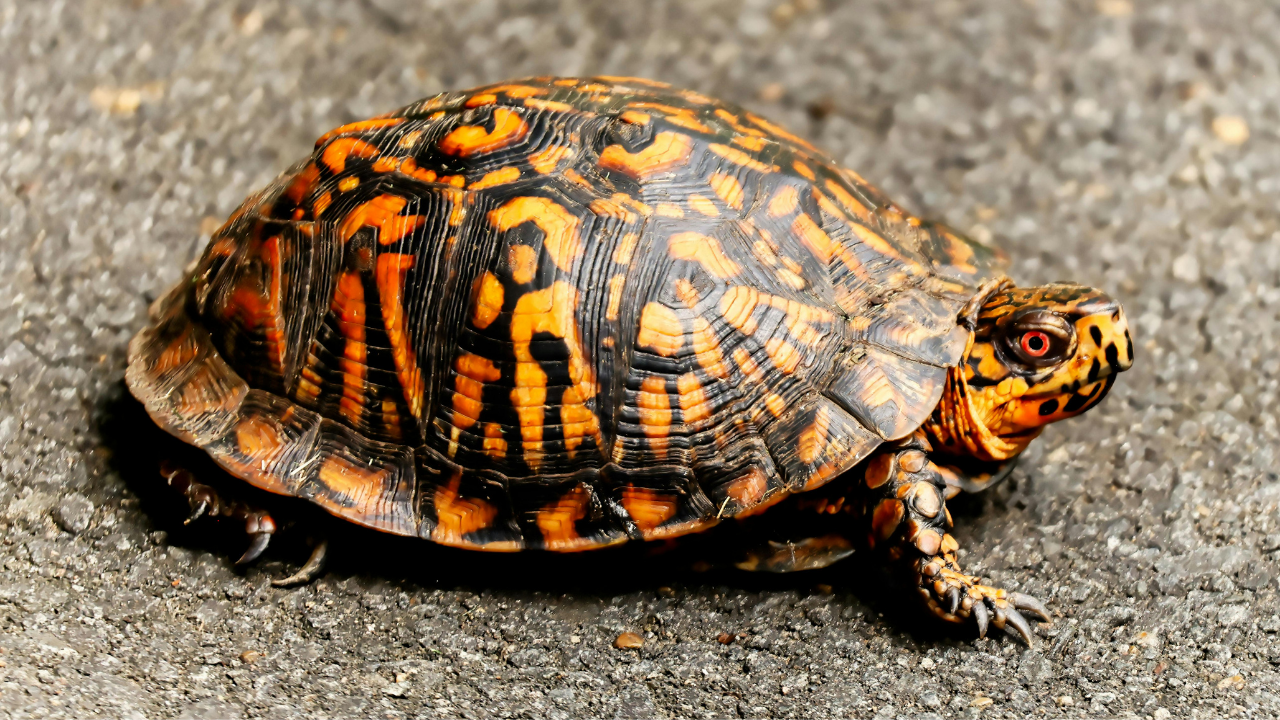
Eastern box turtle (Image Credit: Canva)
X-rays and a plastic cup
One of the team’s most unusual tools is a portable X-ray machine. Researchers use it to determine whether female turtles are carrying developing eggs. Veterinary technicians take quick X-ray images while the turtles are in the field. A plastic cup is used to keep the turtle in position during the short scan. The X-ray gives researchers a clearer indication of whether a turtle is likely to nest soon.Once a female carrying eggs is identified, the team has to follow her movements closely. This is where the long spool of thread comes in. A small bobbin containing 216 yards of thread is attached to the turtle’s shell. One end of the thread remains attached to a marker at the spot where the turtle was found, while the turtle carries the bobbin as she moves through the area.The thread creates a trail that researchers can follow later. Instead of having to watch the turtle continuously, they can return the next day and trace the thread to see where she has travelled.
Following the thread to a nest
When a female is searching for a nesting location, she may travel around and leave a long trail of thread behind her. Once she chooses a spot, her movements become more concentrated as she digs and lays her eggs. Researchers follow the thread until they reach the area where the turtle has settled. They then look for signs of freshly disturbed soil that could indicate a newly dug nest.The researchers can also compare the turtle’s weight before and after nesting. A female may lose between 20 and 80 grams after laying her eggs, providing another clue that she has recently nested. After finding a nest, the team marks its location and places a trail camera nearby. This allows researchers to monitor the nest without repeatedly disturbing it.
Predators raided most nests
The results of the fieldwork revealed just how vulnerable turtle eggs can be. During eight weeks of almost daily searching, researchers found 16 nests. Predators raided 13 of them, often within only a few hours after the eggs were laid. Skunks and raccoons were among the predators responsible for destroying the nests. One trail camera even captured a raccoon eating eggs from a box turtle nest, providing researchers with direct evidence of nest predation.The high number of destroyed nests is significant because Eastern box turtles already face several other challenges, including habitat loss, roads and human activity. For conservationists, understanding what happens to eggs before turtles even hatch is an important part of understanding the species’ wider struggle.
A closer look at turtle survival
The Smithsonian research is part of a broader effort to understand Eastern box turtles and their declining populations in Virginia. Researchers have been tracking the turtles since 2022, studying their movements, behaviour and use of different habitats. The nest research adds another important piece to that work. By learning where females choose to nest and how quickly predators find those nests, scientists can better understand what affects reproductive success.The combination of an X-ray machine, a plastic cup and hundreds of yards of thread may seem unusual, but each tool helps solve a different part of the puzzle. Together, these tools allow researchers to follow one of the most difficult stages of a turtle’s life: the brief period when a female chooses a nest and leaves her eggs behind. For the researchers, finding the nests is only the beginning. The bigger question is whether those eggs can survive long enough for a new generation of Eastern box turtles to emerge.