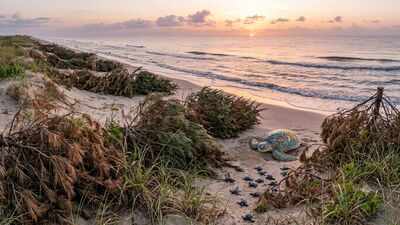
The festive season ends quickly on most coastlines. Decorations disappear, trees are taken away and beaches return to their familiar routines. Along part of the Texas coast, though, some Christmas trees stay behind for months after the holidays. They are not there as forgotten decorations; instead, they become part of a quiet effort to strengthen the shoreline before sea turtles begin returning to their nests. As late winter gives way to spring, volunteers and conservation staff arrange the discarded trees across sections of sand where strong coastal winds can slowly reshape the landscape. The process is simple, but it supports a much larger goal that will matter once nesting season arrives.
How discarded Christmas trees become new sand dunes
Natural Christmas trees collected after the holiday period have found a new role on South Padre Island. Rather than being thrown away, hundreds are gathered and placed in carefully selected areas where shifting sand can settle around them over the coming months.As reported by KRGV, this year, Sea Turtle Inc. assembled roughly 250 donated trees. Some came directly from local residents, while others were collected from communities throughout the Rio Grande Valley. Once delivered to the island, the trees were positioned inside the organisation’s protected hatchery area instead of being buried beneath the sand. Coastal gusts carry loose sand into the branches little by little, allowing the trees to trap sediment naturally until new dune formations begin to emerge.
How the beach rebuilds itself over time
There is no heavy engineering involved in the project. Staff simply place the trees in position and leave the weather to reshape the beach over time.As weeks pass, sand gathers between the branches, gradually covering the trunks without any digging. By the beginning of summer, only small sections of the trees are expected to remain visible above the surface. Eventually, they become part of the dune itself.The method takes advantage of conditions that already exist on South Padre Island, where persistent coastal winds constantly move sand across the shoreline. Instead of resisting those forces, the restoration effort works alongside them.
Preparing for sea turtle nesting season
Timing is an important part of the project. The dune-building work takes place before sea turtle nesting begins, giving the shoreline time to change naturally before turtles arrive.The restored dunes act as a barrier between the hatchery and incoming tides. During periods of higher water, they help reduce the risk of flooding that could threaten developing eggs kept inside the protected nesting area.Sea Turtle Inc. relocates eggs found along the island’s beaches into the hatchery, where they remain under supervision until the hatchlings are ready to emerge. Extra protection from waves and erosion can make those months considerably safer.
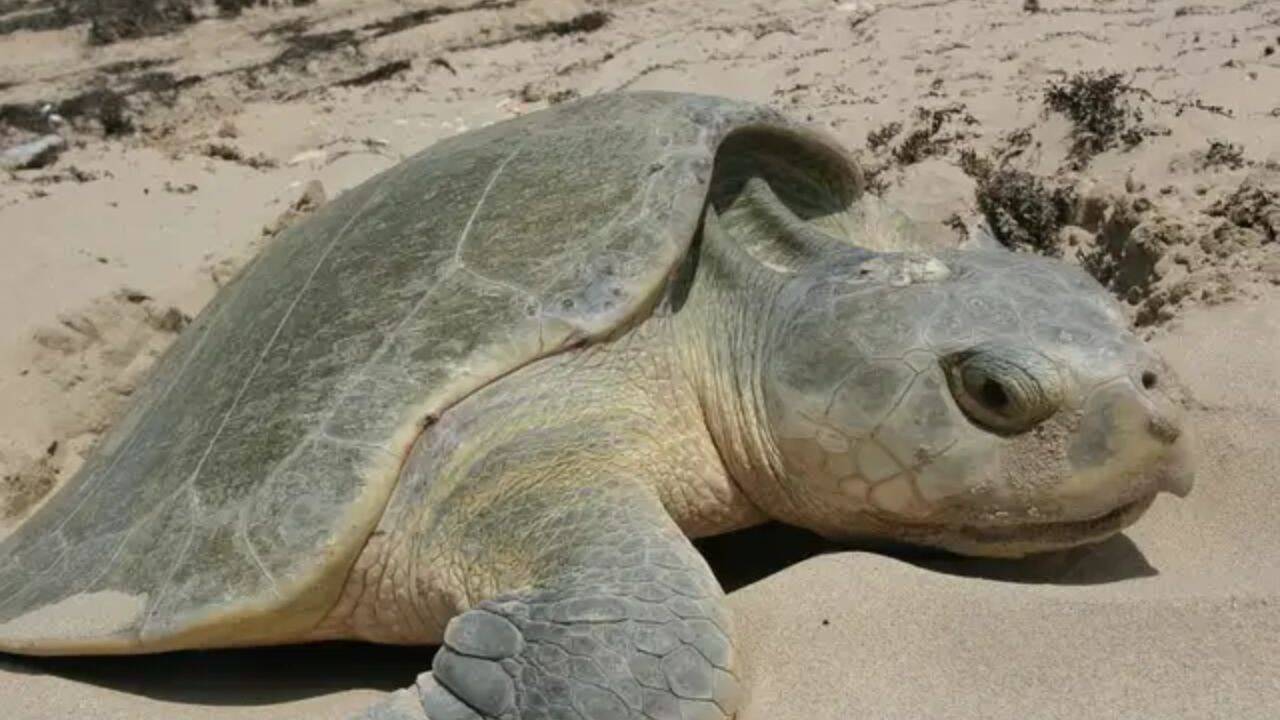
The hidden role of Christmas trees on South Padre Island
Visitors walking along the beach during late winter are likely to notice rows of evergreen trees standing above the sand, an unusual sight long after Christmas has passed. By the time nesting season is well underway, much of that scene will have disappeared.The trees slowly become hidden beneath fresh layers of sand, leaving behind newly formed dunes that blend into the surrounding coastline. What began as unwanted holiday decorations becomes part of the island’s natural defences without changing the character of the beach itself.Sea turtle nesting season on South Padre Island runs from early April through August. While visitors may barely notice the rebuilt dunes once summer arrives, the work completed months earlier continues to serve a practical purpose, helping create a more protected environment for one of the island’s most closely watched wildlife events.