
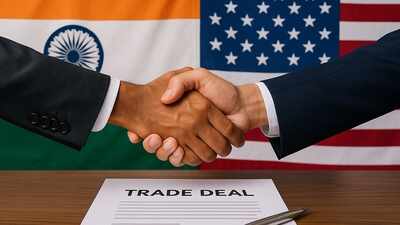
India-US trade deal: With US Trade Representative Jamieson Greer travelling to India for talks, India is looking to score a competitive advantage over regional peers for the trade deal. The United States’ top trade negotiator is scheduled to arrive in India on Tuesday for two days of discussions. India is seeking a trade agreement that provides it a tariff advantage over competing Asian economies. India is also seeking guarantees that the US will not impose fresh tariffs after the agreement is signed. Both countries are looking to finalise a pact seen as important for improving bilateral relations that have recently come under strain.The visit by US Trade Representative Jamieson Greer comes shortly after Prime Minister Narendra Modi and US President Donald Trump held their first meeting in more than a year on June 17 during the G7 summit in France.
India-US Trade Deal Progress
Although the two sides reached a preliminary trade understanding in February, questions remain over an ongoing US Section 301 investigation concerning allegations of excess industrial capacity and forced labour.India is particularly focused on securing tariff terms that would place its exporters in a stronger position than competitors in the region, including ASEAN countries such as Vietnam.“We are trying to work out with the US how they will ensure that we will get a comparative advantage, so that our exporters can benefit,” Commerce and Industry Minister Piyush Goyal said on Monday according to a Reuters report.Goyal said he would welcome an agreement being concluded before July 24, when Washington’s temporary 10% tariff on trading partners is due to expire.“The faster, the better,” he said.Greer’s office said the objective of the talks is to secure a trade arrangement that is “fair, balanced, and reciprocal”.In February, the two countries had agreed on a framework involving 18% tariffs on Indian exports in return for India lowering certain trade barriers and increasing purchases of American products. At that stage, the tariff rate was lower than those applicable to rival economies such as Bangladesh and Vietnam.However, progress towards a final agreement stalled after the US Supreme Court struck down Trump’s broad-based global tariff measures.The negotiations have become more complex because of the Section 301 investigations being conducted by the Office of the US Trade Representative into India and several other countries. Analysts say the probe is being used by the US to encourage India to further open its market to agricultural and other products, while also increasing purchases of energy and defence equipment.