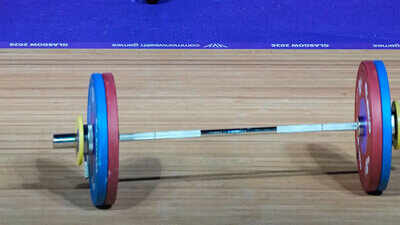
NEW DELHI: Three of the four Indian weightlifters, who tested positive for prohibited substances ahead of the Commonwealth Games in Glasgow and were subsequently dropped from the country’s 16-member squad, have accepted the doping charges against them, handing Indian weightlifting yet another embarrassing blow.Men lifters N Ajith (71kg) and Harcharan Singh (110kg), along with women’s lifter Vanshita Verma (77kg), have accepted the sanctions imposed by the National Anti-Doping Agency (NADA), effectively admitting the anti-doping rule violations (ADRVs) that derailed their and the country’s CWG campaign.The three lifters returned positive tests during the qualification period. Ajith and Pardeshi were widely regarded as genuine gold medal contenders.The fallout extended beyond the individual athletes. Under CWG qualification regulations, repeated ADRVs during the qualification window automatically reduced India’s weightlifting quota. Having initially secured 16 places, the country’s allocation first dropped to 12 and was eventually reduced to 11, forcing the withdrawal of Dilbagh Singh despite the latter having committed no doping offence.Their acceptance of the bans is a setback not only for Indian weightlifting but also extinguishes the trio’s hopes of competing at the upcoming Asian Games in Japan and 2028 Los Angeles Olympics, with their suspensions running until 2029.Ajith and Harcharan tested positive for human growth hormone (hGH) and have each been handed three-year bans, effective retrospectively from May 27, 2026, the date of their provisional suspensions. Vanshita, whose urine sample contained two prohibited substances — stanozolol and mestanolone — received a four-year ban starting May 21, 2026.Another woman lifter Heena (76kg), who tested positive for stanozolol, accepted a three-year ban beginning retrospectively from May 9, 2026.Under the World Anti-Doping Agency (WADA), Ajith, Harcharan and Heena would ordinarily have faced four-year suspensions, while Vanshita was liable for a five-year ban because two prohibited substances were detected in her sample. However, each received a one-year reduction after accepting their respective ADRVs and the sanctions proposed by NADA.The only unresolved case is that of 88kg lifter Sairaj Pardeshi, who has challenged his provisional suspension and is contesting the charges. Pardeshi, whose out-of-competition sample reportedly contained an anabolic steroid earlier this year, has alleged that his supplements were deliberately spiked. He has also lodged a formal complaint alleging a conspiracy by a coach to sabotage his career through possible tampering with his food or drink. His disciplinary proceedings are still underway.The episode comes against the backdrop of India’s worsening global anti-doping record. According to WADA’s 2024 Testing Figures Report, India recorded the world’s highest positivity rate among nations conducting over 5,000 tests for the third successive year. The Athletics Integrity Unit (AIU) also currently lists India with the highest number of active sanctions globally, underlining the scale of the country’s doping crisis and reinforcing the urgent need for a far more effective anti-doping framework.