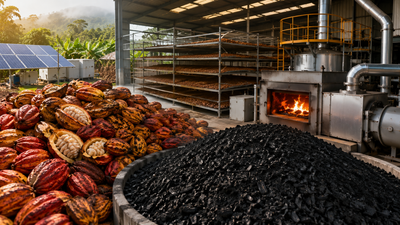
A cocoa processor in Dong Nai, Vietnam, has turned a long-standing waste problem into part of the solution for one of its biggest production headaches. Trong Duc Cocoa Company, the country’s second-largest cocoa producer, generates around 5,000 tons of empty fruit pods every year after extracting fresh beans. Rather than letting that waste pile up, the firm now feeds it into a Torch Updraft Gasifier running at temperatures close to 1,400°F, converting the pods into biochar and a clean, usable gas. That gas is fed straight back into the plant to help dry the next batch of cocoa beans, cutting rainy-season drying time from around 15 days down to roughly 7. The change, backed by the EU-funded SWITCH-Asia programme, is already reducing mould risk, saving energy and improving bean quality, while giving a once-worthless by-product a genuine second life on the farm.
How cocoa pod waste becomes biochar and clean energy
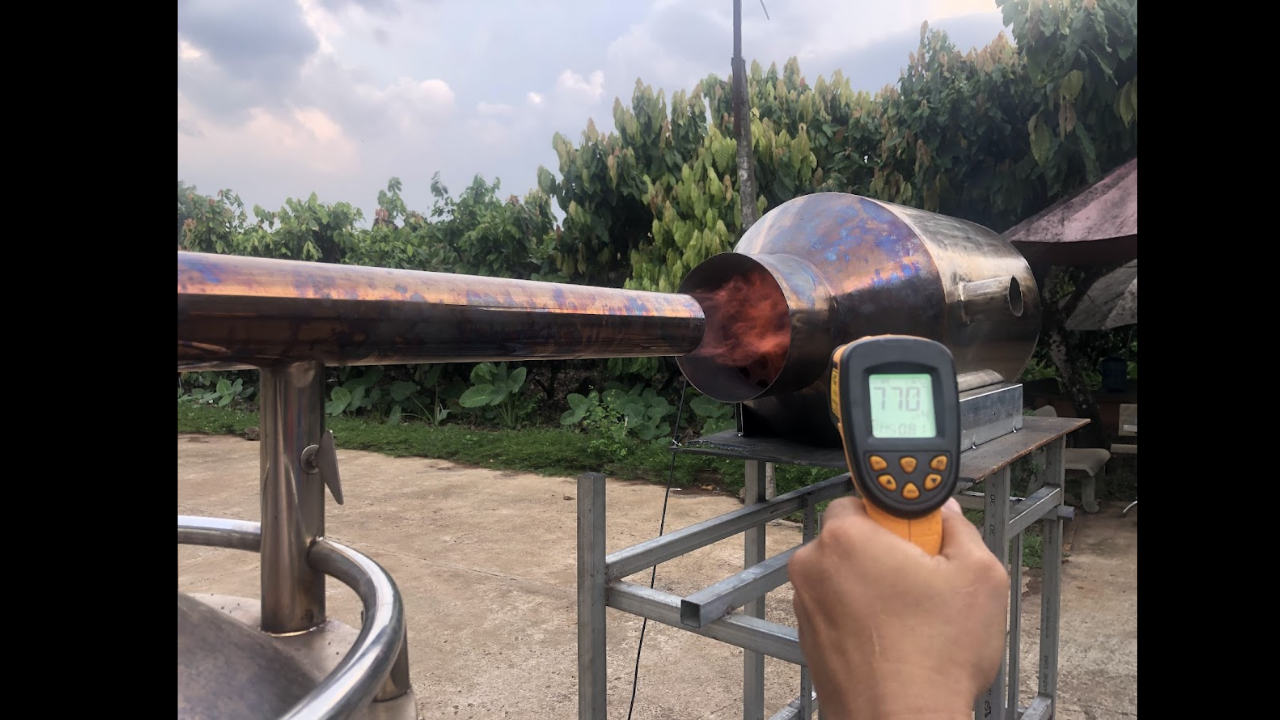
The fix begins long before the pods reach the gasifier itself. According to SWITCH-Asia, once dried, the pod material is fed into a Torch Updraft Gasifier, where it is converted into biochar at temperatures near 1,400°F. The process produces a smokeless flame, and the report notes that the unit achieves “high gasification efficiency, ensuring complete combustion of the material,” which matters for both output quality and air quality around the plant.Nothing from the reaction goes to waste. The clean gas generated during gasification is piped back into the facility to provide heat for plant operations, most notably for drying the next batch of cocoa beans. The biochar left behind is not a mere by-product either; it has been independently tested by Quatest 3 against four standard indicators: fixed carbon, ash content, volatile matter and hydrogen levels, and meets recognised biochar quality standards.
PC: SWITCH-Asia
Cocoa drying drops from 15 days to 7 during the rainy season
The most immediate payoff shows up during Vietnam’s rainy season, traditionally the hardest stretch of the year for cocoa drying. Humidity slows everything down, and beans left out too long risk developing mould, which can ruin an entire batch’s flavour and market value. Before the new system, rainy-season drying at Trong Duc typically took around 15 days.With gasifier-generated heat now supporting the process, that figure has fallen to roughly 7 days, nearly matching the drying speed the company sees during the dry season. As the SWITCH-Asia report puts it, the new approach cuts “drying time during the rainy season from 15 days to just 7 days, nearly matching the drying time in the dry season,” while also reducing energy use and mould risk and improving overall product quality.
Cocoa pod biochar improves soil health for future crops
The gains extend beyond the drying shed. Trong Duc’s CEO, Dang Tuong Khanh, has pointed out that pod waste previously had little value and often ended up harming the surrounding environment. Turning it into fuel and biochar has changed that equation, and the biochar itself brings a second benefit once it is returned to farmland, where it can improve soil structure, help retain moisture and support better nutrient availability for future crops.The project sits within the EU-backed SWITCH-Asia programme, delivered by Helvetas alongside the Community Development Centre as part of a four-year initiative running from 2022 to 2026. Mr Nguyen Dinh Tuan, project manager for the Circular Economy in Cocoa Production at Helvetas Vietnam, said, “This initiative not only addresses waste management issues but also opens up new development opportunities for the cocoa industry. Revenue from biochar can offset waste management costs and provide additional income. This will encourage other cocoa enterprises to invest in circular economy technologies.”